


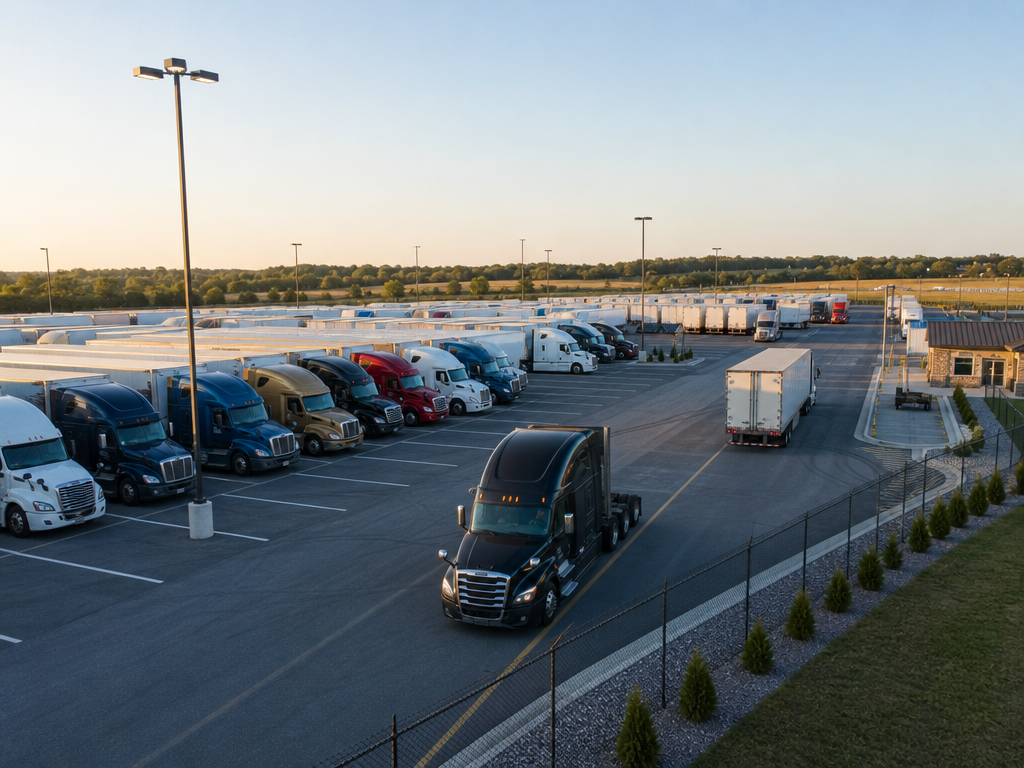
Finding a place to park a commercial truck is one challenge. Finding somewhere that feels safe and secure is another.
For truck drivers, parking often means leaving valuable equipment and cargo in an unfamiliar location, sometimes overnight. For property owners and operators, it means managing a steady flow of large vehicles, keeping unauthorized trucks out, and making sure the facility remains secure even when staff isn’t physically present.
A fence and a few security cameras might help, but they don’t solve every problem.
What happens when an unauthorized truck enters the property? How does an operator know which vehicles belong there? Who checks the back of the lot at 2 a.m.? And if something goes wrong overnight, how does the next shift know what happened?
These are the kinds of questions that make truck parking security an important part of running a successful commercial parking operation.
The good news is that security doesn’t have to depend on constant manual oversight. With the right combination of access control, vehicle verification, security patrols, and digital reporting, operators can create a more secure environment without making parking unnecessarily complicated for drivers.
What Is Truck Parking Security?
Truck parking security includes the measures operators use to protect their parking facilities, the vehicles parked there, and the people using them.
Some of those measures are familiar: fencing, gates, cameras, and lighting. Others involve technology that helps operators keep track of who is entering the property, which trucks are authorized to park, and whether security personnel are completing their assigned responsibilities.
A well-managed facility might use a combination of:
- Controlled entrances and perimeter fencing
- License plate recognition (LPR)
- Digital vehicle registration and parking authorization
- Security cameras and lighting
- Scheduled security patrols
- Parking enforcement procedures
- Incident reporting and documentation
The important thing to understand is that none of these measures work entirely on their own.
A gate can help control who enters, but it won’t tell an operator whether someone has damaged a fence on the opposite side of the property. Cameras can capture activity, but someone still needs to investigate problems. And security personnel can patrol a facility more effectively when they have reliable information about the vehicles they’re checking.
The strongest truck parking security strategies bring these different layers together.
Why Truck Parking Security Matters
Commercial truck parking comes with security concerns that ordinary passenger vehicle parking doesn’t always face.
Trucks are larger, often carry valuable cargo, and may remain parked for extended periods. Drivers frequently arrive late at night or early in the morning, and some facilities operate around the clock with limited on-site staffing.
That creates opportunities for problems if a property isn’t properly managed.
Unauthorized vehicles might enter the lot. Trucks could park in restricted areas. Equipment or cargo could be vulnerable to theft or tampering. Damaged gates, poor lighting, or gaps in perimeter fencing might go unnoticed.
And these aren’t just security concerns. They can affect the parking business itself.
Imagine a driver paying for overnight parking, only to arrive and find their reserved space occupied by an unauthorized vehicle. Or an operator discovering that a section of fencing has been damaged but having no idea how long it’s been that way.
Neither situation inspires much confidence.
That’s why security should be considered alongside reservations, access, and everyday truck parking management.
A secure facility is better positioned to deliver the dependable parking experience drivers expect.
Start With Who Can Enter the Property
One of the simplest ways to improve truck parking security is to establish better control over who enters the facility in the first place.
At an open lot, practically anyone can pull in. Unless someone is physically checking vehicles, operators may have little visibility into whether a truck has permission to be there.
Controlled access changes that.
Instead of relying entirely on a shared gate code or someone manually checking drivers at the entrance, operators can connect access permissions to parking reservations or registered vehicles.
Depending on the property, that might involve QR codes, mobile credentials, license plate recognition, or automated gate controls.
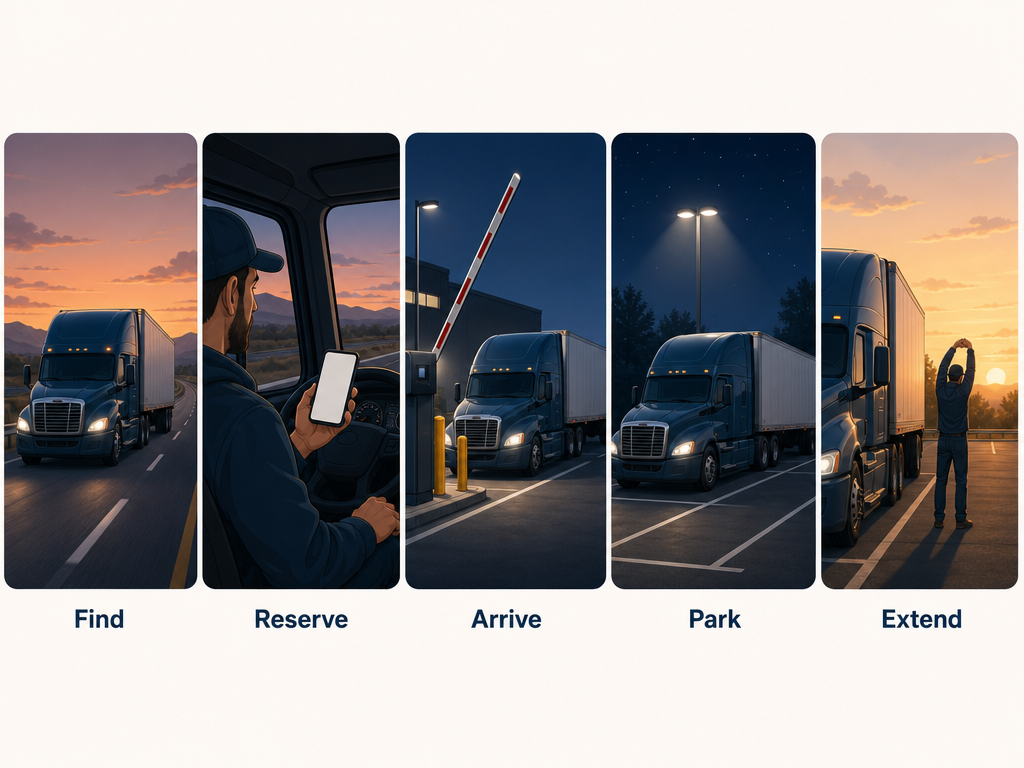
For example, a driver who reserves an overnight parking space could receive access for the duration of that reservation. Once the parking session ends, the associated permission can expire according to the property’s rules.
ParqEx’s truck parking platform helps connect reservations with access management, giving operators a more organized way to control vehicle entry.
Of course, controlling the entrance doesn’t mean every potential security problem disappears.
A truck might enter legitimately and then remain beyond its reservation. A driver could park somewhere they shouldn’t. Or an issue could develop elsewhere on the property.
But knowing who is supposed to be there gives operators a much better starting point.
License Plate Recognition Adds Another Layer of Visibility
Even at a relatively small truck parking facility, manually checking every vehicle can become time-consuming.
At a property with dozens or hundreds of trucks, it’s even more difficult.
License plate recognition can help simplify that process.
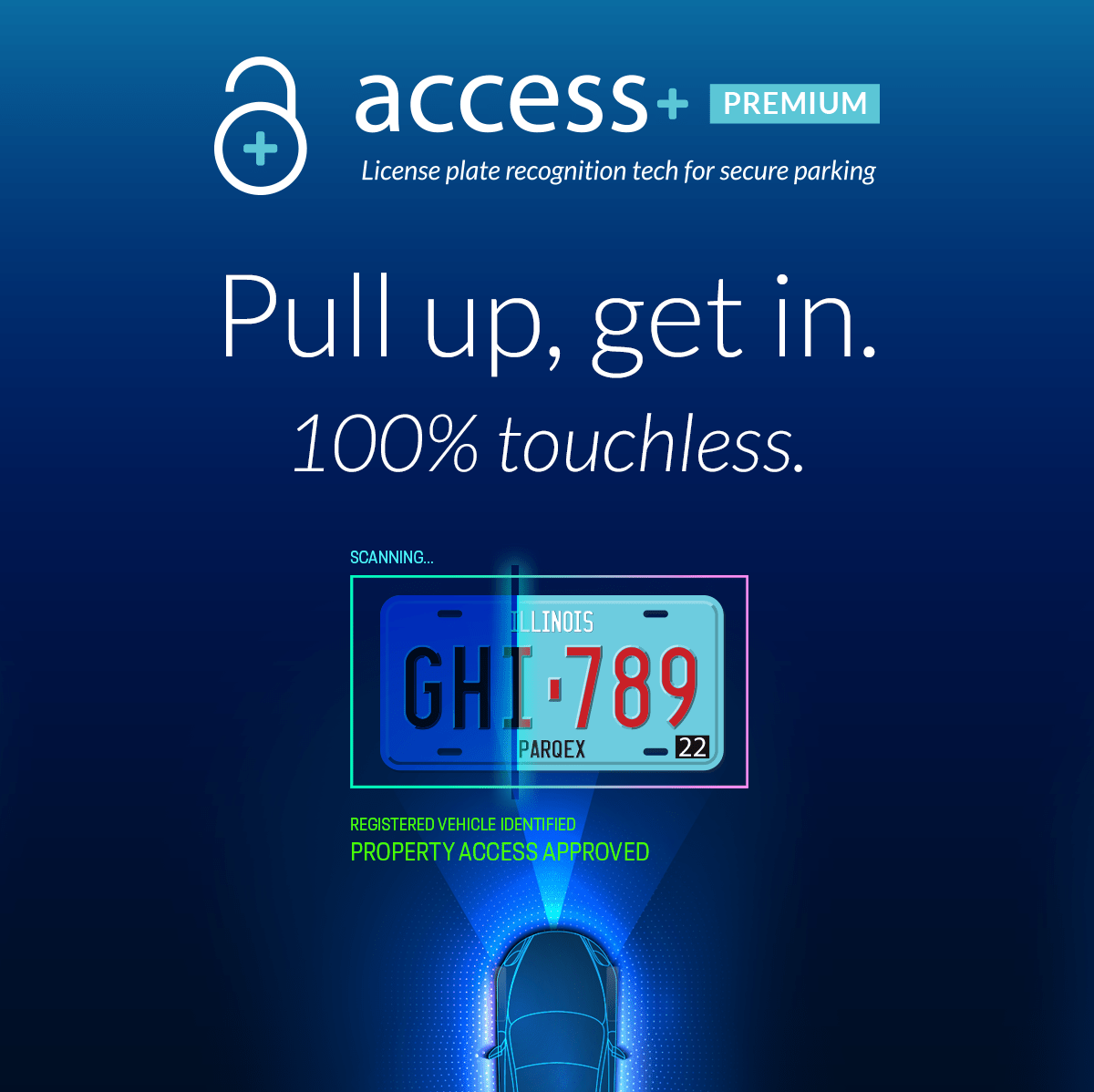
At an entrance, fixed LPR cameras can capture license plates and help compare arriving vehicles against authorized parking records.
This gives operators another way to verify whether a truck belongs on the property.
LPR can also be useful beyond the entrance.
Security personnel conducting vehicle patrols can use vehicle-mounted cameras to identify parked trucks and check their authorization status without having to stop and manually record every plate.
ParqEx explores this approach in Vehicle-Mounted LPR for Security Patrols, which looks at how the technology can support more efficient vehicle verification during patrols.
For truck parking facilities, the benefit is straightforward: officers can spend less time on repetitive checks and more time investigating vehicles or situations that actually need attention.
LPR isn’t foolproof, and it doesn’t replace good security procedures. Camera positioning, plate visibility, and accurate parking records all matter.
But when used alongside access control and vehicle registration, it can give operators a clearer picture of vehicle activity.
Why Security Patrols Still Matter
Technology has made it easier to monitor truck parking facilities, but there’s still plenty that requires someone to physically inspect the property.
A camera might not clearly show a damaged section of fencing. An automated gate won’t necessarily alert management to debris blocking a drive aisle. And parking software can’t determine whether a light has burned out in a poorly monitored corner of the lot unless that issue is reported or detected by another system.
That’s where security patrols come in.
Depending on the facility, an officer might check entrances, inspect fencing, monitor parking rows, identify unauthorized vehicles, and look for potential safety hazards.
The challenge isn’t necessarily deciding what needs to be checked. It’s making sure those checks happen consistently.
At a large property, operators may have multiple officers working different shifts. Without a structured process, it can be difficult to know which areas were inspected or whether an issue was addressed.
This is where Security Patrol Management can make a difference.
Digital patrol management helps security teams organize assignments, document completed inspections, and keep supervisors informed about activity across the property.
Instead of simply assuming the overnight patrol covered the entire facility, management has a clearer record of what actually happened.
Truck Parking Security vs. Truck Parking Enforcement
Security and enforcement are closely related, but they’re not quite the same thing.
Truck parking enforcement is primarily concerned with whether vehicles are following the property’s parking rules.
Truck parking security takes a broader view, focusing on protecting the facility, the vehicles, and the people using it.
Consider a few examples.
A truck staying beyond its paid reservation is generally an enforcement issue.
A broken perimeter gate is a security concern.
An unauthorized vehicle entering a restricted area could involve both.
Understanding that distinction helps operators respond appropriately instead of treating every parking violation as a security threat.
Our article on Truck Parking Enforcement takes a closer look at how reservations, LPR, digital verification, and enforcement procedures help operators maintain compliance.
Security builds on those same systems while addressing the wider needs of the property.
When Something Goes Wrong, Documentation Matters
Even a well-secured facility can experience an incident.
Maybe an officer discovers a damaged gate during an overnight patrol. Perhaps a driver reports suspicious activity near a parked trailer. Or someone notices that a restricted area has been accessed without authorization.
Whatever the situation, the way it’s documented matters.
Consider what happens when an overnight officer discovers a problem and simply sends a text to their supervisor.
That might resolve the immediate issue, but what happens when the next shift arrives? Does anyone know whether the problem was fixed? Was maintenance contacted? Is there a record of what happened?
Without a consistent reporting process, important information can easily get lost between shifts.
Digital Security Incident Management helps address that problem by giving personnel a structured way to document incidents, record evidence, communicate findings, and track follow-up actions.
For a truck parking facility, an incident record might include the location, time, vehicles involved, photographs, actions taken, and whether additional attention is needed.
Over time, these records can also reveal patterns.
If the same gate keeps malfunctioning or unauthorized vehicles repeatedly appear in one area, management has information it can use to address the underlying issue.
Security becomes more effective when operators can learn from what happens rather than repeatedly responding to the same problems.
Good Security Also Depends on the People Behind It
A security system is only as effective as the people responsible for managing it.
Truck parking facilities may have officers monitoring entrances, conducting vehicle patrols, inspecting the perimeter, and responding to incidents throughout the day and night.
Coordinating those responsibilities takes planning, especially when several properties or shifts are involved.
It’s one thing to schedule an officer for an overnight shift. It’s another to know whether that officer completed the required patrols, checked the gates, and followed up on reported issues.
ParqEx’s Workforce Management for Security Teams article explores how digital tools can help security supervisors coordinate staffing, assignments, and operational responsibilities.
For truck parking operators, the value comes down to consistency.
When personnel know what’s expected and supervisors can review completed work, it’s easier to maintain security standards from one shift to the next.
Don’t Overlook the Basics: Lighting, Fencing, and Facility Layout
It’s easy to focus on technology when discussing modern security, but physical infrastructure still matters.
A facility can have advanced access control and digital patrol records, yet still struggle with basic vulnerabilities if the property itself isn’t designed or maintained with security in mind.
Lighting is a good example.
Truck parking facilities often operate overnight, so visibility around entrances, pedestrian routes, parking rows, and perimeter areas is important.
Fencing and gates also need regular attention. A controlled entrance doesn’t offer much protection if another part of the property is easily accessible.
Cameras can provide additional visibility, particularly around entrances and other important areas, but their placement and image quality matter.
And because tractor-trailers require significant maneuvering room, the parking layout should provide clear traffic patterns and keep restricted or operational areas accessible.
These aren’t particularly complicated ideas, but they’re easy to overlook when a property is focused primarily on maximizing parking capacity.
A well-organized facility is generally easier to monitor and manage than one where vehicle movement, parking areas, and access points are poorly defined.
Different Properties Need Different Security Strategies
Not every truck parking facility faces the same challenges.
A busy truck stop might have vehicles arriving and departing throughout the night. A private fleet yard may only allow registered company vehicles. A distribution center could need to separate overnight parking from active loading areas.
And a commercial property offering truck parking during unused hours may need to ensure that drivers can access designated spaces without entering other parts of the business.
These differences matter when deciding which security measures to implement.
For example, a dedicated overnight parking facility might prioritize controlled entry, lighting, and routine patrols.
A logistics property might need more detailed access permissions and procedures for separating authorized parking from restricted operational areas.
An operator managing multiple facilities may need centralized reporting and consistent security procedures across locations.
There’s no universal checklist that makes every truck parking facility secure.
The best approach starts with understanding how the property is actually used, where its vulnerabilities exist, and what level of monitoring is appropriate.
Bringing Parking and Security Operations Together
One of the biggest opportunities for truck parking operators is connecting systems that have traditionally worked separately.
Think about how many different activities take place during a typical parking session.
A driver reserves a space. Payment is processed. Access is granted. The vehicle enters the property. Security personnel may patrol the facility while the truck is parked. Eventually, the driver leaves, and the space becomes available again.
Now consider what happens when something interrupts that process.
Maybe the vehicle isn’t registered. Maybe the driver overstays. Maybe an officer discovers damage near the parking area.
If reservations, access, enforcement, and security reporting all operate independently, staff may have to piece together information from several different sources.
A more connected approach makes it easier to understand what’s happening.
ParqEx’s Security Operations Management content explores this broader idea: bringing personnel, patrols, incident reporting, and operational oversight into a more coordinated process.
For truck parking facilities, the same principle applies.
Parking management provides information about vehicle authorization and parking activity. Security operations help oversee the people and procedures responsible for protecting the property.
When those functions work together, operators have a better foundation for responding to problems and improving day-to-day operations.
How Can Truck Parking Operators Improve Security?
Improving truck parking security doesn’t necessarily mean investing in every available technology.
For many operators, the best place to start is with a closer look at how the facility currently operates.
Who can enter the property? How are vehicles verified? Are parking rules clearly communicated? What happens when someone discovers a problem?
Those questions can reveal where improvements would make the biggest difference.
A practical security review should consider several areas:
- Access control: Review how vehicles enter and whether authorization is tied to valid parking permissions.
- Physical infrastructure: Inspect fencing, gates, lighting, cameras, and areas with limited visibility.
- Vehicle verification: Evaluate whether registration records or LPR could make authorization checks more reliable.
- Security patrols: Establish clear responsibilities and a consistent way to document completed inspections.
- Incident reporting: Make sure problems are recorded, communicated, and followed through to resolution.
- Parking policies: Define restricted areas, permitted parking durations, and procedures for addressing violations.
It’s also worth reviewing existing incident and enforcement records.
If the same problems keep appearing, that may indicate a larger operational issue rather than a series of unrelated incidents.
The goal should be to make security more consistent and manageable, not simply to add more procedures for employees to follow.
Can Better Truck Parking Security Help Protect Revenue?
Security isn’t just about protecting vehicles and property. It can also help protect the parking operation itself.
Consider a facility that offers paid overnight reservations.
If unauthorized trucks routinely enter and occupy spaces, the operator may lose inventory that could otherwise be reserved by paying drivers.
That creates a revenue problem, but it also creates a customer experience problem.
A driver who pays for a space expects that space to be available when they arrive.
Similarly, damaged gates, recurring property issues, and poorly documented incidents can create additional operating costs.
Better security procedures can help operators reduce unauthorized use, protect available parking inventory, and maintain more dependable operations.
This connects directly with the larger goals of truck parking solutions: making commercial parking easier to access, manage, and operate.
Security may not be the first thing drivers think about when reserving parking, but it can influence whether they feel comfortable using a facility again.
A More Connected Approach to Truck Parking Security
Truck parking security has come a long way from relying on fencing, cameras, and the occasional patrol.
Those measures still matter, but today’s operators have more ways to understand what’s happening across their properties.
Digital reservations can establish who is expected to park. Access control can help manage entry. LPR can support vehicle verification. Security patrols provide physical oversight, while incident reporting helps ensure problems are documented and addressed.
The real value comes from making these different parts of the operation work together.
ParqEx’s truck parking platform connects reservations, payments, access management, LPR, enforcement, and reporting to help operators manage commercial parking more effectively.
And as security operations technology continues to evolve, there’s an opportunity to bring even greater coordination to the personnel, patrols, and incident-response processes that support these facilities.
Ultimately, truck parking security isn’t about making a parking lot feel like a fortress.
It’s about giving drivers a place they can park with greater confidence while giving operators the visibility and control they need to manage their property.
Because finding truck parking is important. Knowing that parking is well-managed and secure matters, too.