





A security officer notices that a rear gate has been left open. They take a photograph, add a sentence to the shift report, and continue the patrol. The incident has been recorded, but has it been managed?
That depends on what happens next. Someone may need to determine why the gate was open, secure the area, notify the property contact, request a repair, adjust the rest of the patrol, and confirm that the gate remains closed later in the shift. If none of that follow-up occurs, the report merely proves that the problem was seen.
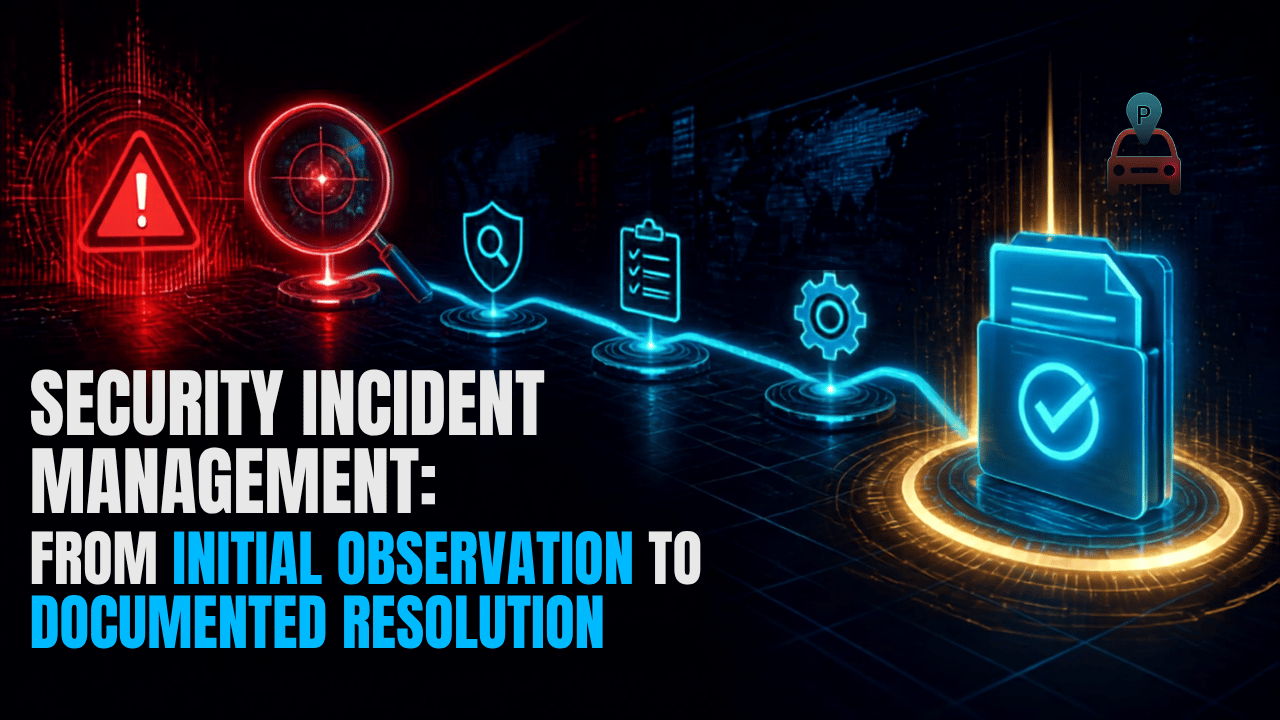
Security incident management connects the original observation to the response and final outcome. It gives officers, supervisors, property contacts, and outside partners a clearer way to understand what happened, what required attention, who took responsibility, and whether the issue was resolved.
What Is Security Incident Management?
Security incident management is the process of identifying, documenting, assessing, communicating, responding to, and closing security-related incidents.
The term “incident” can include far more than emergencies or criminal activity. During a normal shift, an officer might encounter:
- An unlocked door or open gate
- Suspicious activity
- An unauthorized vehicle
- A failed access point
- Property damage or vandalism
- A broken light or safety hazard
- A resident, guest, or employee complaint
- A parking or permit violation
- A medical or emergency situation
- Equipment failure
- A maintenance issue affecting security
Some incidents require immediate escalation. Others can be documented and assigned for later follow-up. The management process helps the officer determine which response fits the situation and the property’s established procedures.
Incident management is one component of security operations management. It connects field observations with patrol activity, property playbooks, access and parking information, supervisor oversight, partner handoffs, and client reporting.
Incident Reporting vs. Incident Management
Incident reporting answers the first set of questions:
- What happened?
- When and where did it happen?
- Who observed or reported it?
- What evidence was collected?
Incident management continues from there:
- How serious is the situation?
- Who needs to know?
- What does the property’s policy require?
- Who owns the next action?
- Has the issue been contained, escalated, or resolved?
- What information should reach the client?
A completed form is not necessarily a completed response.
Consider a vehicle parked in a restricted area. The officer may photograph it and record the plate. Managing the incident may also require checking current authorization data, reviewing the property’s digital parking policies, confirming that no exception applies, issuing a warning, and documenting whether the vehicle moved.
The incident record should follow that progression rather than end with the initial photograph.
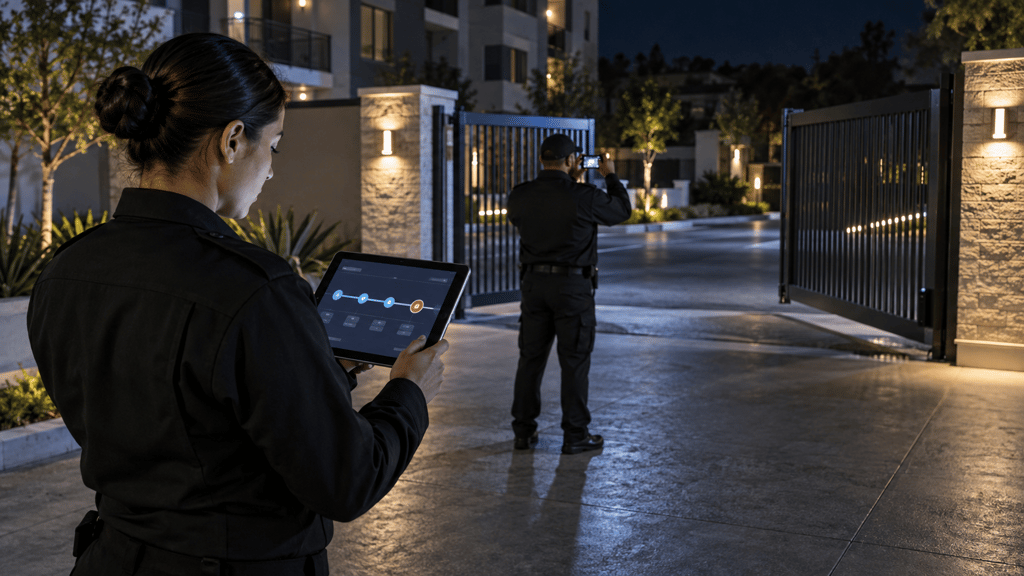
The Security Incident Management Process
1. Identify and record the incident
The process begins when an officer, employee, resident, visitor, sensor, camera, or access system detects something requiring attention.
The initial record should capture the basic facts while they are still clear:
- Property and exact location
- Date and time
- Reporting person or officer
- Incident type
- People or vehicles involved
- Written observations
- Photographs, video, or other evidence
- Any immediate action already taken
Officers should separate what they directly observed from assumptions. “Rear gate was open at 1:12 a.m.” is an observation. “A trespasser opened the gate” is a conclusion that requires additional evidence.
Clear, factual reporting gives supervisors and clients a stronger basis for deciding what to do next.
2. Classify the type and severity
Incidents should be categorized consistently into categories such as security, safety, access, parking, maintenance, property damage, medical, or service-related issues.
Classification makes routing and reporting easier. A failed parking-lot light may need both a safety designation and a maintenance handoff. A vehicle blocking a fire lane may require a different response than an expired guest permit.
Severity also matters. An open interior office door at noon does not necessarily carry the same urgency as a forced exterior door discovered overnight. The property playbook should help officers distinguish routine documentation from situations requiring an immediate call, dispatch, evacuation, or emergency response.
3. Take immediate protective action
When it is safe and within the officer’s role, they may be able to contain or reduce the immediate risk.
That could involve closing a door, restricting access to an unsafe area, directing traffic, assisting a visitor, issuing a warning, or remaining nearby until additional support arrives.
The record should show what the officer did and when. If no immediate action was possible, it should explain why and identify the next responsible party.
Technology cannot make this judgment for every situation. Officers still need training, clear post orders, and an understanding of their authority.
4. Notify and escalate
The correct notification depends on the incident and property. The recipient could be a supervisor, property manager, resident, facilities employee, emergency contact, law enforcement agency, medical responder, or parking-enforcement partner.
A property-specific escalation plan should define:
- Which events require immediate notification
- Who should be contacted first
- What information must be included
- When a supervisor must approve the response
- When should emergency services be contacted
- What to do if the primary contact does not respond
- Which updates the client expects
Without this structure, officers may rely on memory or call several people before reaching the right person. That delay matters in urgent incidents and causes unnecessary disruption in routine ones.
5. Assign and track the next action
Many incidents continue after the officer’s initial response. A damaged gate may need a repair request. Video may need supervisor review. An unauthorized vehicle may require a second check. A safety issue may remain open until the property confirms it has been corrected.
The incident should have a clear owner and status. Common stages may include:
- New
- Under review
- Action required
- Assigned
- Waiting for outside response
- Resolved
- Closed
The exact labels matter less than the accountability behind them. Someone should be able to see what remains open and who is responsible for moving it forward.
6. Resolve, hand off, or close
Not every incident is resolved by the security company. Some are handed to maintenance, property management, law enforcement, emergency services, towing providers, or other partners.
A handoff should not make the incident disappear from the security record. The timeline can still show who received it, when the handoff occurred, what the officer did beforehand, and whether the client expects a later update.
Closure should describe the outcome rather than simply changing a status. “Gate secured; facilities notified; repair scheduled for 8 a.m.” is much more useful than “closed.”
7. Report the outcome to the client
Clients need different levels of information depending on the situation. A critical event may trigger an immediate alert and several updates. Routine issues may appear in a daily activity report. Longer-term patterns may belong in monthly service reporting.
The final record should connect the original observation with the response, evidence, notifications, handoffs, and outcome. This prevents clients from receiving isolated facts without knowing whether anyone acted on them.
Building Property-Specific Incident Playbooks
The same event can require different responses at different properties.
An unregistered vehicle may receive a courtesy notice at one residential community and an immediate enforcement review at another. An unlocked pool gate at a hotel may require urgent notification to management, while an unlocked interior door during office hours may only require documentation and a facilities request.
Each property playbook should define:
- Common incident categories
- Severity levels
- Emergency and client contacts
- Notification order
- Officer authority
- Required evidence
- Parking and access procedures
- Outside partners
- Follow-up expectations
- Reporting preferences
These instructions should remain associated with the property and the the current shift. An officer covering an unfamiliar post should not have to search old messages to determine how the client expects an incident to be handled.
This is also where workforce management for security teams intersects with incident response. The assigned officer needs the qualifications, training, equipment, and site knowledge appropriate for the incidents they may encounter.
Connecting Incidents to Patrol Activity
Many incidents originate during walking or vehicle patrols. Connecting the incident to the active patrol provides useful context:
- Which route was underway
- Which checkpoint or area was involved
- What the officer was expected to inspect
- When the area was last checked
- Whether additional checkpoints were affected
- Whether the route changed after the incident
For example, an officer may discover broken glass near an entrance during a walking patrol. The incident record can show the exact checkpoint, photograph the condition, notify the property, request cleanup, and require another inspection before the shift ends.
Vehicle activity can create similar connections. A patrol using mobile LPR may identify a vehicle that does not match the property’s authorization records. The plate read begins the review, but the incident history should also show officer verification, the applicable rule, any warning or enforcement action, and the outcome.
That context is more valuable than an isolated incident form or plate alert.
Parking and Access Incidents
Parking and access frequently overlap with property security. Officers may encounter unauthorized vehicles, blocked gates, expired permits, invalid credentials, tailgaters, after-hours vendors, or guests who were not properly registered.
Current parking management software can help officers determine whether a plate, permit, reservation, or exception is valid before treating the situation as a violation.
Verification is important. An unfamiliar vehicle is not automatically unauthorized, and an access denial does not always indicate suspicious behavior. Records may be outdated, a temporary exception may exist, or someone may need assistance correcting a simple registration problem.
When action is appropriate, consistent parking compliance depends on following the property’s escalation process. The record may include a reminder, warning, citation, resident notification, supervisor review, or enforcement-partner handoff.
What Supervisors Need to See
Supervisors do not need every routine incident to demand the same level of attention. They need a view that separates normal activity from exceptions requiring intervention.
That may include:
- New critical incidents
- Incidents awaiting acknowledgment
- Missed notifications
- Open items without an owner
- Issues approaching a response deadline
- Repeat incidents at the same location
- Cases waiting for a partner or client response
- Incidents closed without sufficient evidence
Real-time visibility helps supervisors respond during the shift rather than reconstructing events after a client calls. It also supports coaching. If reports regularly lack key facts or officers are uncertain about a specific escalation procedure, the company can address the pattern rather than treating each case in isolation.
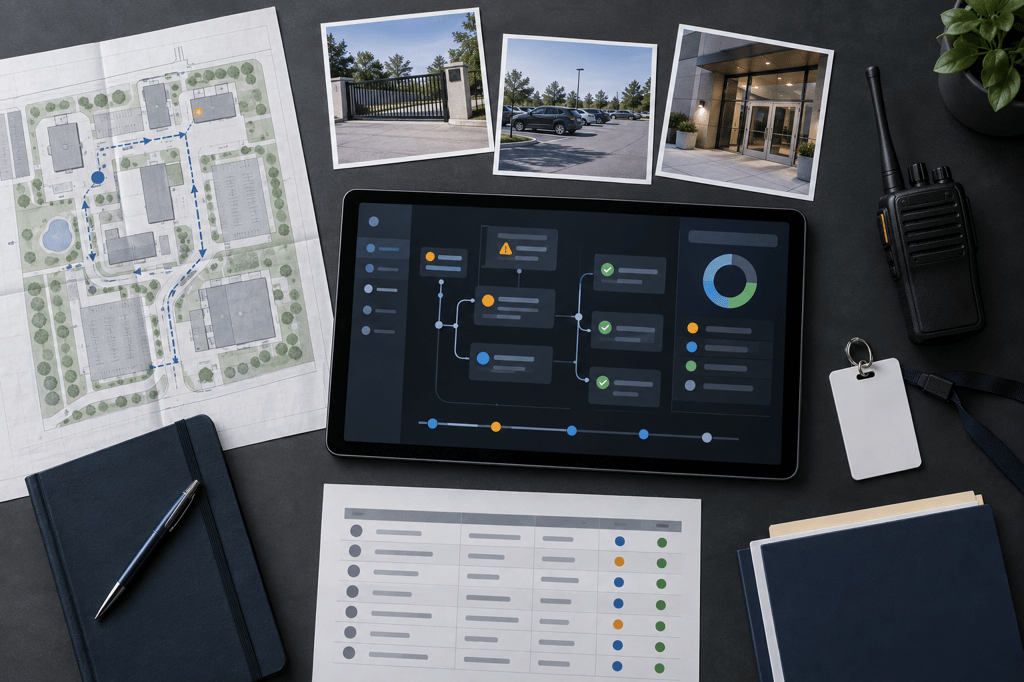
Security Incident Metrics That Provide Useful Context
Incident counts alone can be misleading. More reported incidents may indicate an increase in problems, but they may also reflect more consistent documentation of field conditions by officers.
Useful measures include:
- Incidents by property, location, and category
- Severity distribution
- Time from observation to notification
- Response and resolution time
- Open versus closed incidents
- Incidents requiring outside handoff
- Repeat issues by location
- Parking and access incidents
- Reports missing required evidence
- Client acknowledgment or follow-up time
The purpose is not to reward low incident numbers. It is to identify recurring conditions, delayed responses, unclear procedures, and opportunities to adjust patrols or property playbooks.
Common Security Incident Management Problems
Vague narrative reports
Notes such as “everything handled” do not explain what was found, what action occurred, or whether anything remains open.
Inconsistent categories
If officers describe the same issue in different ways, managers cannot reliably identify patterns across shifts or properties.
Escalation through personal text messages
Texts may help people respond quickly, but they often separate the communication from the official incident history.
No ownership after the handoff
An incident may be sent to maintenance or management and then remain open indefinitely because nobody is responsible for checking the outcome.
Closing incidents too early
Documenting that a problem exists is not the same as resolving it. Closure should reflect the real outcome or clearly state that responsibility has been transferred.
Treating every incident the same
Over-escalating routine matters creates noise. Under-escalating urgent incidents creates risk. Property-specific severity and response rules help officers find the right balance.
What Strong Security Incident Management Accomplishes
An effective process makes incident handling easier to follow from beginning to end.
For officers, it clarifies what information to collect and what response the property expects. For supervisors, it reveals urgent, overdue, and incomplete work. For clients, it replaces scattered messages and vague summaries with an evidence-rich record.
Most importantly, it keeps the operation focused on outcomes.
The question is not only whether the officer noticed the open gate, unauthorized vehicle, damaged light, or access problem. It is whether the right person learned about it, the correct action was followed, and the final result became part of the property’s operating history.
That is the difference between logging an incident and managing it.
FAQ Section
Security incident management is the process of identifying, documenting, assessing, communicating, responding to, and closing security-related incidents across a property or portfolio.
Incident reporting records what happened. Incident management continues through severity assessment, notification, assignment, escalation, response, resolution or handoff, and client reporting.
It should include the property and location, date and time, people or vehicles involved, factual observations, photographs or other evidence, immediate actions, notifications, follow-up assignments, and final outcome.
The correct recipient depends on the incident and the property playbook. It may include a supervisor, property manager, resident, facilities team, emergency contact, law enforcement agency, medical responder, or enforcement partner.
An incident should be closed when the response is complete, the outcome is documented, or responsibility has been formally handed off, in accordance with the property’s procedures.
The patrol provides context on the officer, route, checkpoint, timing, expected inspection, surrounding activity, and any changes made after the incident.