


A patrol can look simple from the outside. An officer walks a property, drives through a parking lot, checks a few doors, and writes a report before leaving.
Behind that shift, however, are dozens of decisions. Which areas need to be checked? How often? What counts as proof that the patrol occurred? What should the officer do if a gate is open, a vehicle is unauthorized, or a safety hazard needs immediate attention? And how does the client learn what happened without calling the security company for an update?
Security patrol management provides a structure for answering those questions. It organizes walking and vehicle patrols around the property, the assigned officer, the route, the expected tasks, the issues found, and the report delivered to the client.
The goal is not to monitor officers for monitoring’s sake. It is to make patrol work clearer in the field, easier to supervise, and more useful to the properties paying for the service.
What Is Security Patrol Management?
Security patrol management is the process of planning, assigning, carrying out, documenting, and reviewing patrol work across one or more properties.
It covers more than the route an officer follows. A complete patrol operation may involve:
- Shift and officer assignments
- Property-specific post orders
- Walking and vehicle routes
- Checkpoints and completion windows
- Required inspections, photos, or notes
- Parking and access verification
- Incident reporting and escalation
- Missed-task and exception alerts
- Supervisor review
- Client-facing activity reports
Patrol management falls under the broader practice of security operations management. Workforce management for security teams determines who is qualified, scheduled, and available for the shift. Patrol management picks up from there by defining what that officer needs to accomplish once the shift begins.
Scheduling an officer is important. Knowing what happened after the officer arrived is what proves the service.
Why Informal Patrol Processes Break Down
Many patrol teams begin with a workable but informal system: a printed checklist, a shared spreadsheet, text messages from a supervisor, and a narrative report at the end of the night. That may be manageable for a small operation serving a few familiar properties.
Problems appear as the company adds officers, routes, vehicles, shifts, and clients.
One officer may understand that the rear gate must be photographed at midnight, while a substitute officer only knows to “check the perimeter.” A supervisor may not hear about a missed stop until the next morning. A client may receive a report saying that the property was secure without seeing which doors, areas, or vehicles were actually checked.
The issue is not usually a lack of effort. The instructions, field activity, and evidence simply live in different places.
Good patrol management brings those pieces together. The officer can see what the property requires. The supervisor can identify a missed patrol or urgent issue while it still matters. The client receives a record tied to the actual work rather than a summary reconstructed later.
The Main Parts of a Managed Security Patrol
1. A clear assignment before the shift
Every patrol starts with a person, a place, and a time. The assigned officer also needs the qualifications, equipment, vehicle, and property information required for that particular post.
A vehicle patrol covering several commercial properties has different needs from an officer assigned to walk one multifamily community overnight. The assignment should reflect those differences before the officer checks in.
At a minimum, the patrol plan should identify:
- The officer and supervisor
- The shift and check-in requirements
- The property or group of properties
- The patrol method
- Any assigned vehicle or equipment
- The route and expected stops
- The property playbook and escalation contacts
This is where workforce planning and field execution meet. When those functions are separated, an officer can technically be scheduled without being fully prepared to perform the patrol the client expects.
2. Property-specific post orders
No two patrols are exactly alike because no two properties have the same layout, risks, occupants, or contract.
At an apartment community, an officer may inspect amenity doors, respond to noise complaints, verify guest vehicles, and monitor resident access. A warehouse patrol may focus on truck entrances, loading areas, gates, fencing, and safety conditions. A retail property might place more weight on loitering, damage, after-hours activity, and unauthorized parking.
Post orders turn those differences into usable instructions. They may include:
- Property and emergency contacts
- Areas that require inspection
- Access procedures
- Parking and permit rules
- Checkpoint requirements
- Known exceptions
- Incident categories
- Escalation steps
- Evidence and reporting expectations
These instructions need to be available during the patrol, not buried in an old email or saved on one supervisor’s computer. If a contact, gate code, or policy changes, the officer should be able to see the current version without having to guess which document is correct.
3. Routes that reflect the property
A route gives the patrol a deliberate shape. It identifies the areas to cover, the order in which they should be visited, and how often the patrol should return.
That does not mean every patrol must follow the exact same path at the exact same minute. Predictable movement can create its own security weakness, and field conditions sometimes require officers to change course. But there should still be a documented expectation for what needs attention during the shift.
Route planning may consider:
- Property size and layout
- Higher-risk or restricted areas
- Client priorities
- Time-sensitive tasks
- Walking distance and drive time
- Hours of operation
- Traffic patterns
- Recent incidents
- Required patrol frequency
A route should be realistic. If an officer is assigned more stops than can reasonably be completed, missed checkpoints may reveal a planning problem rather than an officer-performance problem.
4. Meaningful patrol checkpoints
Checkpoints help verify that an officer reached an expected location. Depending on the property and patrol method, verification may use a QR code, GPS location, time stamp, photograph, note, scan, or completed task.
The checkpoint itself is not the real objective. Reaching a stairwell door matters because the officer is expected to confirm that it is locked. Arriving at a parking area matters because the officer needs to look for unauthorized vehicles, safety concerns, or suspicious activity.
A useful checkpoint therefore answers two questions:
- Was the officer present?
- Was the expected inspection or task completed?
Too many low-value checkpoints can turn a patrol into a box-checking exercise. Too few can leave major parts of the property unverified. The right balance depends on what the client needs to know and what the officer can reasonably accomplish.
5. Walking patrols
Walking patrols provide a close view of the property and a visible human presence. An officer on foot can inspect doors, gates, stairwells, hallways, amenities, equipment, lighting, and conditions that are difficult to assess from a vehicle.
Walking also creates opportunities for interaction. Officers may answer a resident’s question, speak with an employee closing a building, assist a visitor, or notice behavior that would not register as a formal alarm.
A managed walking patrol can specify the route, checkpoints, completion window, required observations, and evidence. If the officer discovers an issue, the same field process should allow them to document it and begin the appropriate response.
6. Vehicle patrols
Vehicle patrols are useful when the service area is large or spread across several locations. They allow an officer to move between lots, buildings, campuses, and client properties more efficiently than a walking-only model would allow.
The patrol record should identify more than the vehicle’s location. It should connect the vehicle to the driver, active shift, planned route, property stops, observations, and resulting actions.
Vehicle patrols and walking patrols are not competing approaches. A vehicle can quickly transport the officer across a large property, while short walking segments allow closer inspection of gates, entrances, garages, or common areas. The best mix depends on the property rather than a universal rule.
How Mobile LPR Supports Vehicle Patrol Management
Parking areas often represent a large portion of a patrol route. Checking every vehicle manually can consume much of the shift, especially at large residential, commercial, university, or mixed-use properties.
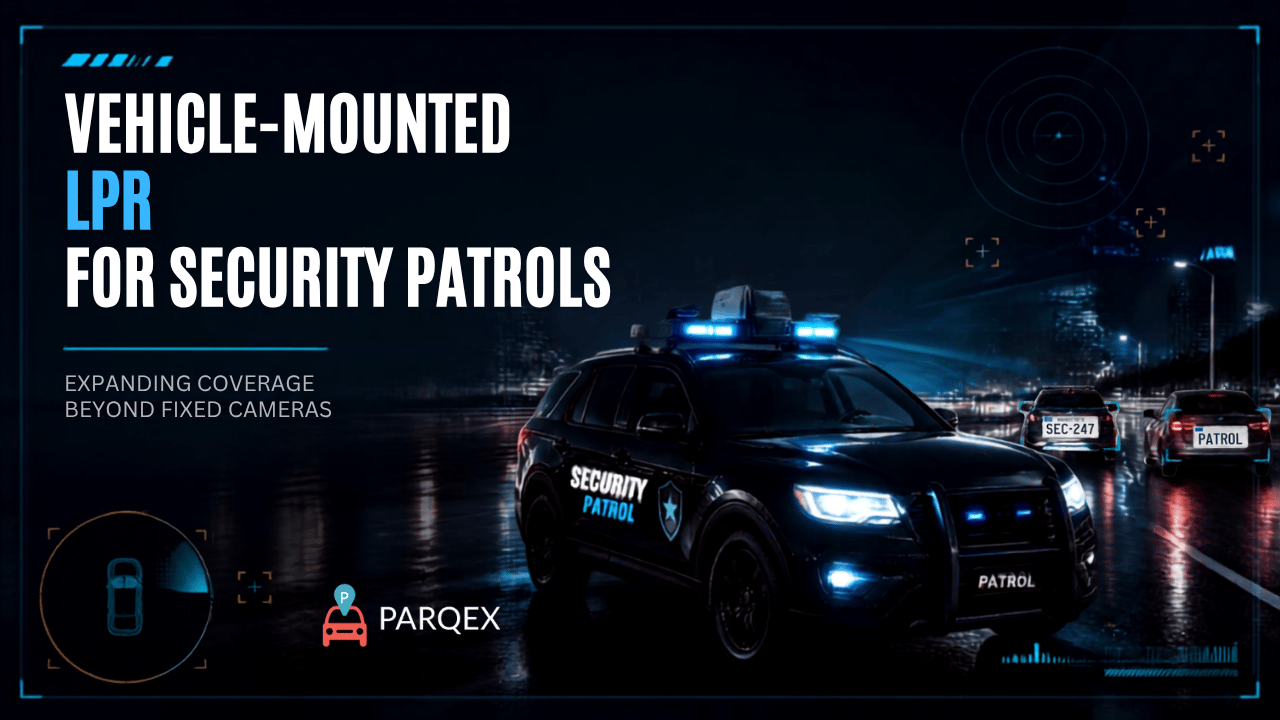
Vehicle-mounted license plate recognition can help the patrol cover that area more efficiently. Cameras mounted on the patrol vehicle read plates as the officer moves through the property. Those reads can then be compared with permits, registrations, reservations, and other authorization data.
This is one reason mobile LPR improves operational efficiency and security: it allows an officer to check more vehicles while continuing the patrol instead of stopping to type every plate.
But the scan needs context. A plate read becomes more useful when it is tied to:
- The officer and patrol vehicle
- The active route and shift
- The client property
- The applicable parking policy
- The authorization result
- Any warning, citation, or follow-up
- The evidence included in the final report
Mobile and fixed LPR also serve different roles. Fixed cameras monitor a defined entrance, exit, or zone continuously. Vehicle-mounted LPR moves with the patrol and reaches areas outside those fixed viewpoints. Handheld mobile LPR enforcement tools can support closer plate checks while an officer moves on foot.
The broader future of mobile LPR points toward more flexible in-field vehicle intelligence. For property patrols, the immediate value is practical: covering more ground and giving officers faster access to relevant vehicle information.
Parking and Access During a Security Patrol
Security patrols regularly cross into parking and access decisions. An officer may need to determine whether a vehicle belongs to a resident, guest, employee, vendor, contractor, or unauthorized user. The same patrol may encounter an open gate, an unregistered visitor, or a vehicle parked in a restricted area.
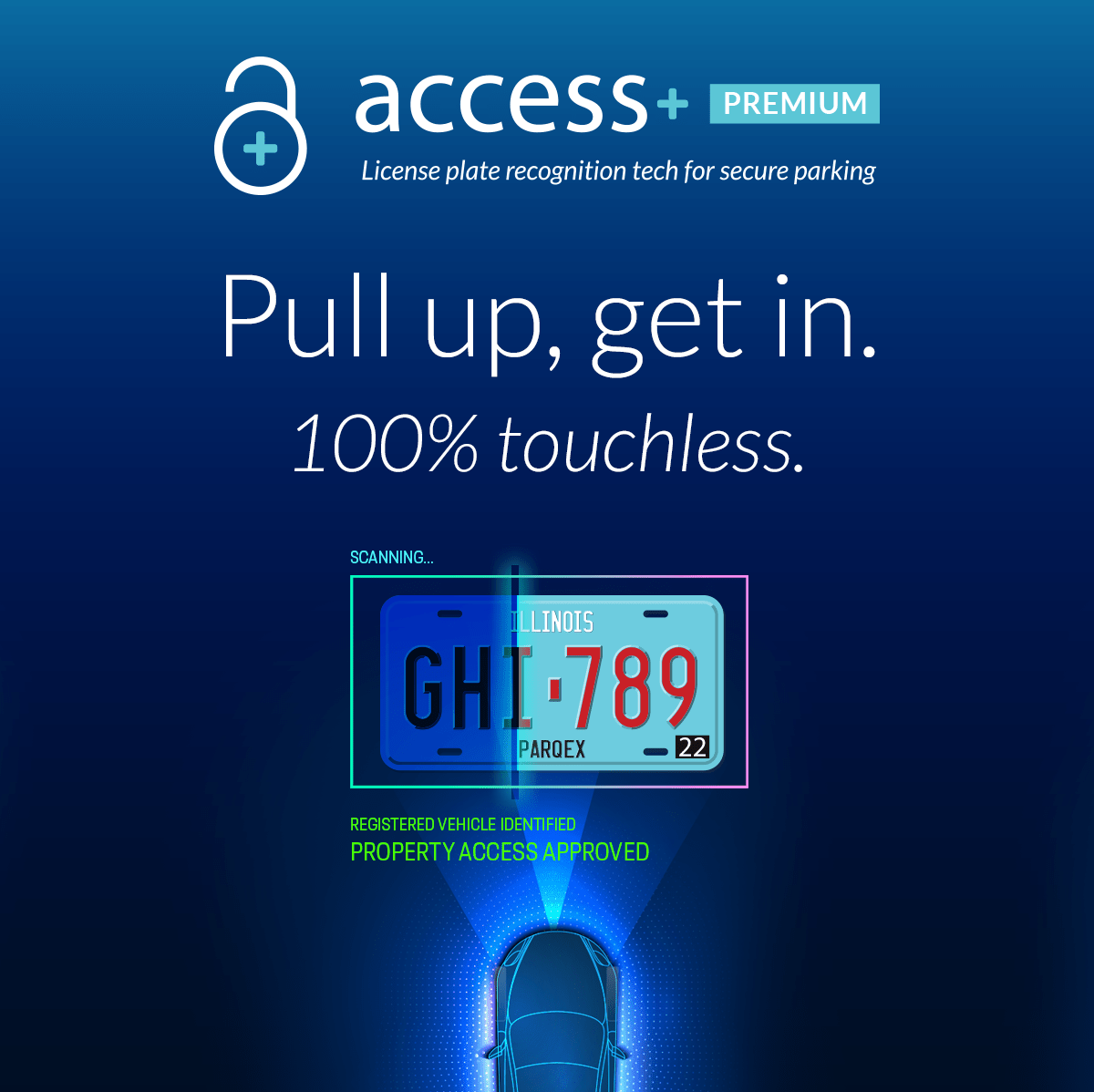
Those decisions are easier when the property’s rules and authorization data are available in the field. Parking management software can give officers access to vehicle, permit, reservation, and exception information rather than forcing them to rely on paper lists or calls to property staff.
The response should follow the property’s policy. One situation may require a reminder or warning. Another may require a citation, a supervisor notification, or a handoff to a booting or towing partner. Clear digital parking policies help the team apply those decisions consistently.
This distinction matters because the patrol officer is not simply looking for violations. They are deciding what the observation means at that property and what action, if any, is appropriate.
From Observation to Managed Incident
Most patrol findings are not dramatic emergencies. They are often smaller issues that still matter to the client: a door that will not latch, a broken light, water where it should not be, damaged fencing, a suspicious vehicle, or an amenity left open after hours.
A patrol process should make it easy to move from noticing the issue to managing it. That may involve taking a photograph, choosing an incident category, adding a note, notifying the correct contact, and recording the next action.
The follow-up is what separates an incident log from incident management.
For example, “rear gate found open at 1:12 a.m.” is useful information. A more complete record shows that the officer inspected the gate, found no visible damage, secured it, notified the property contact, and scheduled it for another check later in the shift.
Not every issue can be resolved by the officer. Some will need maintenance, management, law enforcement, emergency services, or an enforcement partner. The patrol record should still show when and where that handoff occurred.
Real-Time Supervisor Visibility
Supervisors need to know when the patrol is not going according to plan. That does not require watching every movement. It means surfacing the exceptions that deserve attention.
Examples include:
- An officer who has not checked in
- A patrol that started late
- A required checkpoint that was missed
- A route that is significantly overdue
- An urgent incident
- An unresolved issue waiting for a handoff
- A patrol vehicle or piece of equipment that is unavailable
Early visibility gives the supervisor a chance to respond during the shift. They may contact the officer, reassign a stop, provide instructions, alert the client, or arrange additional support.
It can also reveal when the patrol plan itself needs work. A checkpoint that is repeatedly late may be scheduled at an unrealistic time. A route that regularly runs over may need fewer stops or different coverage. Good management evaluates the process as well as the person performing it.
What Clients Should See in a Patrol Report
Clients should not need to interpret a vague statement such as “all areas checked.” A useful patrol report shows what was expected, what was completed, what the officer found, and what happened next.
Depending on the service, the report may include:
- Officer and shift details
- Patrol start and completion times
- Properties, routes, and checkpoints covered
- Completed tasks and inspections
- Missed or delayed activities
- Photographs and field notes
- Parking and access checks
- LPR or manual vehicle actions
- Incidents, notifications, and escalations
- Open items and final outcomes
Urgent issues may require real-time notification rather than waiting for the daily report. Routine activity can be summarized daily, while weekly or monthly reporting helps the client see recurring conditions and longer-term trends.
This reporting also supports the security company. A clear record makes service reviews more productive, gives supervisors evidence for coaching, and helps the provider demonstrate what the client is receiving beyond scheduled coverage.
Security Patrol Metrics That Actually Matter
Patrol data is useful when it helps someone make a better decision. A dashboard full of counts is less valuable if it does not show whether the property was properly covered or whether issues were handled.
Useful measures may include:
- Scheduled versus completed patrols
- On-time shift and patrol starts
- Checkpoint completion rate
- Missed or late checkpoints
- Average incident response time
- Open versus resolved issues
- Repeated incidents by location or category
- Parking and access actions
- Patrol duration and route workload
- Client notification time
These metrics need context. A high incident count does not automatically mean the officer or property is performing poorly. It may show that the patrol is documenting problems more thoroughly. Likewise, a 100% checkpoint rate means little if officers are only scanning codes without completing meaningful inspections.
Numbers should start a conversation, not replace judgment.
How Security Patrol Management Improves the Service
Clearer expectations for officers
Officers can see the route, post orders, checkpoints, tasks, contacts, and escalation steps connected to the shift. That reduces guesswork, particularly when they cover a new property.
Faster response when something goes wrong
Supervisors can address a missed stop, late patrol, or urgent incident while the shift is still underway rather than finding out from the client the next day.
Better use of walking and vehicle resources
The patrol method can reflect the property’s size, layout, risk areas, and parking needs. Mobile LPR can extend vehicle coverage without replacing the closer inspection provided by an officer on foot.
More consistent policy enforcement
Current property rules and authorization data help officers handle parking, access, and other violations according to the client’s actual policy. That supports more consistent parking compliance across different shifts and officers.
Stronger evidence for clients
Checkpoints, time stamps, photographs, notes, scans, notifications, and outcomes show the work behind the service. The client receives more than an invoice and a generic activity summary.
Better patrol planning over time
Patterns across routes, incidents, missed tasks, and property conditions can reveal where coverage needs to change. The company can improve the patrol based on what is actually happening in the field.
Every Property Needs Its Own Patrol Plan
A patrol model should be repeatable, but the patrol itself should not be generic.
A multifamily community may need a combination of amenity checks, guest parking verification, garage patrols, and after-hours resident support. LPR parking for multifamily properties may help officers validate vehicles against resident, guest, and permit records.
An industrial site may prioritize perimeters, loading areas, truck access, equipment, and safety conditions. An office property may need garage patrols, door checks, tenant access procedures, and support for late-working employees. A retail center may emphasize closing procedures, loitering, damage, and parking enforcement.
The management system can stay consistent across those clients. The routes, tasks, checkpoints, policies, and reports should reflect the property in front of the officer.
Building a More Accountable Patrol Operation
Security patrol management does not make fieldwork predictable. Officers will still encounter changing conditions, unexpected incidents, and situations that require judgment.
What it does is give that work a clearer structure.
The officer understands what the property expects. The supervisor can see when a patrol needs attention. An observation can move into a documented response instead of disappearing into a notebook. And the client receives evidence tied to the service they hired.
A completed route is only part of the story. The stronger patrol operation shows where the officer went, what they checked, what they found, and what happened afterward.
FAQ Section
Security patrol management is the process of planning, assigning, carrying out, documenting, and reviewing walking and vehicle patrols. It covers routes, checkpoints, tasks, incidents, supervisor alerts, and client reporting.
Guard tour management often focuses on routes and checkpoint verification. Security patrol management can include those functions, but it also encompasses officer assignments, vehicle patrols, parking and access checks, incident management, escalation, supervisor intervention, and client reporting.
Patrols may be verified through check-ins, time stamps, GPS or QR checkpoints, photographs, notes, completed tasks, LPR scans, incident records, and supervisor review. The best method confirms both the officer’s presence and the work performed.
Walking patrols provide closer inspection and direct interaction in areas such as buildings, stairwells, amenities, and garages. Vehicle patrols cover larger properties or multiple sites more quickly. Many operations combine both.
Mobile LPR helps officers check more license plates as they move through a property. When plate reads are compared with current authorization data and tied to the route, policy, and resulting action, they become part of the patrol record.
A patrol report may include the officer and shift, route and checkpoints, completed tasks, photographs, observations, parking and access actions, incidents, notifications, escalations, and final outcomes.