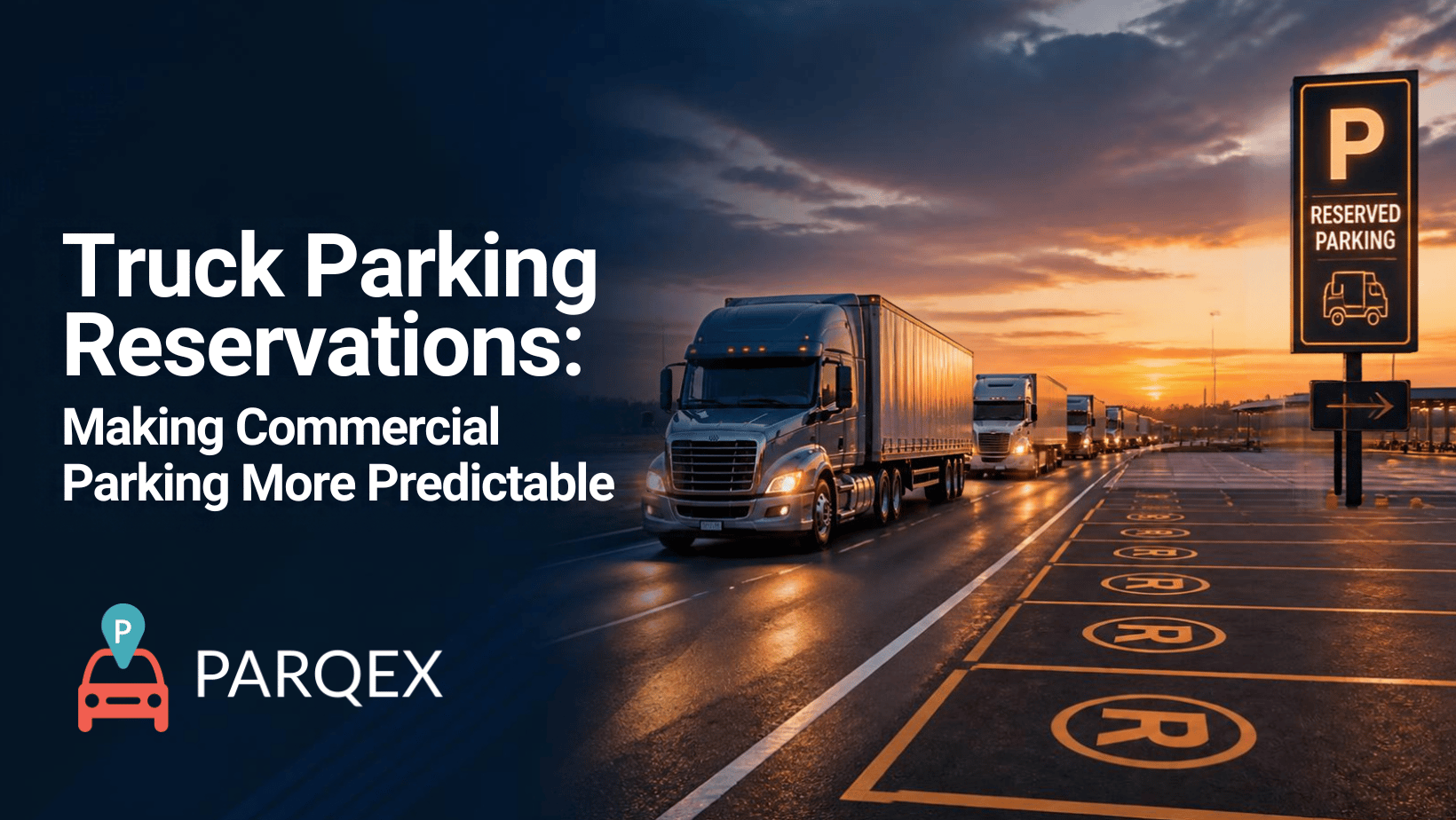



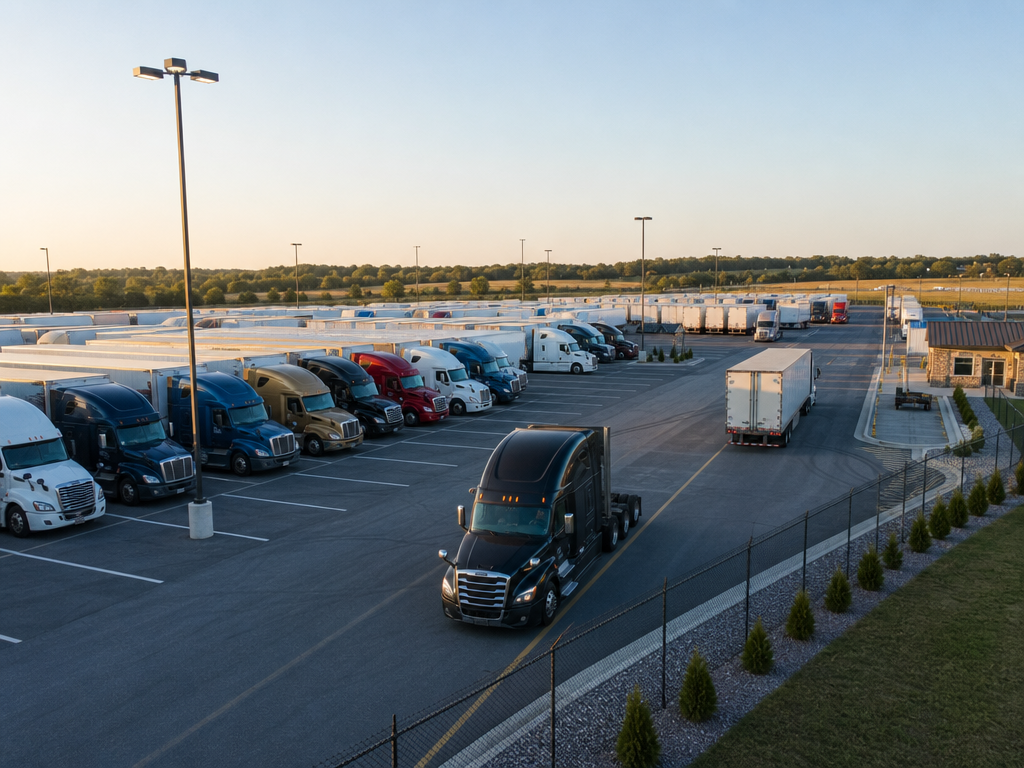
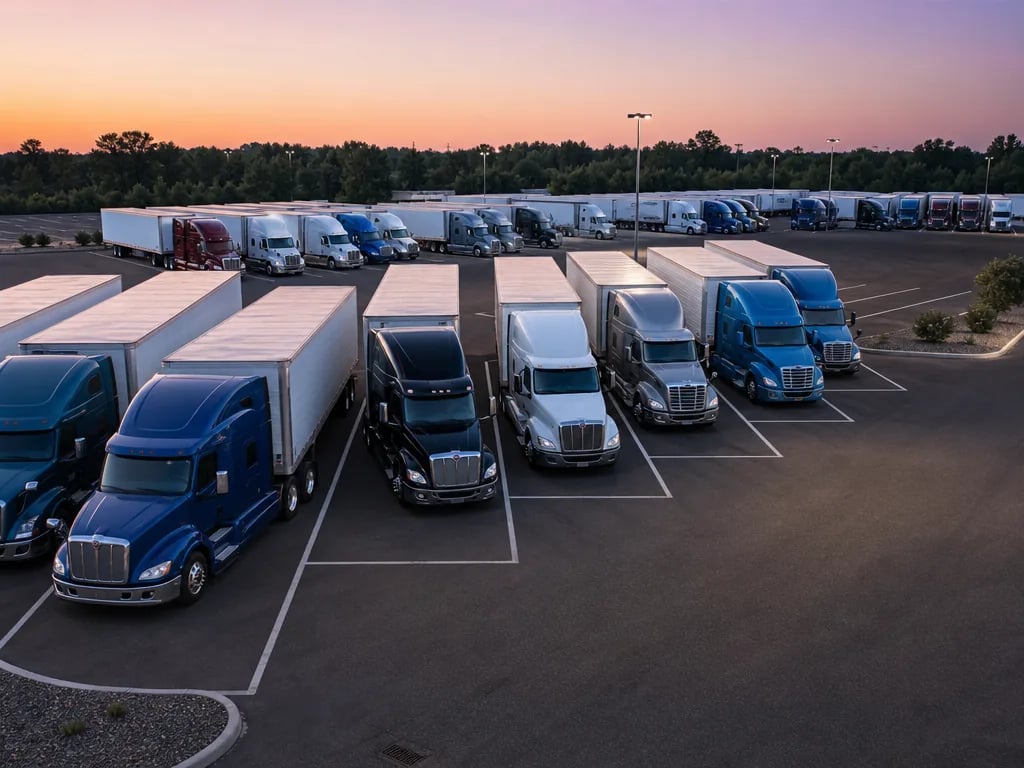
America has a truck parking problem—and solving it requires more than simply building additional parking lots.
Across major freight corridors and metropolitan areas, commercial drivers routinely face difficulty finding safe, legal, and convenient places to park. At the same time, truck parking operators, property owners, logistics facilities, and other organizations may have parking capacity that is difficult to efficiently manage, monetize, secure, and make available to drivers.
This creates an enormous opportunity for modern truck parking solutions.
Instead of treating truck parking as a static piece of real estate, technology can transform parking facilities into digitally managed operations where drivers can discover parking, reserve spaces, gain authorized access, pay digitally, and enter and exit with less friction.
For parking operators and property owners, the same technology can help automate reservations, access control, payments, parking enforcement, occupancy management, and reporting.
That is the opportunity behind ParqEx Truck Parking: bringing the technology and operational infrastructure needed to make commercial truck parking easier to operate—and easier for drivers to use.
Why the Truck Parking Shortage Matters
Truck parking is more than a convenience issue. It affects transportation efficiency, driver safety, freight movement, land use, and the economics of the trucking industry.
The Federal Highway Administration has identified truck parking shortages as a national safety concern. FHWA research has found that shortages are particularly problematic along major freight corridors and around large metropolitan areas.
The consequences are visible across the transportation network.
When drivers cannot find appropriate parking, they may have to spend additional time searching for a space, stop earlier than necessary to secure parking, alter their routes, or use locations that were never intended for commercial truck parking.
Meanwhile, existing parking assets may not be operating as efficiently as they could.
The fundamental challenge is therefore not just:
Where can we build more truck parking?
It is also:
How can we make existing and new truck parking capacity easier to discover, reserve, access, manage, enforce, and monetize?
Technology can play a major role in answering that question.
The Truck Parking Problem Is Also an Operations Problem
Creating a parking lot is relatively straightforward.
Operating a high-performing commercial truck parking facility is considerably more complicated.
Operators need to answer questions such as:
- Who is authorized to park?
- Which spaces are available?
- Can drivers reserve parking before arriving?
- How does a driver enter the facility?
- How long can a truck remain parked?
- What should parking cost?
- How are payments collected?
- What happens when a reservation expires?
- How are unauthorized vehicles identified?
- How does management know who is currently on the property?
- How can parking availability be distributed to more drivers?
- How can underutilized parking capacity generate additional revenue?
When these processes depend on disconnected systems or manual administration, operating truck parking at scale becomes difficult.
A modern truck parking management platform can bring these workflows together.
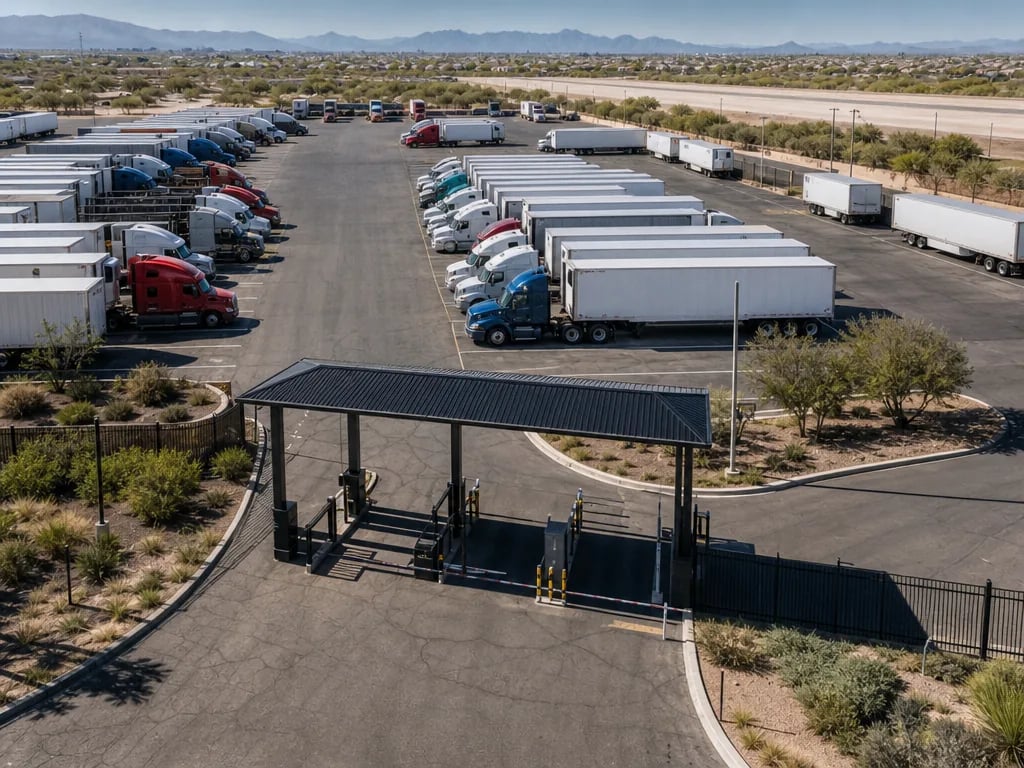
What Is a Smart Truck Parking Solution?
A smart truck parking solution combines physical parking infrastructure with software and automation.
Rather than requiring operators to manually coordinate reservations, access, payments, and parking activity, the parking facility becomes digitally manageable.
Depending on the property and operating model, a smart truck parking ecosystem can include:
Online Parking Reservations
Drivers can find available parking and reserve a space digitally rather than arriving without knowing whether capacity will be available.
Digital Payments
Parking transactions can be processed electronically, reducing dependence on cash, attendants, and manual payment workflows.
Automated Access Control
Authorized drivers can receive controlled access to secured parking areas based on their reservation or parking permissions.
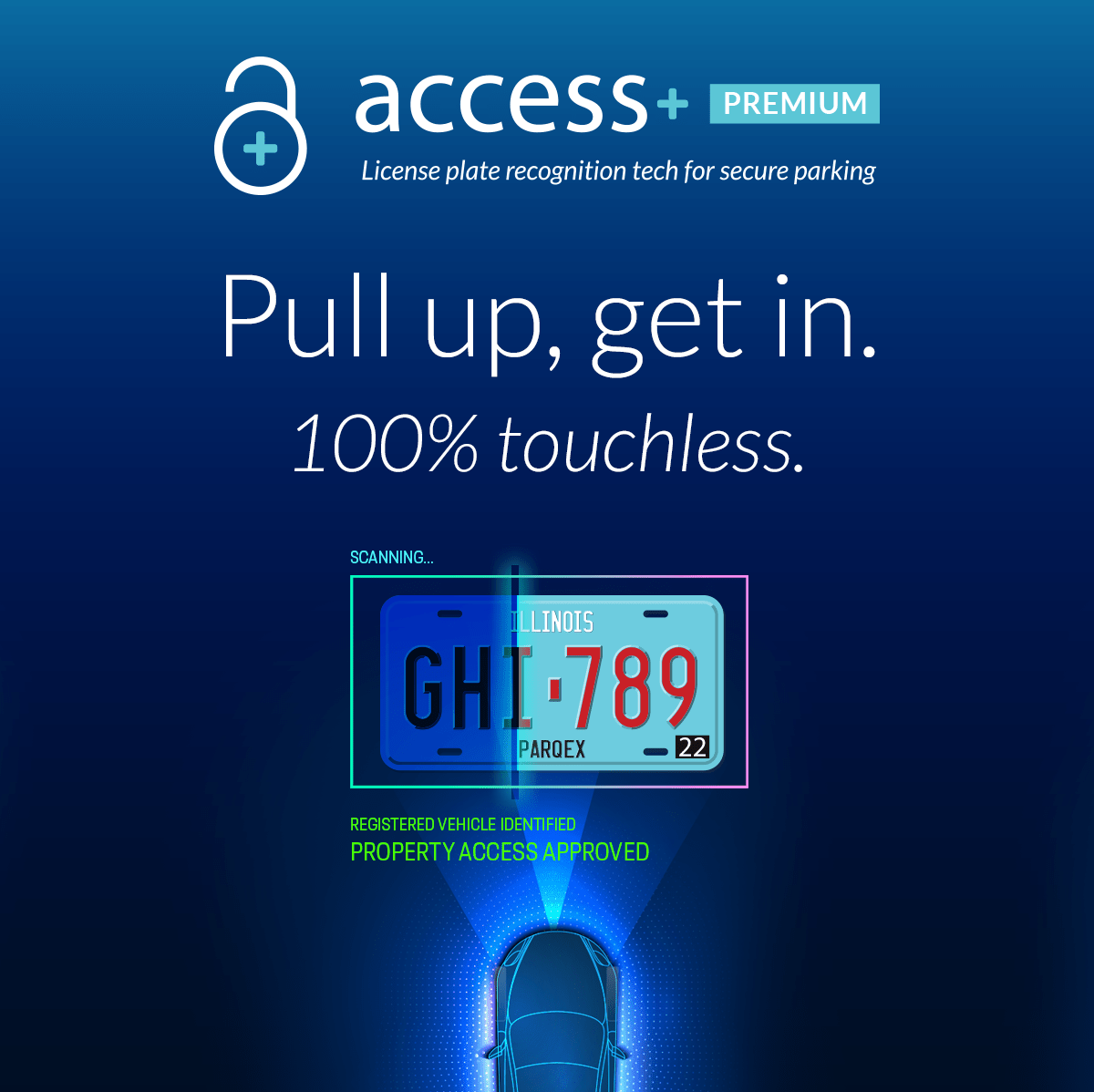
License Plate Recognition
LPR technology can identify vehicles through their license plates and support automated parking access and management workflows.
Parking Enforcement
Operators need a reliable way to determine which vehicles are authorized and which are not.
Digital parking records can make it easier for enforcement personnel to validate parking rights and respond to unauthorized vehicles.
Occupancy and Operational Data
Digital parking systems can provide operators with information about reservations, parking activity, transactions, utilization, and revenue.
Together, these capabilities can turn a traditional parking lot into a connected commercial truck parking operation.
Why Truck Parking Reservations Matter
One of the most frustrating aspects of truck parking is uncertainty.
A driver may know that parking facilities exist along a route but still have no guarantee that a space will be available when needed.
This becomes particularly important at night.
Federal research has repeatedly identified nighttime parking availability as a major challenge. FHWA’s Jason’s Law research found that drivers experienced particularly significant difficulty finding safe truck parking during evening and overnight periods.
A truck parking reservation system changes the experience.
Instead of simply hoping that parking will be available, drivers can potentially identify a participating facility, review parking options, reserve parking, and arrive with greater confidence.
For drivers, that creates predictability.
For operators, reservations create something equally valuable: visibility into demand.
An operator can begin understanding:
- When parking demand peaks
- How far in advance drivers reserve
- Average parking duration
- Occupancy patterns
- Revenue by day or time period
- Repeat usage
- Capacity constraints
Truck parking therefore becomes measurable rather than anecdotal.
Automated Access Can Eliminate a Major Operational Bottleneck
A reservation is only one part of the parking journey.
The next question is:
How does the driver actually get into the parking facility?
Traditional access methods can create friction.
Drivers may need to call someone, interact with an attendant, obtain a physical credential, enter a static gate code, or wait for someone to provide access.
Those approaches become increasingly difficult when facilities operate around the clock.
Truck drivers do not necessarily arrive during normal business hours.
A driver could arrive at 11:30 p.m., 2:00 a.m., or 5:00 a.m.
The parking facility needs to work regardless.
Automated parking access helps bridge the gap between the digital reservation and the physical property.
With an integrated system such as ParqEx Access+, access permissions can become part of the parking workflow.
The goal is simple:
The right vehicle gets access to the right parking facility at the right time.
That can reduce manual intervention while maintaining greater control over who enters the property.
LPR Technology Can Make Truck Parking More Seamless
License Plate Recognition, or LPR technology, can take parking automation another step further.
Instead of asking every driver to use a physical credential, access card, ticket, or manually entered code, the vehicle itself can become part of the authorization process.
An LPR-enabled system can identify the vehicle’s license plate and compare it against authorized parking records.
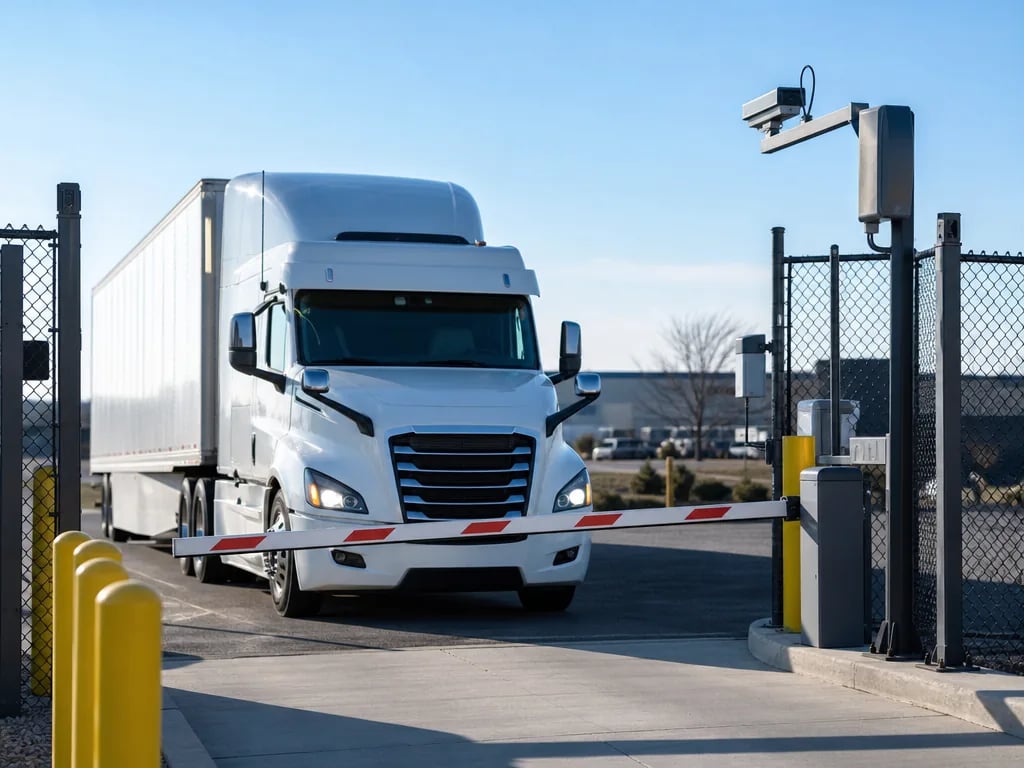
For truck parking operations, this can create several advantages.
Faster Entry and Exit
Drivers can spend less time dealing with gates, tickets, credentials, or attendants.
Better Vehicle Identification
Operators can associate parking activity with specific registered vehicles.
Reduced Credential Sharing
A physical card or access code can potentially be shared. A registered license plate creates a stronger relationship between parking authorization and the vehicle using it.
Improved Enforcement
Vehicle identification can help operators determine whether a truck is authorized to be on the property.
Better Operational Data
Entry and exit activity can contribute to a more complete picture of facility utilization.
For secured truck parking facilities, the combination of reservations + LPR + automated access can create a substantially more streamlined parking experience.
Truck Parking Technology Can Help Property Owners Generate Revenue
The truck parking shortage also creates an important real estate opportunity.
Across the country, there are privately controlled parking areas and parcels that may have unused or underutilized capacity.
Examples can include certain:
- Commercial parking facilities
- Industrial properties
- Logistics facilities
- Warehouses
- Transportation properties
- Surface parking lots
- Mixed-use developments
- Private parking operators
- Large landowners
Not every property is suitable for truck parking. Vehicle size, zoning, ingress and egress, pavement capacity, neighborhood impact, security, insurance, and local regulations all need to be considered.
However, where commercial truck parking is appropriate, technology can make monetization considerably easier.
Instead of building a manual parking business from scratch, owners can use a truck parking management platform to establish parking rules, sell parking, control access, collect payments, and monitor activity.
That transforms unused asphalt or parking capacity into a potentially productive real estate asset.
From Parking Lot to Revenue-Producing Asset
Consider a property with truck-compatible parking spaces that sit unused during certain periods.
Without a digital system, monetizing those spaces can require significant operational effort.
Someone must advertise the parking.
Someone must accept reservations.
Someone must process payments.
Someone must tell drivers where to park.
Someone must provide access.
Someone must confirm when parking expires.
Someone must handle unauthorized vehicles.
Someone must reconcile transactions.
As the number of parking spaces and transactions grows, those operational requirements grow with it.
Automation changes the economics.
A technology platform can handle significant portions of the parking lifecycle digitally.
That can make it practical for more property owners and parking operators to participate in the commercial truck parking market.
A Better Driver Experience Matters
Truck parking technology should not only benefit the operator.
It should make parking easier for the driver.
A strong driver experience should minimize uncertainty and unnecessary steps.
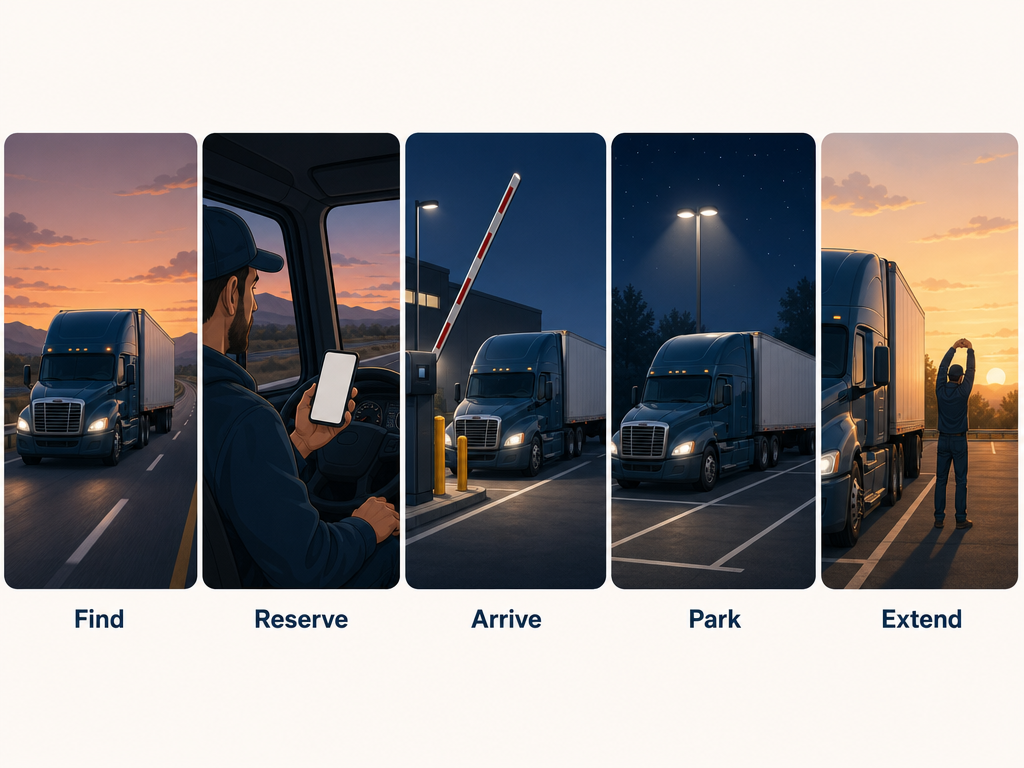
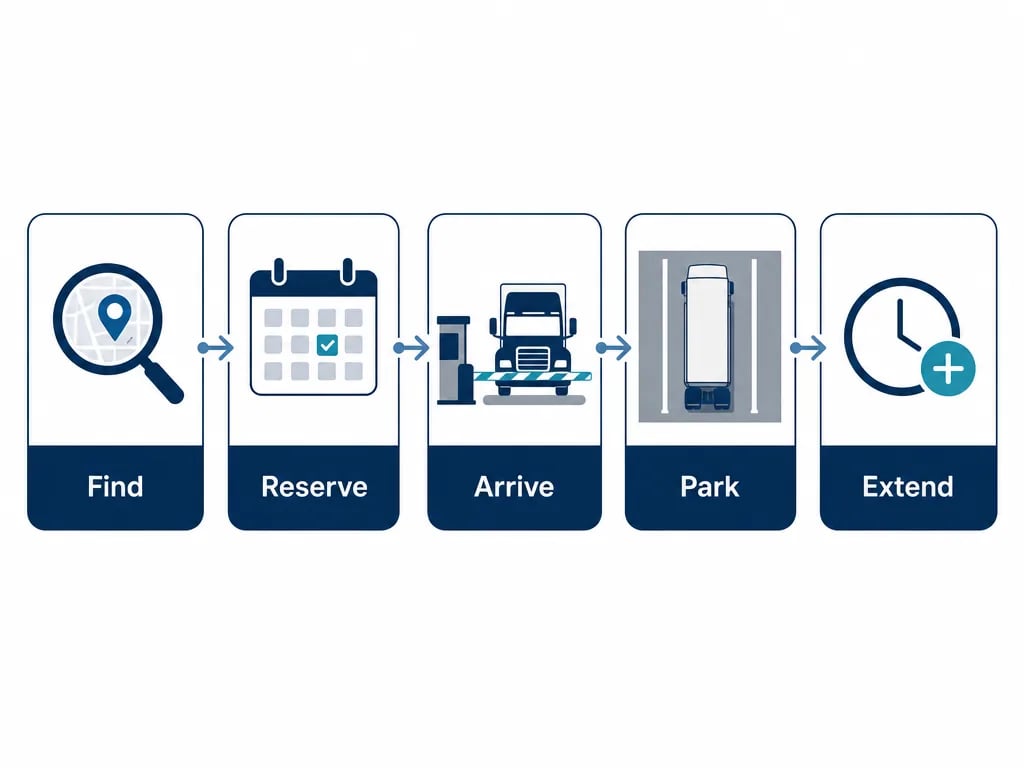
Ideally, the process looks something like this:
- Find parking.
- Review availability and parking details.
- Reserve the appropriate parking option.
- Pay digitally.
- Receive arrival and access instructions.
- Enter the facility.
- Park for the authorized period.
- Extend the reservation when permitted and needed.
- Exit the facility.
Every unnecessary step creates friction.
Every phone call creates additional operating cost.
Every unclear instruction creates another potential support request.
The best truck parking technology should therefore make the complicated processes happening behind the scenes feel simple to the driver.
Parking Enforcement Is Critical
Reservations and payments only work when parking rules can be enforced.
Imagine a facility with 100 spaces.
If 15 unauthorized trucks occupy spaces overnight, the operator may effectively have only 85 spaces available for paying customers.
Even worse, a driver who legitimately reserved one of those spaces could arrive and discover that unauthorized vehicles have consumed available capacity.
That damages trust in the reservation system.
Effective truck parking enforcement therefore protects more than parking revenue.
It protects the customer experience.
With digital authorization records and tools such as the ParqEx Enforcer app, parking personnel can more efficiently determine whether vehicles have valid parking rights.
Instead of relying entirely on paper permits, handwritten lists, or disconnected records, enforcement can operate from current parking data.
The Parking Marketplace Can Help Drivers Discover Capacity
Creating parking capacity solves only half of the equation.
Drivers must also be able to find it.
This is where a parking marketplace becomes valuable.
A marketplace can connect parking demand with participating parking inventory.
For parking operators, this creates an additional distribution channel.
For drivers, it creates another way to discover and reserve parking.
This marketplace model is particularly powerful because truck parking is geographically dependent.
A parking space 100 miles away has little value to a driver who needs to stop near a particular freight corridor, customer, warehouse, distribution center, or metropolitan area.
Digital discovery can help connect the driver with parking capacity where and when it matters.
White Label Truck Parking Solutions
Not every organization wants its truck parking operation presented under another company’s consumer brand.
Large parking operators, real estate organizations, logistics companies, transportation organizations, and other enterprises may want to deliver the parking experience under their own brand.
That is where white label parking solutions become important.
A white label approach can allow organizations to leverage established parking technology while maintaining a branded customer experience.
Instead of developing an entire parking technology stack internally, an organization can focus on its parking operation and customer relationships while using an existing technology infrastructure behind the scenes.
For organizations planning to operate multiple truck parking facilities, this can dramatically reduce the complexity associated with building proprietary parking software.
Who Can Benefit From Smart Truck Parking Technology?
The market extends beyond traditional truck stops.
Potential users of commercial truck parking technology can include:
Truck Parking Operators
Existing operators can digitize reservations, access, payments, and enforcement.
Commercial Real Estate Owners
Properties with appropriate unused parking capacity may be able to establish new revenue streams.
Industrial and Logistics Properties
Facilities near freight corridors can use technology to better control truck access and parking.
Fleet Operators
Fleet parking requires controlled access, vehicle authorization, and reliable operational visibility.
Warehouses and Distribution Centers
Truck staging, waiting, and overnight parking can create significant operational challenges.
Municipalities and Public Agencies
Public-sector organizations continue to examine ways to improve truck parking availability, safety, and freight mobility.
Parking Management Companies
Existing parking operators can expand their technology and management capabilities into commercial vehicle parking.
What Should Operators Look for in a Truck Parking Management Platform?
Not all parking technology is designed for the complexity of commercial truck parking.
When evaluating a solution, operators should consider the entire parking lifecycle.
1. Can Drivers Reserve Parking Online?
A digital reservation process is foundational for pre-booked truck parking.
2. Can the Platform Process Payments?
Reservations and payments should work together rather than requiring separate systems.
3. Can It Integrate With Physical Access?
Digital parking authorization has significantly greater value when it can connect to the facility itself.
4. Does It Support LPR?
License plate recognition can create a more automated vehicle-based access experience.
5. Does It Support Enforcement?
Unauthorized parking can undermine both revenue and customer satisfaction.
6. Can Operators See Their Parking Activity?
Management should have visibility into reservations, utilization, transactions, and operational performance.
7. Can the Solution Scale?
A system that works for one facility should ideally support additional parking locations as the operation grows.
8. Can It Support the Operator’s Brand?
For larger organizations, white label capabilities may be strategically important.
9. Can It Help Distribute Parking Inventory?
Technology becomes more valuable when it can help connect available parking with drivers looking for spaces.
Why an Integrated Truck Parking Platform Beats Disconnected Systems
Operators can assemble a parking operation from separate products.
One platform handles payments.
Another handles reservations.
Another controls the gate.
Another manages LPR cameras.
Another handles enforcement.
Another provides reporting.
Technically, that can work.
Operationally, however, it can create unnecessary complexity.
The more systems involved, the more integrations, databases, credentials, vendors, reconciliation processes, and potential failure points the operator must manage.
An integrated approach provides a different model.
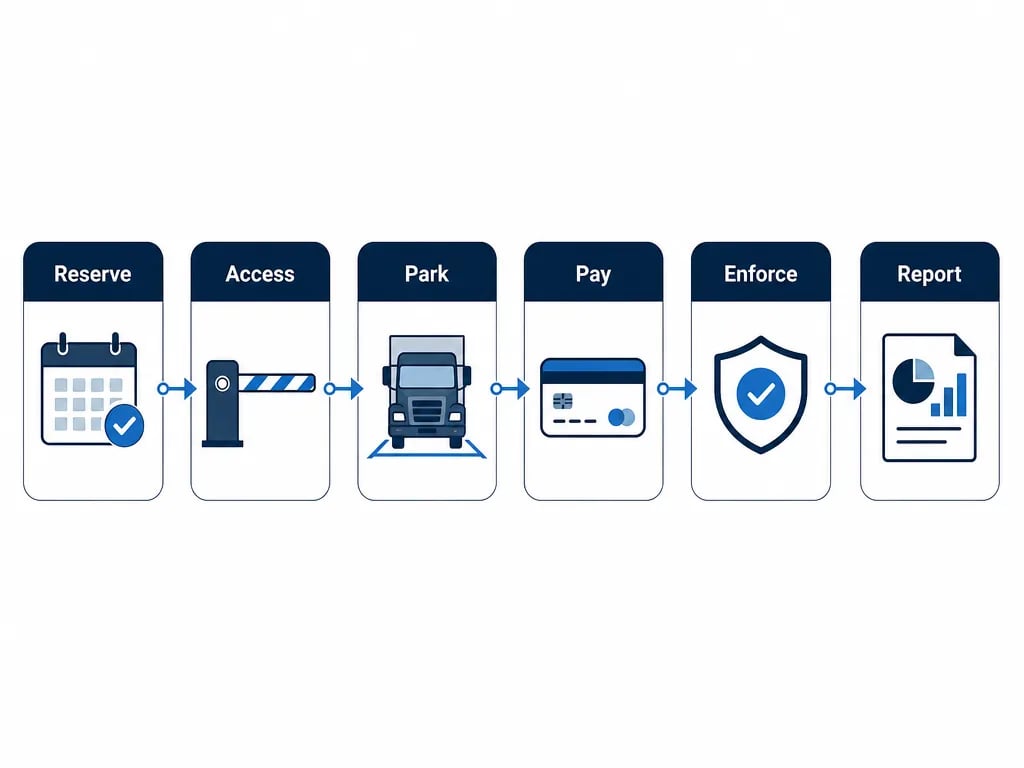
The reservation establishes authorization.
Authorization can trigger access.
The vehicle can be associated with that authorization.
Enforcement can validate the parking session.
Payment can be tied to the reservation.
Management can see the resulting activity.
That connected workflow is where a smart truck parking platform becomes much more powerful than a collection of individual parking tools.
Truck Parking Data Can Improve Decision-Making
Digitizing parking also creates data.
That matters because truck parking demand is dynamic.
FHWA has emphasized the importance of measurement and data in understanding parking supply, demand, safety, and driver needs.
A digitally managed facility can develop its own operational intelligence.
Operators can begin asking questions such as:
- What is our average occupancy?
- Which days have the highest demand?
- What time does the facility typically fill?
- How long do trucks stay?
- How much revenue does each parking space generate?
- What percentage of reservations are made in advance?
- How frequently do drivers extend?
- Which facilities are underutilized?
- Where should additional capacity be created?
Over time, this data can inform pricing, capacity planning, staffing, enforcement, investment, and expansion decisions.
The Future of Truck Parking Is Connected
The truck parking industry is moving toward a model in which the physical parking space and the digital parking experience increasingly operate as one system.
Drivers should be able to discover parking before arriving.
Reservations should communicate with access systems.
Vehicle identity should support authorization.
Payments should happen digitally.
Operators should know how their facilities are being used.
Enforcement teams should have access to current authorization information.
Owners should be able to understand the financial performance of their parking assets.
And organizations operating multiple facilities should be able to manage them through a scalable technology infrastructure.
This is not simply about putting software on top of a parking lot.
It is about transforming parking into a connected operation.
ParqEx: Technology for the Next Generation of Truck Parking
ParqEx brings together technologies that can support this new approach to commercial truck parking.
The platform can help connect critical elements of the parking lifecycle, including:
- Parking reservations
- Digital payments
- Access+ access-control technology
- License Plate Recognition (LPR)
- Parking management
- Parking Marketplace capabilities
- Enforcer tools
- White label solutions
- Operational reporting
For property owners, parking operators, and organizations exploring commercial truck parking, this creates an opportunity to manage parking as a technology-enabled asset rather than simply a physical lot.
And for drivers, the objective is equally important:
Make truck parking easier to find, easier to reserve, and easier to use.
The Truck Parking Shortage Creates an Opportunity to Build Smarter
America unquestionably needs more truck parking capacity.
But capacity alone will not solve every part of the problem.
The industry also needs better ways to discover, reserve, access, operate, enforce, and monetize truck parking.
That is where technology can have an immediate impact.
A digitally managed truck parking network can help operators make better use of existing capacity while giving property owners new tools for bringing appropriate parking inventory into the market.
The result can be a better experience for everyone involved:
Drivers gain greater parking predictability.
Operators gain greater control.
Property owners gain new monetization opportunities.
Fleet and logistics organizations gain better parking infrastructure.
Communities benefit when commercial vehicles have appropriate places to park.
The truck parking challenge is substantial.
The opportunity to build a smarter parking ecosystem is just as significant.
Ready to Explore Smart Truck Parking?
If you own, operate, manage, or are developing commercial truck parking, discover how ParqEx can help you automate and scale your operation.
Explore ParqEx Truck Parking →
Learn how ParqEx can help with reservations, payments, access control, LPR, parking management, enforcement, and revenue generation—and discuss the right technology strategy for your truck parking operation.