



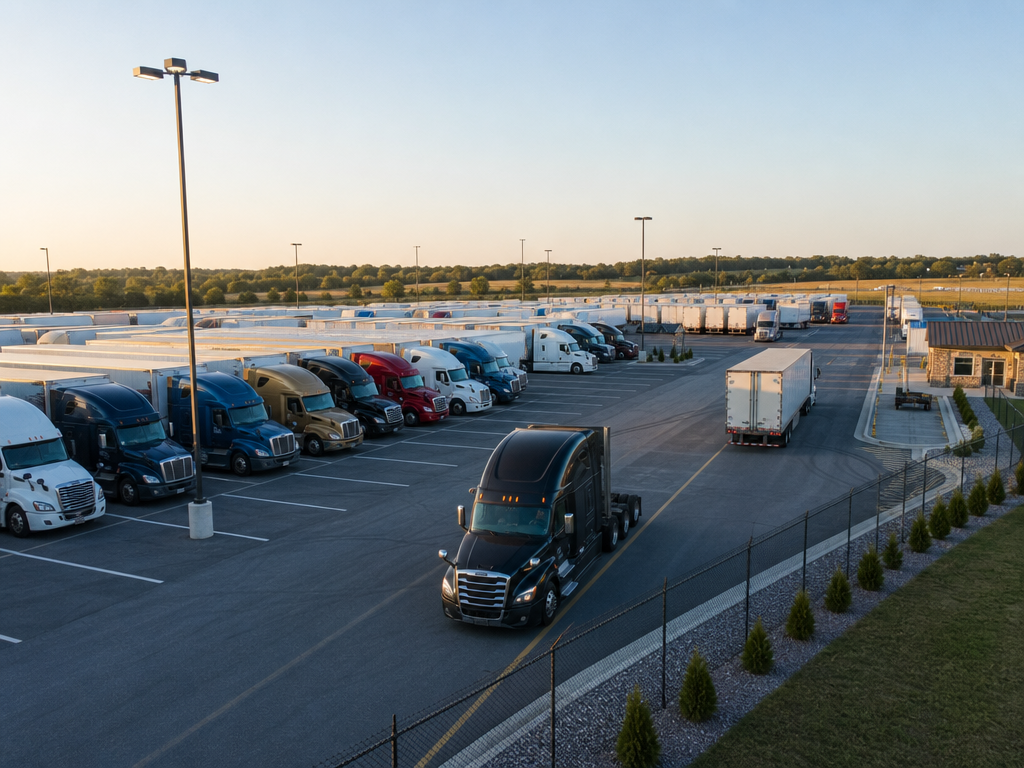
Truck parking is usually discussed as a capacity problem.
There aren’t enough safe, legal places for commercial drivers to park, particularly when drivers need to stop overnight or reach their hours-of-service limits. Building more truck parking is certainly part of the solution.
But there’s another side of the problem that gets considerably less attention: managing the parking that already exists.
A truck parking facility can have dozens or hundreds of spaces and still struggle with unauthorized vehicles, uncertain availability, overstays, inefficient enforcement, manual payments, or drivers who have no way to know whether a space will be waiting for them when they arrive.
Meanwhile, other properties may have sufficient parking capacity that sits unused during certain hours, with no effective way to make it available to commercial drivers.
That’s where truck parking management comes in.
Modern truck parking management gives operators greater control over who parks, when they park, how spaces are reserved and paid for, and how parking rules are enforced. Just as importantly, it can help property owners understand how their parking is actually being used—and whether that parking could be generating more value.
What Is Truck Parking Management?
Truck parking management is the process of organizing, controlling, and optimizing parking for commercial trucks and their drivers.
It can include everything from making spaces available for reservation to verifying vehicles when they arrive, collecting payment, monitoring parking activity, enforcing rules, and analyzing utilization afterward.
Instead of treating a truck parking lot as passive pavement, management turns it into an active operation.
Modern truck parking solutions can bring together several pieces of that operation, including:
- Parking availability
- Reservations
- Driver and vehicle registration
- Digital payments
- Access permissions
- License plate recognition (LPR)
- Parking policies
- Occupancy and utilization data
- Enforcement workflows
- Revenue reporting
The exact needs vary by property. A truck stop may be managing hundreds of parking sessions each night, while a commercial property may simply want to make 20 unused spaces available overnight.
In either case, the underlying challenge is the same: making parking inventory easier to use without sacrificing the property owner’s control over it.
Truck Parking Isn’t Only a Supply Problem
The shortage of truck parking in the United States is a serious infrastructure challenge. Drivers can spend valuable time searching for safe parking, and a lack of available spaces can push trucks toward shoulders, ramps, retail lots, and other areas never intended for overnight commercial parking.
We’ve previously explored some of those issues in How to Eliminate Truck Parking Hardships.
Increasing physical parking supply matters. But supply alone doesn’t tell the whole story.
Consider a truck parking facility with 100 spaces.
If several spaces are occupied by unauthorized vehicles, others contain trucks that have overstayed, and the operator doesn’t have reliable information about which reserved spaces are actually being used, the facility may effectively have far fewer than 100 spaces available.
The parking exists. The problem is how the parking is being managed.
Better management can’t manufacture new physical spaces, but it can help operators make better use of the inventory they already have.
Reservations Give Drivers Greater Certainty
For commercial drivers, finding parking isn’t always something that can be left until the end of the day.
Drivers operate within hours-of-service requirements, making the ability to locate a safe place to stop especially important. Searching multiple lots for an open space can consume time and fuel at exactly the point when both matter.
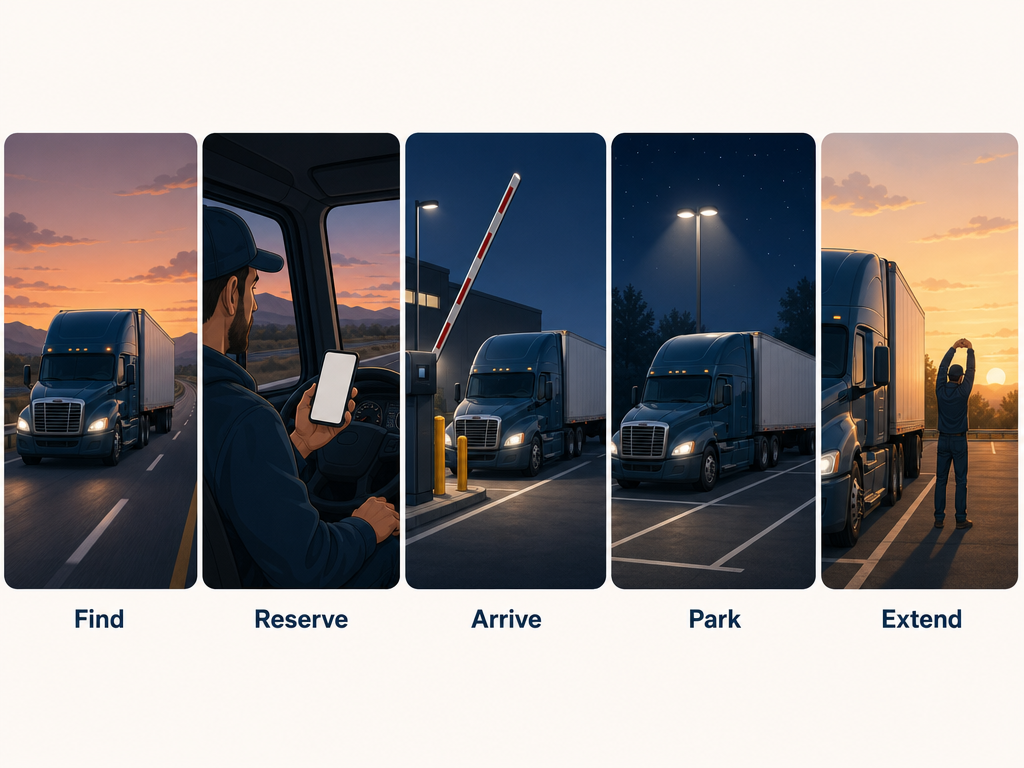
Truck parking reservations can remove some of that uncertainty.
Instead of arriving and hoping a space is available, a driver can secure parking in advance.
For the operator, that reservation also creates useful information. The property knows which vehicle is expected, when it should arrive, how long the parking session should last, and whether payment has been completed.
ParqEx’s Truck Parking Marketplace demonstrates how available parking inventory can be connected with commercial drivers actively looking for somewhere to park.
The result is more than convenience. Reservations can help transform unknown parking demand into something operators can anticipate and manage.
Knowing Who Is Actually Parked Matters
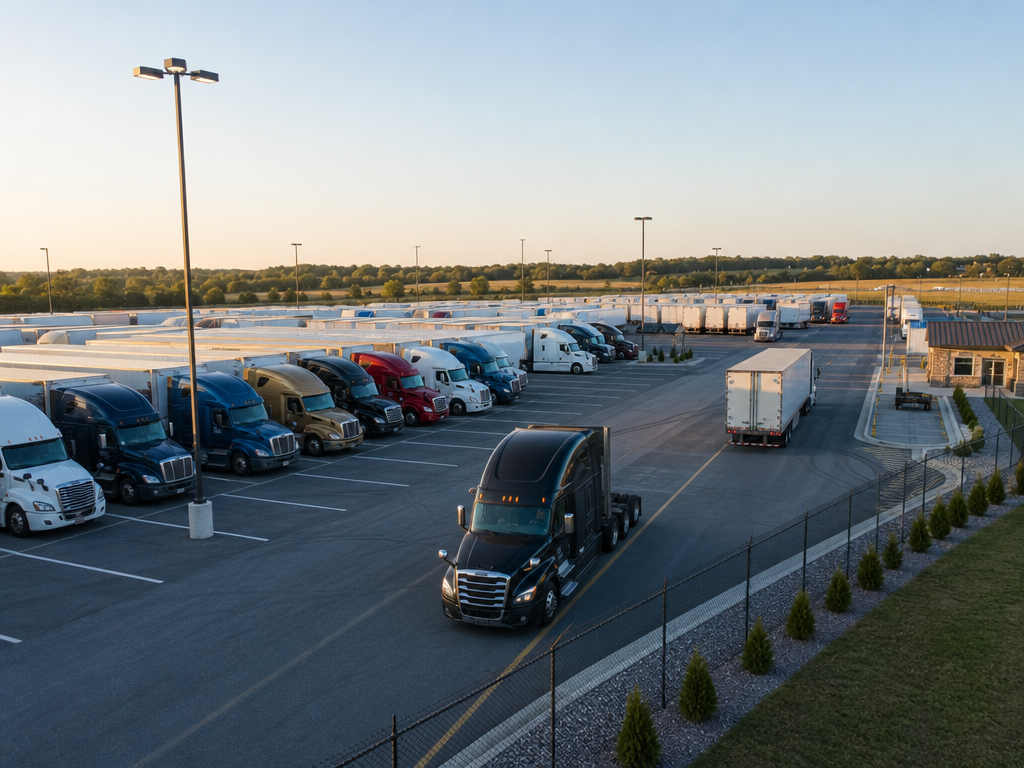
A truck sitting in a parking space tells an operator very little by itself.
Is that driver a paying customer? Do they have a reservation? Are they part of an approved fleet? Did their parking session expire two hours ago? Are they even supposed to be on the property?
Without connected vehicle and parking information, answering those questions can require staff to manually investigate each vehicle.
Digital authorization changes that.
A parking session can be associated with a driver’s vehicle information, reservation, payment, and permitted parking period. Operators can then distinguish between legitimate parking activity and vehicles requiring attention.
That becomes especially valuable as a facility grows.
Manually checking ten trucks may be manageable. Manually checking hundreds every night is an operation of its own.
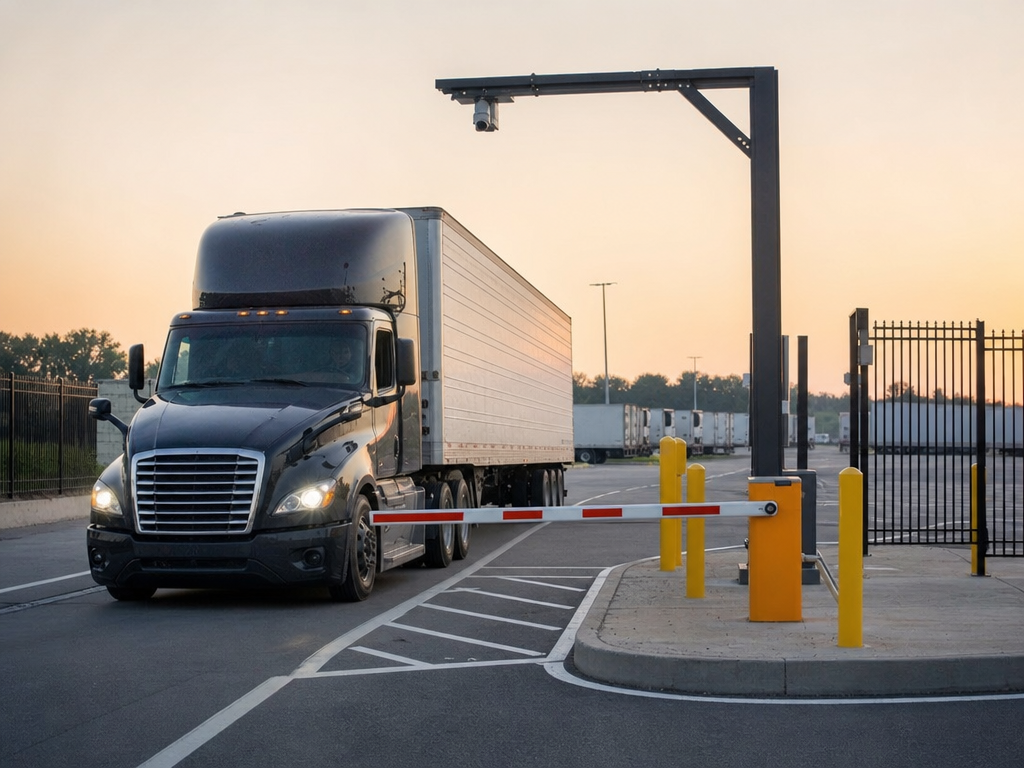
LPR Can Make Truck Parking Management More Efficient
License plate recognition can further reduce that manual workload.
LPR identifies vehicles based on their license plates. When those plates are connected to parking management information, operators gain more context about the vehicles occupying their property.
Instead of simply seeing a truck, staff may be able to determine whether its plate corresponds to an active reservation or a valid parking session.
Mobile LPR can also help security or parking personnel verify vehicles while moving through larger facilities.
ParqEx has previously covered how mobile LPR improves operational efficiency and security by reducing the need for repetitive manual vehicle checks.
For expansive truck parking lots, that efficiency can become particularly valuable.
Enforcement Is Part of Truck Parking Management
Parking rules aren’t particularly useful if operators have no practical way to identify when they’re being violated.
And unauthorized parking isn’t the only problem.
Truck parking violations can include:
- Parking without authorization
- Expired reservations
- Unpaid parking sessions
- Overstaying a permitted period
- Occupying the wrong space
- Parking in restricted areas
- Blocking access or operational areas
When parking information is fragmented across spreadsheets, payment systems, handwritten records, or staff knowledge, enforcement becomes slower and less consistent.
A connected parking operation gives enforcement personnel better information before action is taken.
Instead of simply finding a vehicle in a questionable location, staff can verify its parking status and determine whether a legitimate violation has occurred.
We’ve explored that challenge specifically in Truck Parking Enforcement: Solving the Ever-Present Problem with ParqEx.
Enforcement isn’t separate from parking management. It’s one of the mechanisms that keeps managed inventory available for the drivers who are actually supposed to use it.
Existing Properties Could Help Unlock More Truck Parking
One of the most interesting opportunities in truck parking isn’t necessarily a newly constructed truck lot. It’s parking that already exists.
Commercial and industrial properties can have substantial parking capacity that isn’t required around the clock. A property may need every available space during business hours but have sections of its parking sitting empty overnight.
That doesn’t automatically mean the property should open its lot to trucks.
It does mean the inventory deserves a closer look.
With the right management structure, an owner can define exactly how that parking may be used.
For example:
- Which spaces can be offered?
- What hours are they available?
- Which vehicles are permitted?
- Can drivers reserve in advance?
- How much should parking cost?
- When must trucks leave?
- How will vehicles be verified?
- What happens if someone overstays?
Those controls matter because monetizing unused parking shouldn’t mean giving up control of the property.
Instead, technology can set rules for when parking inventory becomes available and automatically return it to its primary use when the parking window ends.
Truck Parking Can Become a Revenue-Producing Asset
Parking has value. But that value isn’t always captured simply because the spaces exist.
A property might have parking sitting empty for eight or twelve hours every night. Another may have excess capacity on weekends. A logistics facility may have designated areas that could accommodate additional vehicles during predictable periods.
When appropriate parking inventory can be made available to commercial drivers, the property may be able to create a new revenue stream from an asset it already owns.
This is part of a much broader shift in how property owners think about parking.
As we discuss in Parking Space Revenue, underused parking doesn’t necessarily need to remain an operating expense or idle piece of real estate. With the right management tools, parking inventory can become a measurable revenue-producing asset.
Truck parking presents an especially interesting use case because driver demand can overlap with periods when other properties experience low parking demand.
A property used heavily during the day may have available capacity at night—exactly when commercial drivers may be looking for somewhere to stop.
Truck parking management provides the operational layer needed to connect those two needs.
Utilization Data Helps Operators Make Better Decisions
A full parking lot isn’t automatically an efficient parking lot. Operators need to understand what’s happening behind the occupancy number.
How often does the facility reach capacity? Which hours experience the most demand? How long do trucks typically stay? How often are reservations canceled? How often do drivers reserve but never arrive? Are particular sections consistently underused? How frequently do overstays occur? Could pricing or availability change by the time of day?
Without reliable parking data, these questions are difficult to answer.
Utilization data allows operators to identify patterns instead of relying on assumptions. That information can influence everything from pricing and staffing to enforcement and future expansion. It can also help determine whether a perceived capacity shortage actually requires construction.
If existing spaces aren’t turning over efficiently or portions of the facility remain underused, operational changes may create additional usable capacity before another parking space ever needs to be built.
Different Truck Parking Operations Have Different Needs
There isn’t one universal truck parking model.
Truck Stops and Travel Centers
High-volume truck parking facilities need to manage frequent arrivals and departures while providing drivers with reliable information about availability.
Reservations, payments, vehicle verification, enforcement, and utilization data can make those operations more predictable.
Logistics and Distribution Facilities
Distribution centers may need to manage several types of commercial vehicles simultaneously, including fleet vehicles, delivery vehicles, visitor vehicles, and trucks waiting for appointments.
Digital parking permissions can help separate those uses while keeping operational areas clear.
Commercial and Industrial Properties
Property owners with suitable unused parking may be able to offer controlled truck parking during defined periods.
Here, scheduling and access become particularly important because truck parking must coexist with the property’s primary use.
Municipalities
Municipalities face a broader challenge.
Restricting trucks from parking in unsafe or inappropriate locations is only part of the equation. Drivers also need legitimate alternatives.
Better visibility into appropriate parking inventory and potentially bringing additional private inventory to market can complement broader transportation and infrastructure strategies.
Fleet Operators
Fleets may need dependable parking along recurring routes, near facilities, for overnight storage, or while drivers rest.
Managed parking can provide greater predictability than asking drivers to locate suitable parking independently every time.
Why Manual Truck Parking Management Becomes Difficult to Scale
Many truck parking operations begin with simple processes.
Signs. Phone calls. Spreadsheets. Paper permits. Manual patrols. Individual payment systems.
Those processes may work when parking volume is low. The problem appears as the operation grows.
Someone has to process reservations. Someone has to verify vehicles. Someone has to check payments. Someone has to identify overstays. Someone has to respond when a driver is in the wrong location. Someone has to determine whether spaces are actually available.
None of those tasks is unusual on its own. Repeated hundreds or thousands of times, however, they create substantial operational friction.
Technology doesn’t eliminate the need for people. It gives those people better information and reduces the repetitive work surrounding each parking session.
The reservation establishes who should be there. The vehicle information establishes what they’re driving. The payment confirms the transaction. The parking rules establish how long they can stay. LPR can assist with verification. Enforcement addresses exceptions. Analytics show management what happened afterward.
Instead of separate activities, they become parts of the same parking operation.
From Parking Lot to Truck Parking Operation
Solving America’s truck parking challenge will require more physical capacity. But building new parking isn’t the only way to make progress. We also need to make better use of the parking that’s already available.
That means helping drivers discover spaces before they reach the end of their day. It means giving operators better control over reservations, payments, access, and enforcement. It means identifying unused private parking that could be responsibly brought to market. And it means understanding how existing truck parking performs before assuming that more pavement is always the first answer.
Truck parking management connects those pieces.
For drivers, it can mean greater confidence that a safe, legal parking space will be available when they need it. For operators, it can mean greater visibility and control. For property owners, it can turn underused parking into an additional source of revenue. And for the broader transportation system, it can help make existing parking capacity work harder.
ParqEx brings together parking reservations, payments, access management, LPR, enforcement workflows, and parking data to help operators manage parking as an active asset. Explore how ParqEx truck parking helps property owners and operators better manage, monetize, and control their truck parking inventory.
Because solving truck parking isn’t only about finding more places to put trucks. It’s also about managing the spaces we already have better.