





EV Parking Management: Why Installing EV Chargers Is Only the Beginning
Installing electric vehicle charging stations is an exciting milestone for any property. Whether it’s an apartment community, mixed-use development, office campus, hotel, or commercial facility, adding EV chargers signals a commitment to sustainability and prepares the property for the future of transportation.
For many organizations, however, installing the charging stations feels like the finish line. In reality, it’s only the beginning.
Once charging stations become operational, an entirely new set of questions quickly emerges.
- How do you prevent gas-powered vehicles from occupying EV charging spaces?
- How do you verify that someone using an EV parking space is actually charging?
- What happens when a charging session ends but the vehicle remains parked for hours?
- How do you enforce charging policies without requiring staff to manually monitor every charger?
- How do you create a fair experience for every EV driver while protecting valuable parking assets?
These are operational challenges, not infrastructure challenges, and solving them requires much more than installing charging hardware.
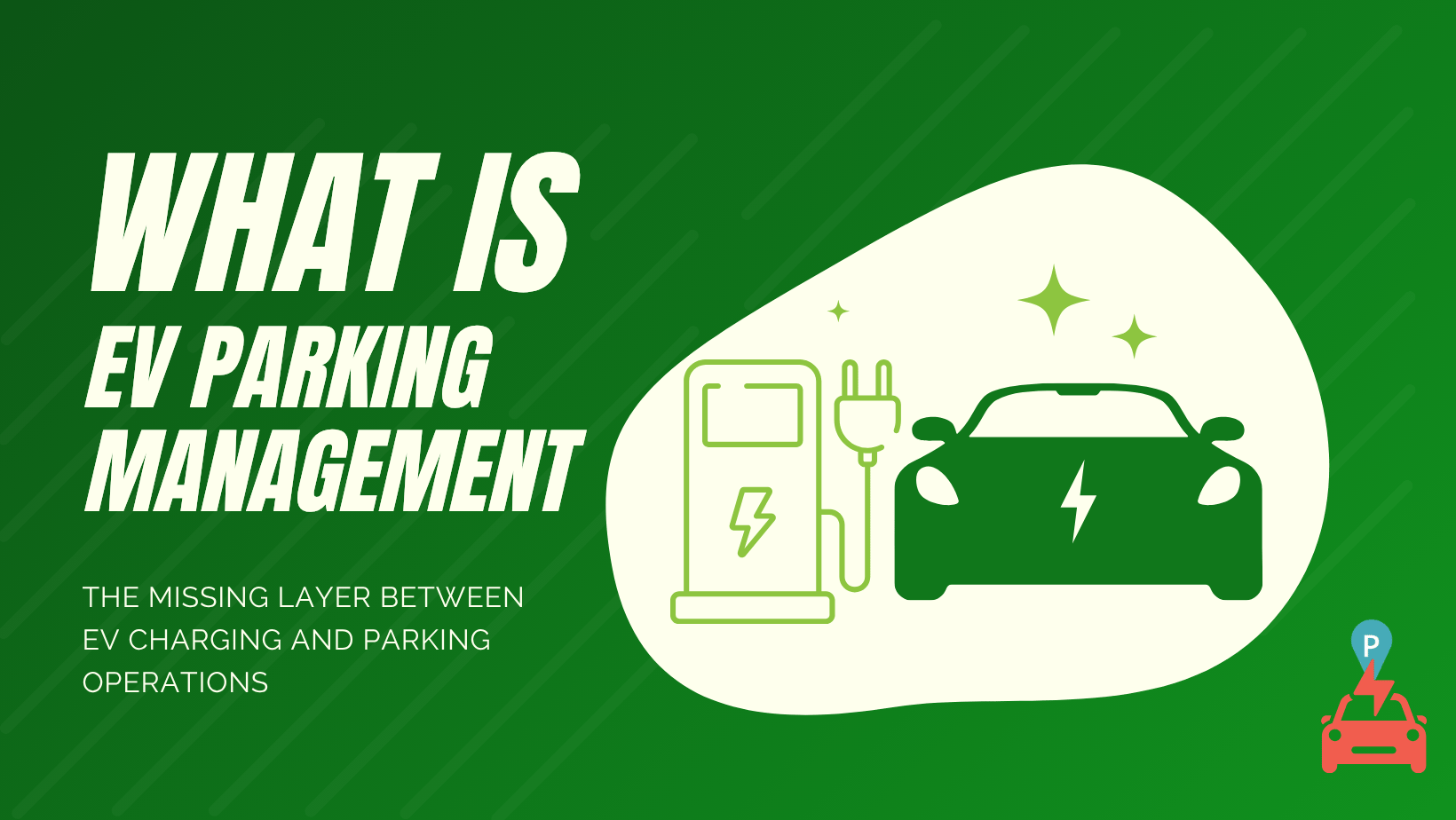
That’s where EV Parking Management begins.
Installing EV Chargers Is Only the First Step
Most conversations surrounding EV adoption focus on physical infrastructure.
How many charging stations should a property install? Should they invest in Level 2 chargers or DC Fast Charging? Which charging network is the right fit?
These are all important decisions, but they’re only one piece of a much larger operational strategy.
Once the chargers are installed, someone still has to manage them.
Without proper operational controls, EV charging spaces can quickly become occupied by vehicles that aren’t charging, drivers may continue occupying spaces long after charging has finished, and property staff often find themselves responding to complaints instead of focusing on higher-value responsibilities.
Much like installing security cameras doesn’t eliminate the need for security operations, installing EV chargers doesn’t eliminate the need for Parking Management Software and operational oversight.
What Happens After an EV Charger Is Installed?
This is where many properties underestimate the complexity of EV charging management.
Every reservation, charging session, payment, notification, and enforcement decision involves multiple systems working together behind the scenes.
A modern EV parking operation may need to coordinate:
- Parking reservations
- Vehicle information
- Charging network data
- Payment processing
- Property-specific parking policies
- Automated notifications
- Enforcement workflows
- Reporting and audit history
Each system serves a different purpose.
The challenge isn’t simply collecting information; it’s connecting all of that information to make fair, accurate, and automated decisions.
When these systems operate independently, staff members often become the integration point, manually checking chargers, verifying reservations, answering resident questions, and resolving disputes.
That’s not scalable.
Modern Parking Operations should automate those repetitive tasks while giving property managers complete visibility into what’s happening across every charging space.
Why “Just Checking If They’re Charging” Isn’t So Simple
At first glance, verifying whether a vehicle is charging sounds easy. Simply ask the charging station.
Unfortunately, it isn’t that simple.
A parking platform typically knows:
- Who reserved the parking space
- Which vehicle is assigned to the reservation
- When the reservation began
- When it is scheduled to end
Meanwhile, the charging network knows something entirely different:
- Whether a charging session actually started
- Which charging connector was used
- When charging began
- When charging ended
- How much energy was delivered
Neither system tells the complete story.
A reservation alone doesn’t prove someone actually charged their vehicle. Charging data alone doesn’t identify which parking reservation should be associated with that charging session or what parking policies apply.
Only by integrating these independent systems can properties confidently determine whether parking policies have been followed.
This operational layer transforms disconnected pieces of information into intelligent decisions.
Evidence Before Enforcement
One of the most important principles in modern EV parking operations is surprisingly simple: Never enforce a parking policy without evidence.
Traditionally, parking disputes often rely on manual observations or resident complaints. Someone reports a vehicle. A staff member walks outside to investigate. By the time they arrive, the situation may have already changed.
Automated EV parking operations take a completely different approach.
Rather than relying on assumptions, the platform validates charging activity using actual charging session data before making any enforcement decision.
This creates a better experience for everyone involved.
Property managers spend less time investigating complaints. Residents gain confidence that enforcement decisions are based on objective charging activity rather than subjective observations. Support teams have access to historical records when questions arise.
The result is a parking program that is more transparent, more consistent, and significantly easier to manage.
When combined with Parking Compliance solutions, automated validation helps ensure EV charging spaces remain available for the drivers who genuinely need them.
Why Automation Is Essential
As EV adoption continues to accelerate, manually monitoring charging spaces is simply unrealistic.
Properties may have dozens, or eventually hundreds, of charging sessions occurring throughout the day.
Automation allows organizations to:
- Verify charging activity
- Apply configurable grace periods
- Send reservation confirmations and reminders
- Notify drivers when charging has completed
- Apply property-specific parking policies
- Maintain detailed audit histories
- Reduce manual administrative work
This operational intelligence not only improves efficiency but also generates valuable data that supports AI Parking Demand Forecasting and future infrastructure planning.
Understanding how often chargers are occupied, when demand peaks, and where utilization can be improved allows organizations to make smarter long-term investment decisions.
Likewise, integrating EV charging into broader Parking Utilization Optimization strategies helps maximize the value of every parking space across the property—not just EV charging stalls.
Why EV Parking Operations Matter
Installing charging stations demonstrates a commitment to supporting electric vehicles. Operating those charging stations effectively determines whether that investment succeeds.
As EV adoption continues to grow, properties need more than charging hardware. They need systems that can automate enforcement, validate charging activity, support property-specific policies, improve the resident experience, and protect valuable parking assets.
That’s exactly why EV Parking Management is becoming an essential layer of modern property management.
As more organizations embrace Parking as a Service, EV charging is evolving from a standalone amenity into an integrated component of a property’s overall parking ecosystem.
The future of EV charging won’t be defined solely by how many chargers a property installs. It will be defined by how effectively those chargers are managed.
Because the future of EV charging isn’t just about power. It’s about operations. And that’s exactly what EV Parking Management was built for.