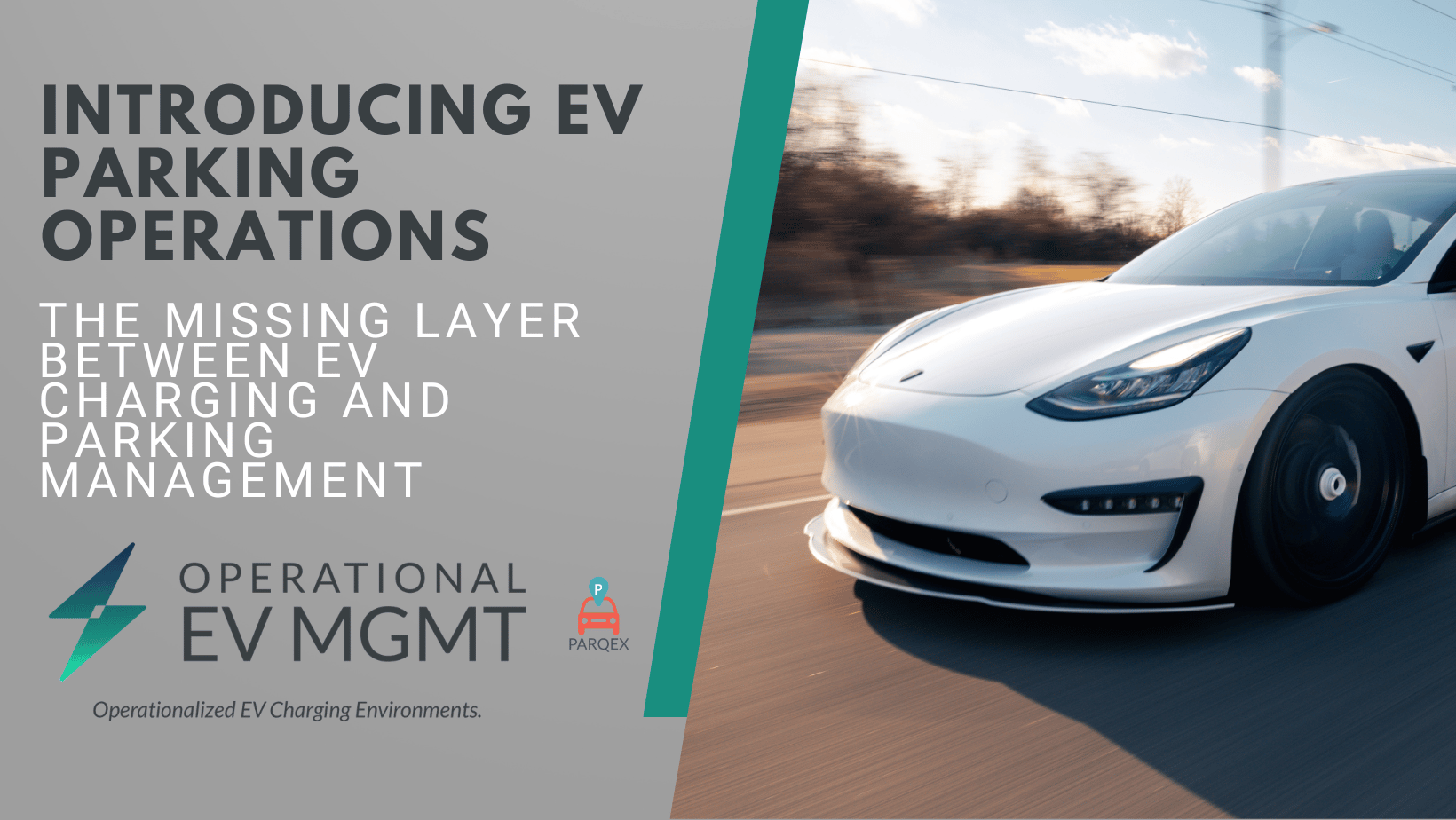





The Missing Layer Between EV Charging and Parking Operations
As electric vehicle adoption continues to accelerate, many organizations are discovering that installing EV chargers is only the first step. The real challenge begins once drivers start using them.
Who should have access to charging spaces? How are charging reservations managed? What happens when a vehicle occupies a charger without actually charging? How can charging availability be maximized without creating frustration for drivers or additional work for property staff?
These questions aren’t solved by charging hardware alone. They’re solved through EV Parking Management.
EV Parking Management is the operational layer that manages how EV charging spaces are reserved, accessed, monitored, enforced, and optimized within a parking environment. While EV charging technology delivers electricity, EV Parking Management ensures those charging resources are used efficiently.
As more organizations deploy charging infrastructure, EV Parking Management is quickly becoming an essential component of successful EV programs.
EV Parking Management vs. EV Charging Management
These two terms are often used interchangeably, but they solve very different problems.
EV Charging Management focuses on the charger itself.
Typical charging management capabilities include:
- Monitoring charging sessions
- Tracking energy consumption
- Managing charging rates
- Payment processing
- Charger diagnostics
- Utility and energy reporting
These platforms answer questions like:
- Is the charger online?
- How much electricity was delivered?
- How long was the charging session?
- Is the hardware functioning properly?
EV Parking Management focuses on everything happening around the charger.
Instead of managing electricity, it manages how parking spaces are used.
Typical EV Parking Management capabilities include:
- EV parking reservations
- Parking access management
- Parking enforcement
- Charging validation
- Parking policy enforcement
- Permit management
- Parking utilization analytics
- Revenue optimization
Charging software manages the charger. EV Parking Management manages the parking operation. Both are necessary.
Why EV Parking Management Exists
Installing chargers creates a new operational challenge.
Charging spaces are among the highest-demand parking assets on a property.
Without proper management, organizations often encounter problems such as:
- Drivers parking without charging
- Vehicles remaining connected long after charging has finished
- Unauthorized vehicles occupying charging spaces
- Staff manually resolving disputes
- Underutilized charging infrastructure
- Frustrated tenants, employees, guests, or customers
Many of these problems aren’t electrical. They’re parking problems.
That’s why EV Parking Management has emerged as its own category. It bridges the gap between parking operations and charging infrastructure.
The Core Components of EV Parking Management
Successful EV Parking Management combines multiple operational systems into a single workflow.
Reservations
Drivers need confidence that a charger will be available when they arrive.
EV parking reservation systems allow organizations to control who can reserve charging spaces, when they can reserve them, and how long they may occupy them.
Reservations reduce congestion while improving charger availability.
Access Management
Not every driver should have the same level of access.
Some charging spaces may be reserved for residents, employees, fleet vehicles, hotel guests, visitors, or premium users.
Parking access management allows organizations to automate access based on user type, schedules, permits, or other operational rules.
Charging Validation
Simply parking in an EV space doesn’t mean charging actually occurred.
Modern EV Parking Management platforms integrate directly with charging networks to verify charging activity.
Instead of relying on manual inspections, organizations can automatically validate charging sessions before determining compliance.
Parking Enforcement
Traditional enforcement often requires staff to physically inspect vehicles.
EV Parking Management automates much of this process by combining reservation data, charging activity, and parking policies.
This allows organizations to enforce rules consistently while significantly reducing administrative work.
Parking Policies
Every property has unique operational requirements. Some may allow charging only during business hours. Others may limit charging sessions to two hours or prioritize residents over visitors.
Digital parking policies allow these rules to be configured, automated, and consistently enforced.
Analytics
Operational decisions should be based on data rather than assumptions.
Parking analytics help organizations understand:
- Charger utilization
- Parking demand
- Peak charging periods
- Reservation trends
- Compliance rates
- User behavior
These insights help determine where additional chargers are needed while maximizing the use of existing infrastructure.
Revenue Management
Charging spaces often represent premium parking assets.
Organizations can monetize them through reservation fees, premium parking, dynamic pricing, visitor access, or paid charging experiences.
Rather than viewing EV charging as a cost center, many organizations are beginning to treat it as a revenue-generating amenity.
Parking revenue optimization becomes increasingly valuable as EV adoption grows.
EV Parking Management Is About Operations
One of the biggest misconceptions surrounding EV charging is that installing chargers completes the project. When in reality, installation marks the beginning of ongoing operations.
Organizations must continually manage:
- Access
- Reservations
- Compliance
- Enforcement
- Utilization
- Reporting
- Driver experience
- Revenue opportunities
These operational responsibilities extend far beyond the charger itself. They’re the responsibility of EV Parking Management.
Where EV Parking Management Fits Into EV Parking Operations
As EV programs continue to mature, organizations are recognizing that they need more than charging software alone. They need a complete operational framework.
This broader approach is known as EV Parking Operations.
While EV Parking Management focuses on the day-to-day management of charging spaces, EV Parking Operations encompasses the entire operational ecosystem, including reservations, charging integrations, enforcement, policies, analytics, automation, reporting, and long-term optimization.
Together, these technologies enable organizations to scale EV charging programs while delivering a better experience for drivers and property managers alike.
The Future of EV Charging Depends on EV Parking Management
The next phase of EV adoption won’t be defined by how many chargers are installed. It will be defined by how effectively those chargers are managed.
Organizations that invest in EV Parking Management today will be better positioned to reduce administrative workload, improve charging availability, increase utilization, strengthen enforcement, and maximize the value of their charging infrastructure.
Because successful EV charging isn’t just about delivering electricity, it’s about managing the parking operation that makes charging possible.