


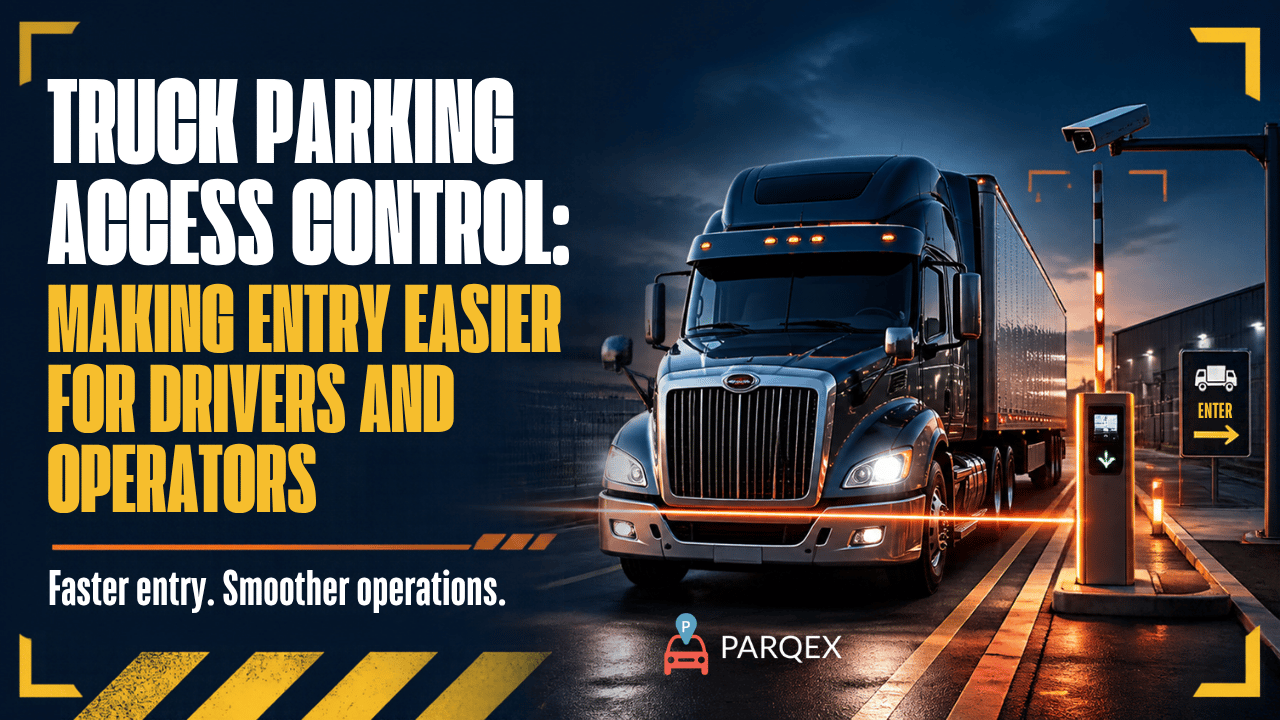
A truck driver reserves a parking space, pays for it, and arrives at the facility just after midnight.
There’s only one problem: the gate is locked.
Now the driver has to find an access code, call the property manager, or wait for someone to open the entrance. What should have been a straightforward parking experience suddenly becomes another headache at the end of a long day.
For truck parking operators, the situation isn’t much better. Someone has to answer that call, verify the reservation, and figure out how to let the driver in.
This is exactly the kind of problem truck parking access control is designed to solve.
Instead of treating parking reservations and property access as two separate processes, modern access-control technology can connect them. Drivers receive permission to enter based on their reservations, while operators maintain control over which vehicles can access the property and when.
The result is a more convenient experience for drivers and a more manageable operation for property owners.
What Is Truck Parking Access Control?
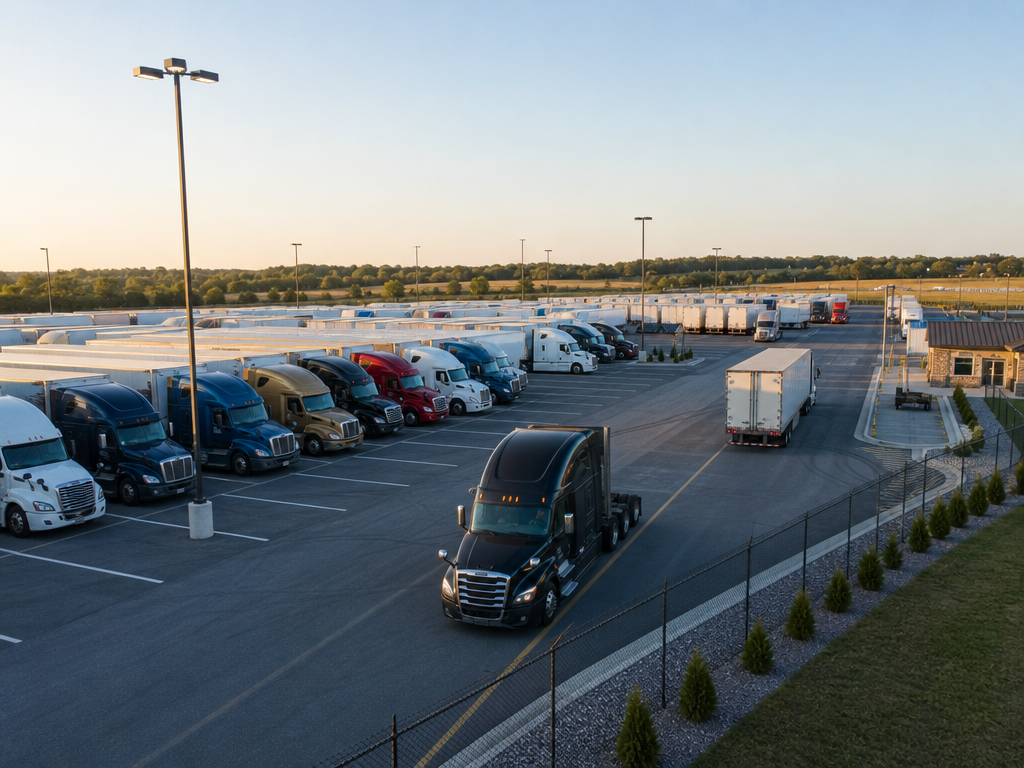
Truck parking access control refers to the technology and procedures used to manage vehicle entry and exit at commercial truck parking facilities.
At its simplest, access control determines whether a vehicle has permission to enter a property.
Traditionally, that might involve a security attendant, physical key, access card, or gate code.
Today, operators have more flexible options.
Depending on the facility, modern truck parking access control can include:
- Automated entrance and exit gates
- Smartphone-based access
- QR codes and digital credentials
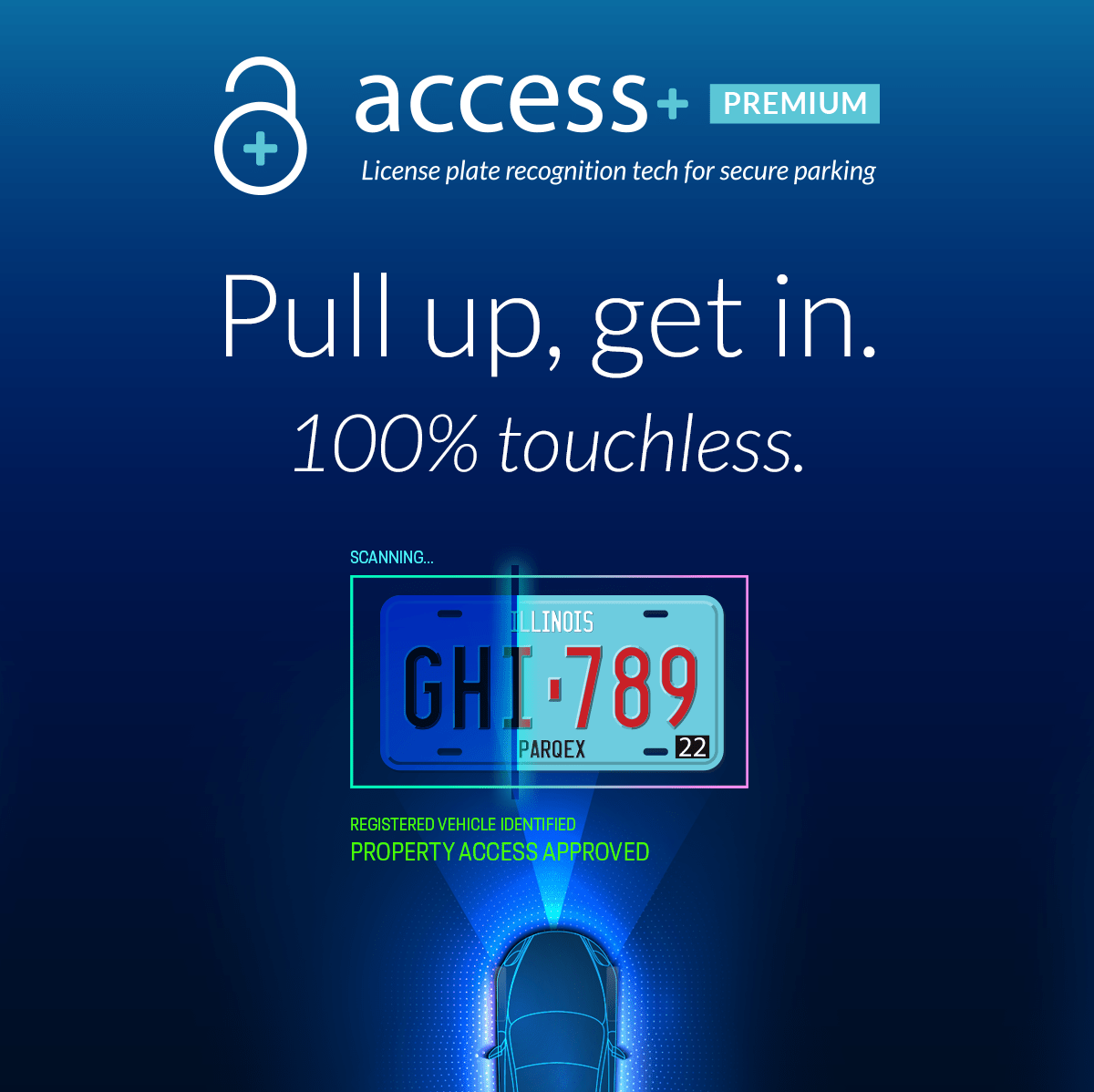
- License plate recognition (LPR)
- Reservation-based permissions
- Time-limited vehicle authorization
- Digital records of entry and exit activity
The goal isn’t to make entering a truck parking facility complicated. It’s to make the process easier for authorized drivers while giving operators more control over their property.
When connected with truck parking management, access control becomes part of the overall parking operation rather than a separate task that someone has to manage manually.
Why Traditional Gate Access Can Be a Problem
Truck parking doesn’t operate on a typical nine-to-five schedule.
Drivers may arrive late at night, early in the morning, or at unpredictable times depending on traffic, delivery schedules, and required rest periods.
That creates challenges for facilities relying on manual entry procedures.
A property manager might need to provide gate codes over the phone. A security attendant may have to verify reservations individually. Some facilities distribute physical credentials that drivers must return when their parking sessions end.
These methods can work, but they become harder to manage as parking demand increases.
Shared gate codes create another problem: once someone has the code, it may continue circulating long after their parking authorization expires.
Changing those codes frequently can be inconvenient for both operators and legitimate customers.
And when a driver arrives after hours, even a small access issue can become frustrating.
Automated access control helps reduce these complications by connecting entry permissions to information the parking system already has.
How Reservation-Based Truck Parking Access Works
One of the biggest advantages of digital access control is its ability to work directly with parking reservations.
Instead of granting permanent access to anyone who has previously parked at the facility, operators can authorize entry for a specific parking session.
Here’s how that might work:
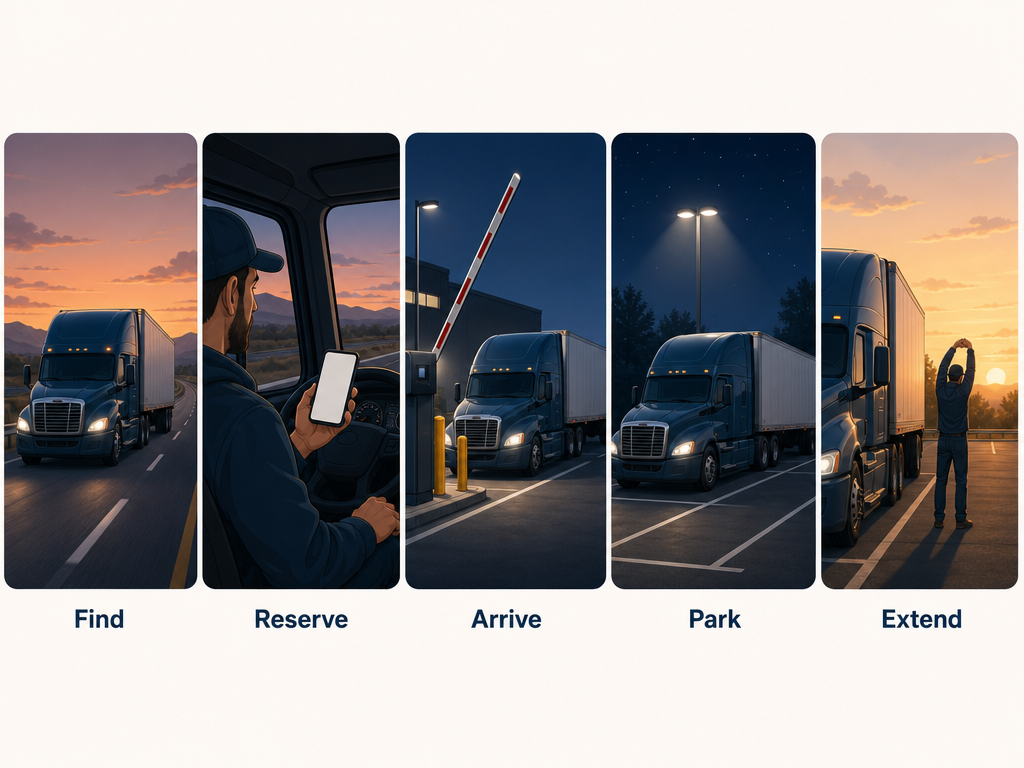
- The driver reserves parking. A driver finds an available space through a marketplace, property booking link, or supported on-site booking method.
- Payment and vehicle details are recorded. The reservation establishes the authorized parking period and relevant driver or vehicle information.
- Access permission is created. The system connects the reservation to an approved access method, such as a mobile credential or registered license plate.
- The driver arrives. The access system verifies the applicable credential or vehicle authorization.
- The gate opens. If the authorization is valid and the hardware is configured appropriately, the driver can enter without requiring manual approval.
- The parking session ends. Access permissions can expire according to the reservation and property rules.
This creates a more predictable experience on both sides.
The driver knows how to enter the facility. The operator knows which vehicle or credential has permission to access the property.
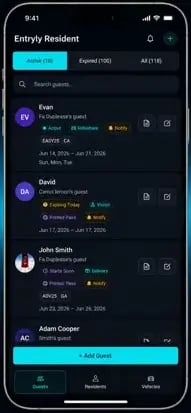
ParqEx’s truck parking platform connects paid reservations with Access+ and supported vehicle-verification technologies to help operators manage this process.
Suggested Image 1 — Reservation-Based Truck Parking Entry
Placement: After this section.
Image: Crisp, photorealistic evening view of a commercial semi-truck approaching an automated gate at a modern truck parking facility. A visible access-control pedestal and overhead camera sit beside the entrance, with organized truck parking spaces beyond the gate. Warm lighting, clear truck lanes, and realistic industrial surroundings. No text, logos, or readable signage.
Filename: truck-parking-access-control-gate.jpg
Alt text: Commercial truck entering a secured parking facility using reservation-based gate access control.
Automated Gates Reduce Manual Work
For operators, one of the most practical benefits of access control is reducing the number of everyday tasks that require staff involvement.
Think about a facility with drivers arriving throughout the night.
Without automated access, someone may need to verify each arrival, provide entry instructions, or physically open the gate.
As reservation volume grows, that process becomes increasingly difficult to maintain.
Automated gates can reduce the need for those individual interactions.
When access is connected to an active parking reservation, the system can verify authorization and trigger compatible gate equipment.
That doesn’t mean every truck parking facility needs a completely new gate.
Some properties may already have equipment that can work with supported access-control technology. Others may need hardware upgrades or a new installation.
The important consideration is compatibility.
Before implementing automation, operators should determine whether their existing gate equipment can support the intended access method and whether the system can accommodate commercial truck traffic.
QR Codes and Mobile Access Give Drivers More Flexibility
Not every driver wants to download another app or keep track of a physical access card.
That’s one reason mobile-friendly access methods are valuable.
At appropriately configured properties, drivers may be able to use their smartphones to access a gate or retrieve the credentials associated with their reservations.
QR codes can also support different parts of the parking experience.
For example, a facility might display QR signage that allows an arriving driver to open a mobile booking page, select available parking, and complete payment.
Once the reservation is confirmed, the driver can receive access through the method supported by that property.
It’s worth making an important distinction here:
A QR code used to book parking isn’t necessarily the same thing as a QR credential used to open a gate.
The actual entry method depends on the property’s access-control configuration.
For operators, these mobile-friendly workflows can make parking easier to offer without requiring someone to distribute physical keys or manually process every arrival.
For drivers, they can eliminate an unnecessary stop between making a reservation and reaching their parking space.
License Plate Recognition Can Make Entry Even Easier
For many truck parking facilities, one of the most convenient access methods is license plate recognition.
Instead of asking a driver to enter a code or present a credential, LPR uses a camera to identify the vehicle’s license plate.
The system can then compare that plate with authorized parking records.
If the vehicle has an active authorization and the property is configured for automated entry, the gate can open.
Consider a driver arriving at a truck parking facility after a long trip.
Rather than searching for a gate code or contacting an attendant, the driver approaches the entrance, the camera captures the registered plate, and the system checks whether the vehicle is authorized.
That can make entry considerably smoother.
LPR can also help operators maintain a clearer connection between parking reservations and the vehicles actually using the property.
This is especially useful when a facility serves multiple fleets, independent drivers, or a large number of overnight customers.
However, LPR requires proper camera positioning, accurate vehicle records, and suitable lighting and installation conditions.
Truck operators should also consider the placement and readability of license plates on the vehicles they expect to accommodate.
For a deeper look at vehicle identification beyond the entrance, ParqEx’s Vehicle-Mounted LPR for Security Patrols article explains how LPR can support verification throughout a property.
Time-Based Permissions Help Operators Maintain Control
One of the limitations of traditional gate codes is that they don’t necessarily reflect whether someone still has permission to park.
A driver might receive a code for one overnight stay and continue using it weeks later.
Time-based access permissions offer a more controlled alternative.
When entry authorization is connected to a parking reservation, access can correspond with the approved parking period.
For example, a driver with a reservation beginning at 8 p.m. could receive access according to the property’s configured arrival rules.
When the reservation expires, the authorization can expire as well.
This is particularly helpful for facilities offering different parking durations.
An operator may accommodate overnight reservations, daily parking, weekly stays, monthly customers, and recurring fleet arrangements.
Each type of customer may need different access permissions.
A connected access-control system can help manage those differences without requiring staff to distribute and track separate physical credentials for every driver.
Of course, the exact rules matter.
Operators should establish how early drivers may enter, what happens if they arrive late, whether extensions are allowed, and how exit is handled after a reservation expires.
Access control works best when the technology reflects the property’s actual parking policies.
What Happens When a Driver Needs More Time?
Truck schedules aren’t always predictable.
Traffic delays, delivery changes, and required rest periods can affect when a driver is ready to leave.
That’s why access control should work alongside the reservation system rather than operate independently.
Suppose a driver reserves parking until 6 a.m. but realizes they need another two hours.
If the property has availability and permits extensions, the driver may be able to extend the reservation digitally.
The updated parking session can then inform the applicable access permissions.
This helps avoid a situation where a driver has paid for additional parking but no longer has the necessary authorization.
It also protects the next customer.
If another driver has reserved the space, the operator needs to maintain the scheduled turnover rather than automatically allowing an extension that creates a conflict.
ParqEx’s Truck Parking Reservations article explores how digital reservations, availability, and extensions work together to create a more predictable parking experience.
Access Control and Parking Enforcement Work Together
Automated access can help prevent unauthorized entry, but it doesn’t eliminate every parking violation.
A driver might enter with a valid reservation and remain after it expires.
Another vehicle could enter through an open gate without completing the required registration.
A truck might also park in an area that isn’t included in its authorization.
These situations still require parking oversight.
The advantage of connecting access control with truck parking enforcement is that personnel have more information available when checking vehicles.
Instead of relying entirely on a physical permit or manually maintained list, staff can compare vehicle information with current parking records.
This makes it easier to distinguish an authorized customer from a genuine parking exception.
Access control and enforcement serve different purposes, but they support the same goal: ensuring parking inventory is available to the vehicles permitted to use it.
What About Facilities Without Gates?
Not every truck parking property has a gated entrance.
Some commercial lots operate with open access, while others use designated parking areas within larger industrial properties.
That doesn’t necessarily mean digital access and authorization have no role.
For example, an open facility may still use digital reservations, vehicle registration, and LPR-assisted verification to determine which trucks are authorized to park.
A property with multiple entrances might need to control only certain areas.
And a warehouse offering truck parking during unused hours may want to separate parking customers from active loading zones or other restricted spaces.
The right approach depends on the property.
Operators should consider the existing infrastructure, traffic patterns, security requirements, and whether physical access control is necessary for the intended parking operation.
Not every facility needs the same combination of gates, cameras, and credentials.
Choosing the Right Truck Parking Access Control System
Before selecting access-control technology, operators should think about how their facility actually functions.
A small private truck lot with a handful of recurring customers may have different needs from a large facility managing hundreds of overnight reservations.
Some important questions include:
- Can access permissions connect with digital reservations?
- Does the system support the property’s existing gate hardware?
- Can drivers enter without contacting staff?
- Are mobile access or LPR options available?
- Can authorization expire automatically?
- How are recurring customers and fleet vehicles managed?
- What happens when a reservation is extended?
- Can personnel verify which vehicles are authorized?
- What happens during a power, internet, or equipment failure?
- Can access activity be reviewed when needed?
It’s also important to consider the physical requirements of commercial vehicles.
Truck entrances need sufficient width, turning clearance, and appropriate gate placement. Camera locations must account for vehicle size and approach angles.
Technology should fit the property, not force drivers into an inconvenient or unsafe entry process.
Suggested Image 2 — Automated Truck Parking Access With LPR
Placement: After this section.
Image: Photorealistic close-to-midrange view of a tractor-trailer entering a secured commercial truck parking facility beneath an LPR camera gantry. A barrier arm is raised, with a clearly visible access-control cabinet and orderly parking spaces beyond the entrance. Soft morning light, realistic proportions, no text, logos, or interface overlays.
Filename: automated-truck-parking-lpr-access.jpg
Alt text: Semi-truck entering an automated truck parking gate using license plate recognition and digital access control.
Truck Parking Access Control Can Support Revenue, Too
Access control isn’t only about keeping unauthorized vehicles out.
It can also help operators protect the parking inventory they’re trying to sell.
Imagine a facility offering paid overnight parking.
If drivers can enter without authorization and occupy spaces intended for paying customers, the operator may lose revenue and struggle to honor existing reservations.
Controlling entry helps establish a clearer relationship between parking availability and authorized use.
It can also make paid parking more practical to operate.
Instead of requiring an attendant to collect payment and open the gate for every arriving driver, operators can use digital reservations and compatible access systems to automate more of the process.
That creates opportunities for facilities operating outside traditional business hours.
For property owners exploring truck parking solutions, access control is one of the technologies that can help turn suitable parking space into a more organized commercial operation.
The revenue benefit isn’t necessarily that the gate itself generates money.
It’s that the gate can help protect the paid parking process behind it.
Making Truck Parking Easier From Reservation to Arrival
Truck parking access control should accomplish two things.
It should make entering the facility easier for legitimate drivers, and it should give operators better control over who can use their property.
Those goals don’t have to compete.
A driver who has already reserved and paid for parking shouldn’t need to navigate a complicated entry process. At the same time, operators shouldn’t have to sacrifice control by distributing permanent gate codes or relying entirely on manual checks.
When reservations, payments, vehicle verification, and access permissions work together, the parking experience becomes more predictable.
ParqEx’s truck parking platform brings together digital reservations, payments, Access+, LPR, enforcement workflows, and reporting to support that connected approach.
For operators, it means fewer manual access tasks and better visibility into authorized parking activity.
For drivers, it means less time dealing with gates and more confidence that the parking they’ve reserved will be accessible when they arrive.
Because once a driver has found and paid for truck parking, getting through the gate shouldn’t be the hardest part.


