



For truck drivers, finding a place to park isn’t always as simple as pulling into the next available lot.
Parking availability can become increasingly uncertain later in the day. Drivers have hours-of-service requirements to consider, routes and delivery schedules to maintain, and limited flexibility to spend additional time searching for an open space from one location to another.
At the same time, truck parking operators face the other side of the problem. They need to know which spaces are available, which have already been promised to arriving drivers, who is authorized to park, how long each truck intends to stay, and when that inventory will become available again.
Truck parking reservations can bring greater predictability for both parties.
Instead of treating commercial parking as first-come, first-served until every space is occupied, digital reservations allow parking inventory to be scheduled, sold, and managed before a truck ever enters the property.
What Are Truck Parking Reservations?
Truck parking reservations allow commercial drivers to secure parking at a specific location for a specific period of time.
A digital reservation can connect the driver and vehicle with the parking space, expected arrival, parking duration, payment, and property access requirements.
For the driver, the benefit is straightforward: greater certainty that parking will be available when it’s needed.
For the operator, however, the reservation becomes much more than a booking. It creates an operational record.
The property can know which vehicle is expected, when it should arrive, how long it is authorized to remain, whether payment has been completed, and when the parking inventory should become available again.
That is why reservations are an important part of broader truck parking management. They don’t simply help fill spaces. They help operators organize how those spaces are used.
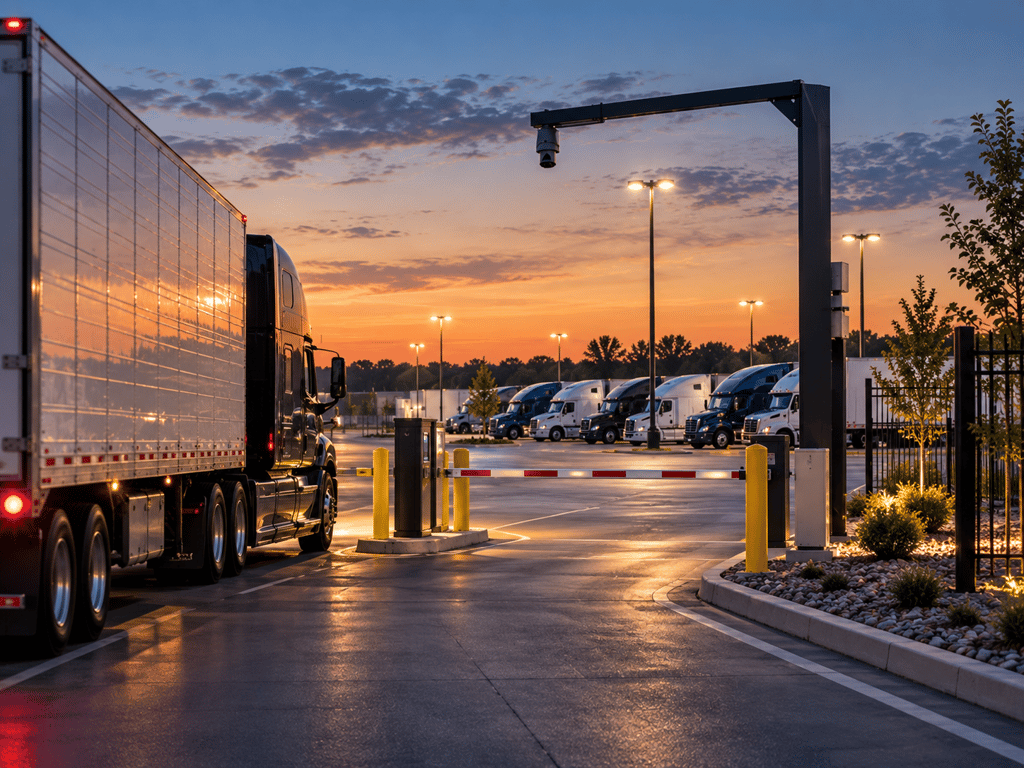
Why Reservations Matter More in Truck Parking
Parking uncertainty is inconvenient for almost anyone. For a commercial driver, it can affect the entire workday.
Drivers operate under federal hours-of-service regulations that limit driving time and require rest periods. That means the search for parking isn’t infinitely flexible.
If suitable parking isn’t available where expected, a driver may need to continue searching, stop earlier than planned, alter a route, or use a less desirable location.
Advance reservations change the question from: “Will there be somewhere to park when I get there?” to: “Where am I already scheduled to park?”
That difference can make truck parking more predictable before the driver even begins looking for a place to stop.
Reservations Turn Parking Spaces Into Managed Inventory
Reservations are equally valuable from the operator’s perspective. Without them, parking inventory is largely reactive.
A truck arrives. It occupies a space. Staff may or may not know how long it will stay. Another truck arrives. Eventually, the lot appears full.
Digital reservations create a forward-looking view.
If a facility has 100 spaces, with 70 occupied and 20 reserved for arriving trucks, the operator knows that only 10 spaces are truly available for additional bookings.
That’s a much more useful number than simply knowing 70 trucks are currently parked.
This distinction matters because physical vacancy isn’t always the same as actual availability. A visibly empty stall may already belong to a driver arriving in 30 minutes. A physically occupied stall may be scheduled to become available shortly.
Reservations turn that changing inventory into something operators can actually manage.
A Better Reservation Experience Starts Before Arrival
A good truck parking reservation process should reduce friction rather than create another task for the driver.
ParqEx’s current Truck Parking platform supports several ways to start a reservation: drivers can discover parking through the ParqEx Marketplace, return via a direct property link, or scan QR signage for drive-up booking. Those different entry points can feed into the same reservation and parking workflow.
That flexibility matters.
Not every driver discovers parking the same way. One may plan a stop in advance. Another may regularly use the same facility. Another may see available truck parking from the road and decide to stop.
The technology behind the reservation should be able to accommodate those different situations without creating separate operational processes for the property.
Reservations and Payments Should Work Together
A reservation is considerably more useful when payment is connected to it.
Instead of booking a space through one process and collecting payment separately upon arrival, digital truck parking reservations can link the transaction directly to the parking session.
That creates a clearer record: Driver → Vehicle → Reservation → Payment → Parking Session
For operators, this can reduce cash handling and manual reconciliation. For drivers, it means the financial portion of the parking transaction can be completed before or as part of their arrival.
And for property owners looking to monetize truck-capable parking, reservations provide a way to turn individual periods of availability into sellable inventory.
That’s closely connected to the broader opportunity we’ve discussed around parking space revenue: parking only becomes a productive asset when owners have a practical way to make appropriate inventory available and collect revenue from its use.
Reservations Can Connect Directly to Property Access
Confirming a reservation doesn’t necessarily mean a property should simply open its gates.
For controlled truck parking facilities, a reservation can serve as the basis for access authorization.
A paid reservation identifies:
- The authorized user
- The expected vehicle
- The permitted location
- The beginning of the parking period
- The end of the parking period
Access technology can then use that information when the truck arrives.
ParqEx’s truck parking platform can connect an active paid reservation with Access+ and, depending on the property’s configuration, LPR or other supported access methods.
That creates a much stronger relationship between booking a space and being authorized to enter the property.
Rather than relying on a shared gate code that can continue circulating long after a reservation ends, access can be tied to the actual parking session.

What Happens When a Driver’s Plans Change?
Truck transportation isn’t always predictable. Traffic changes. Loading takes longer than expected. Delivery appointments move. Weather creates delays. A driver who expected to arrive at a certain time may arrive later.
Reservation systems need enough structure to protect parking inventory without ignoring the realities of commercial transportation.
Operators can establish policies around:
- Arrival windows
- Reservation duration
- Cancellation
- No-shows
- Grace periods
- Extensions
- Maximum stays
Extensions are particularly important. If a driver needs additional time and inventory remains available, extending an eligible reservation can benefit both sides.
The driver doesn’t have to begin searching for another parking location. The operator can convert the additional stay into additional paid parking time.
However, an extension shouldn’t automatically be available when another driver has already reserved that space. ParqEx’s truck parking workflow therefore treats extensions as dependent on the property’s rules and remaining inventory.
That’s what keeps the reservation system fair to the next driver, too.
Reservations Can Reduce Accidental Overstays
Overstays aren’t always intentional. A driver may simply lose track of when a parking session expires or unexpectedly need additional time.
When reservations are digital, the system can provide reminders before expiration and, where permitted, offer the driver the option to extend the session. ParqEx currently incorporates expiration reminders and eligible extensions into its truck parking workflow.
That creates an opportunity to resolve a potential violation before it becomes an enforcement issue.
If an extension isn’t permitted—or if the driver remains beyond the authorized period—the same reservation record provides the operator with clear information about when authorization ended.
This creates a natural connection between reservations and truck parking enforcement.
The reservation establishes the rule. Enforcement handles the exception.
Reservations Can Help Protect Sellable Parking Inventory
An unauthorized truck occupying a parking space creates more than an enforcement problem. It can create a revenue problem.
If a legitimate driver has reserved and paid for that stall, the operator now has an obligation to provide inventory that someone else is occupying.
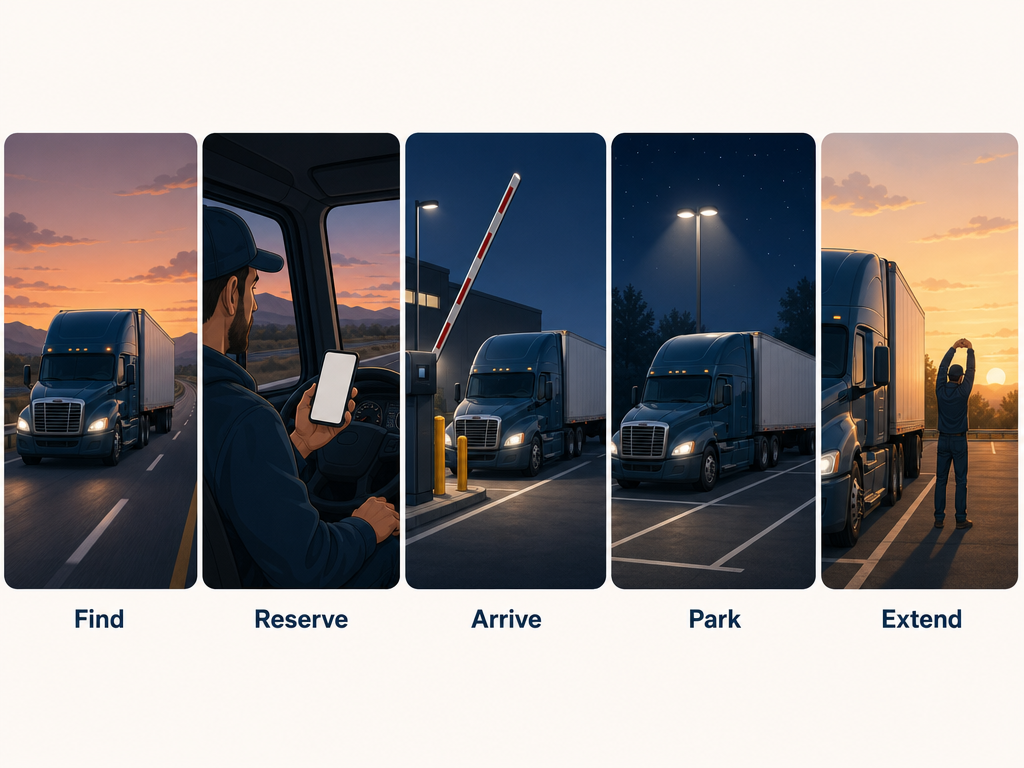
That’s why reservations, access, vehicle verification, and enforcement shouldn’t operate independently. Together, they can create a chain: Reserve → Pay → Authorize → Verify → Park → Depart → Release
When the reservation ends and the vehicle departs, the space becomes available again.
That turnover is fundamental to operating truck parking efficiently.
Reservations Can Help Unlock Existing Parking Supply
Truck parking reservations aren’t useful only at dedicated truck stops. They may also help make suitable private parking capacity available in a more controlled way.
Consider an industrial property with 40 truck-capable spaces that aren’t needed overnight. The owner might not want to simply advertise: Truck parking available. Come park here.
That creates too much uncertainty. But the property may be comfortable making 20 spaces reservable between 7 p.m. and 6 a.m., with payment required in advance and authorization expiring automatically in the morning.
Now the owner knows:
- How many trucks may arrive
- Which vehicles are expected
- When they can enter
- How long they can stay
- What revenue the parking should generate
- When the spaces return to their normal use
Modern truck parking solutions make that kind of controlled parking operation much more practical.
Instead of opening an entire property indiscriminately, owners can make specific inventory available during specific periods under specific rules.
That could help bring existing parking supply into the truck parking ecosystem without requiring every new space to begin with new construction.
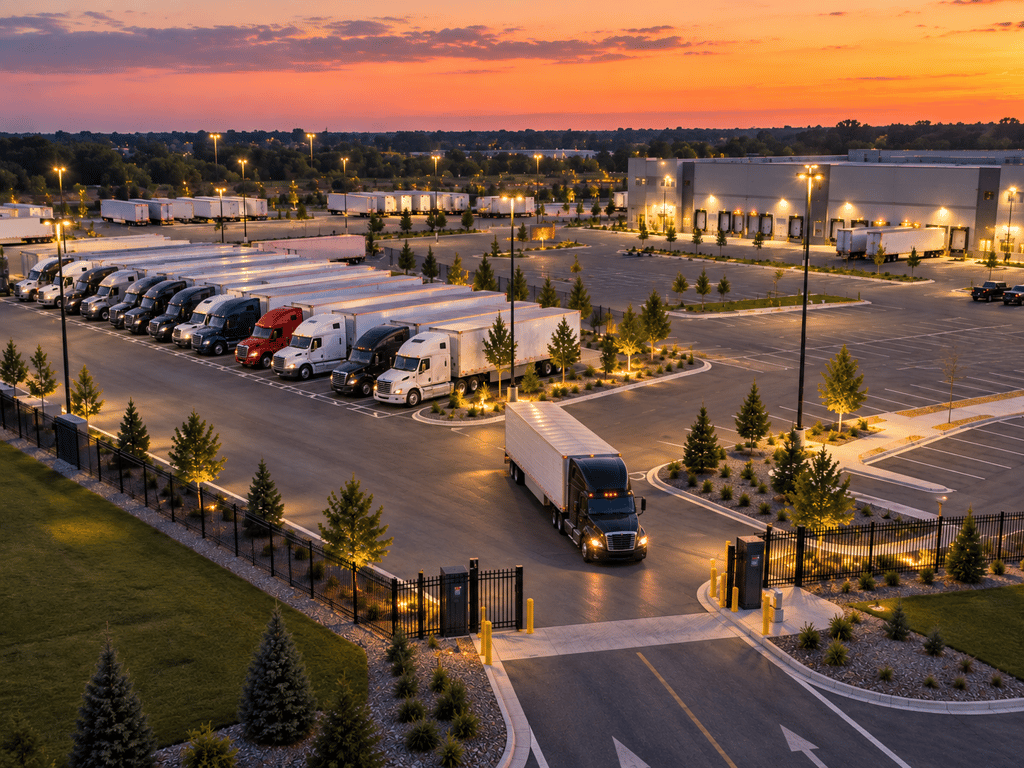
Truck Parking Reservations Create Useful Demand Data
Every reservation also creates information. Over time, operators can begin to see:
- Which days book fastest
- What times drivers typically arrive
- Average parking duration
- How far in advance drivers reserve
- How frequently reservations are extended
- Cancellation and no-show patterns
- Which locations experience the highest demand
- Which parking periods remain underutilized
That data can help operators make better decisions about pricing, inventory, staffing, expansion, and parking policies.
It can also help answer a critical question: Do we actually need more parking, or do we need to manage the parking we already have differently?
Sometimes the answer will absolutely be more capacity. But in other cases, better scheduling, turnover, visibility, or distribution of existing spaces may improve availability without adding pavement.
Reservations Across Multiple Truck Parking Locations
The value of digital reservations becomes even greater for multi-location operators. Instead of each property maintaining its own manual booking process, reservations can become part of a centralized truck parking operation.
Management can see demand across locations and identify patterns that wouldn’t be obvious when each facility operates independently.
One property may routinely sell out on weekday evenings. Another nearby facility may have available capacity during the same period. One location may experience frequent extensions. Another may have unusually high no-show rates.
That information helps operators manage a network of parking inventory, rather than a collection of unrelated lots. It also creates a more consistent experience for drivers who use multiple locations within the same parking network.
What Should a Truck Parking Reservation System Include?
A reservation tool shouldn’t be evaluated solely on whether someone can click a button and book a space. Operators should consider what happens before, during, and after the reservation.
A more complete reservation system should be able to connect booking with the rest of the parking operation, including:
- Real parking availability
- Vehicle information
- Digital payments
- Parking duration
- Access permissions
- Arrival verification
- Expiration reminders
- Eligible extensions
- Enforcement status
- Occupancy and utilization reporting
That’s also why reservations are one component of truck parking management software rather than a complete parking operation on their own.
The strongest system isn’t necessarily the one that generates the most bookings. It’s the one that helps operators manage what happens because of those bookings.
From Finding Parking to Knowing It’s There
Truck parking reservations address something remarkably simple but incredibly important: certainty.
Drivers need to know that appropriate parking will be available when they arrive. Operators need to know who is coming, when they’re coming, how long they’re staying, and when the space becomes available again.
Property owners need control over how their inventory is used. And parking managers need accurate information when something doesn’t go according to plan.
Digital reservations create the record that can connect all of those needs.
ParqEx’s truck parking platform connects reservations with payments, driver and vehicle information, access control, LPR, enforcement, and reporting so the booking isn’t isolated from the parking operation around it.
Because for a commercial driver nearing the end of the day, finding a truck parking lot is useful. Knowing there’s a space waiting is better.