



How Modern Properties Turn Parking Rules Into Enforceable Systems
Parking rules exist everywhere.
Apartment communities have assigned spaces and guest restrictions. Office campuses manage employee permits. Mixed-use developments juggle residents, visitors, retail customers, and delivery drivers — creating complex mixed-use parking environments that are difficult to manage with static rules. Hotels balance overnight guests, restaurant patrons, and event traffic — making hospitality parking management especially complex.
The problem is that most parking rules still live on paper.
Printed parking policies, PDF documents, signage, and email instructions are still the most common ways properties communicate how parking is supposed to work. But in reality, these static rules rarely translate into consistent enforcement, which creates ongoing challenges for parking compliance across the property.
As properties become more complex and vehicle activity increases, the gap between parking rules and actual parking behavior grows wider.
This is where digital parking policies come in.
Rather than relying on manual processes, digital parking policies transform parking rules into software-driven systems that automatically manage access, permissions, and enforcement.
In this guide, we’ll explore:
- What digital parking policies are
- Why traditional parking rules fail at scale
- How software turns rules into enforceable parking policies
- How modern properties use policy automation to manage parking more efficiently
And why digitization is quickly becoming the standard for parking management across residential, commercial, and mixed-use properties.
What Are Digital Parking Policies?
A digital parking policy is a set of parking rules encoded into a software platform and automatically enforced by technology.
Instead of relying on signage, printed rules, or manual enforcement, digital parking policies use software to control:
- Who can park
- Where they can park
- When parking is allowed
- How long vehicles can stay
- What happens when rules are violated
In simple terms:
Digital parking policies turn parking rules into automated systems.
Rather than hoping drivers follow posted rules, properties can program their policies directly into a parking management platform.
For example, a digital parking policy might automatically enforce rules such as:
• Residents can park in assigned spaces 24/7
• Guests can park for up to 12 hours
• Delivery vehicles may use loading zones for 30 minutes
• Retail customers can park free for 2 hours
• Unauthorized vehicles are flagged automatically
These policies are enforced through permit systems, license plate registration, digital guest passes, or access control integrations.
The result is a parking environment where rules are not just communicated — they are operationalized through technology.
Why Parking Rules Are Not the Same as Parking Policies
Many properties use the terms “parking rules” and “parking policies” interchangeably. But in practice, they mean very different things.
A parking rule is simply a statement of what drivers are expected to do.
You’ve probably seen them posted around properties:
- “Guest parking limited to 12 hours”
- “Residents must park in assigned spaces”
- “Unauthorized vehicles will be towed”
These rules communicate expectations. But they don’t actually control what happens in the parking lot. That’s where the gap begins.
A parking policy, on the other hand, is a system that ensures those rules are consistently followed.
Think of it this way:
Rules describe behavior. Policies enforce behavior. This distinction is critical when thinking about long-term parking compliance strategies.
In traditional parking environments, the “policy” is often just a sign and the hope that people follow it. But anyone who manages parking knows the reality is different.
Drivers may not read the sign, guests may stay longer than allowed, and delivery drivers may park wherever is most convenient.
Even when rules are clear, enforcement often depends on manual patrols or complaints from residents. And that’s where things break down.
Digital parking policies solve this problem by turning written rules into automated systems. Instead of relying on signage or manual enforcement, the parking platform itself controls permissions.
For example:
- Residents register their vehicles digitally
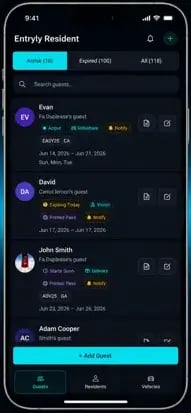
- Guests receive time-limited parking passes
- Visitor parking expires automatically
- Unauthorized vehicles are flagged in real time
The rules haven’t changed — but the way they’re enforced has. Once parking policies go digital, they stop being suggestions and become operational infrastructure.
Why Traditional Parking Rules Fail at Scale
Many properties assume parking problems are caused by bad behavior.
In reality, most parking issues stem from policy systems that were never designed to scale.
Traditional parking management relies on tools that were built decades ago, including:
- Printed parking rules
- Physical permits or hang tags
- Paper guest passes
- Signage enforcement
- Manual patrols
These methods can work for small properties, but they quickly break down when parking demand increases.
Common Failures of Paper Parking Policies
1. Rules Are Difficult to Enforce
Posting parking rules does not guarantee compliance.
Drivers may not read signs, understand restrictions, or follow instructions correctly. Even when rules are clear, enforcement often relies on manual observation.
This creates inconsistent outcomes. Some violations are caught. Others are missed.
2. Enforcement Is Reactive
Traditional parking enforcement usually happens after violations occur.
Staff or enforcement teams must patrol parking areas, identify unauthorized vehicles, and issue warnings or tickets.
By the time enforcement occurs, the problem has already disrupted parking availability.
3. Policies Are Hard to Update
Parking policies change frequently.
New tenants move in. Businesses expand. Delivery activity increases (Managing delivery and logistics parking has become a growing challenge for many properties.) Visitor traffic fluctuates.
When rules are printed on signs or stored in PDFs, updating them requires:
- Printing new signage
- Sending new communications
- Retraining staff
- Updating enforcement protocols
This slows down operations and creates confusion.
4. There Is No Visibility Into Parking Usage
Paper-based parking rules do not provide data.
Property managers rarely have insight into:
- Occupancy patterns
- Peak demand times
- Guest parking activity
- Unauthorized vehicle frequency
Without this information, it becomes difficult to optimize parking allocation or improve policy design.
How Digital Parking Policies Work
Digital parking policies move parking management from manual rule enforcement to automated systems management.
Instead of relying on human monitoring, properties configure parking rules inside software platforms, often replacing outdated types of parking systems that rely on manual enforcement.
Step 1: Define Parking Rules
The first step is to identify how parking should function on the property.
Common policy categories include:
Access permissions
- Resident parking
- Employee parking
- Tenant parking
- Guest parking
- Vendor access
Time-based restrictions
- Hourly limits
- Overnight restrictions
- Event-based policies
- Delivery time windows
Location restrictions
- Assigned spaces
- Visitor zones
- Loading areas
- Reserved parking
These rules form the foundation of a digital parking policy framework.
Step 2: Encode Policies Into Software
Once rules are defined, they are translated into software-based permissions and logic.
Instead of writing rules on signs, properties configure them inside a parking management platform.
For example:
- Residents register their vehicles digitally
- Guests receive temporary parking passes
- Delivery vehicles receive short-term access windows
- Retail visitors receive time-limited parking permissions
This creates a system where parking authorization happens automatically.
Step 3: Automate Enforcement
Digital parking policies allow enforcement to become system-driven rather than patrol-driven.
Depending on the technology stack, enforcement may involve:
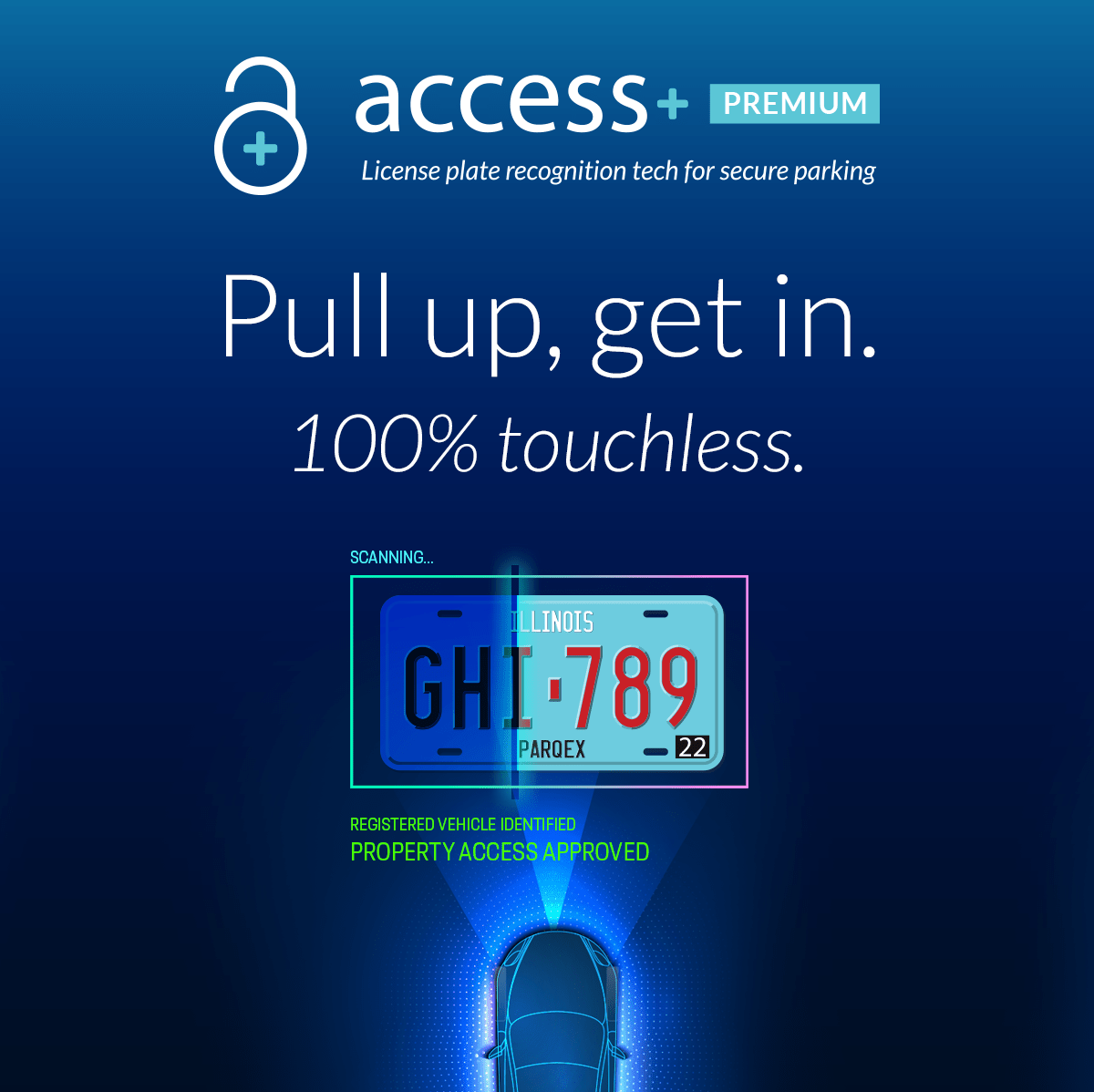
- License plate recognition
- Permit verification
- Mobile enforcement tools
- Access control integration
Unauthorized vehicles can be flagged instantly, reducing the need for constant manual monitoring.
This significantly improves compliance.
Step 4: Monitor and Optimize Policies
Because digital parking policies run through software, properties gain access to operational data.
This allows managers to analyze:
- Parking occupancy trends
- Peak usage periods
- Guest parking demand
- Enforcement activity
Policies can then be adjusted based on real usage patterns rather than assumptions.
Key Benefits of Digital Parking Policies
Digitizing parking rules transforms parking from a manual administrative task into a structured operational system.
Some of the most important benefits include:
1. Consistent Enforcement
Automated systems enforce parking policies consistently across the property.
Rules are applied uniformly rather than depending on manual observation.
This reduces disputes and improves compliance.
2. Reduced Administrative Work
Managing paper permits and guest passes is time-consuming.
Digital systems allow residents, tenants, and visitors to self-manage parking permissions through mobile apps or web portals.
This dramatically reduces operational workload.
3. Improved Parking Availability
By automatically enforcing time limits and authorization policies, digital parking policies prevent unauthorized vehicles from occupying spaces.
This ensures that parking remains available for the people it was intended for.
4. Better User Experience
Digital parking systems simplify parking for legitimate users.
Residents can register vehicles online. Guests can receive digital passes. Businesses can manage visitor parking easily.
This eliminates many of the frustrations associated with traditional permit systems.
5. Data-Driven Parking Management
Because policies are digital, properties gain access to analytics such as:
- Parking utilization
- Guest activity patterns
- Enforcement trends
- Space allocation efficiency
This allows operators to continuously improve their parking policies.
What Happens When Parking Policies Stay Manual
Many properties don’t realize how much operational friction their parking rules create until they try to scale.
Manual parking systems work reasonably well when a property is small or when parking demand is predictable. But as soon as vehicle traffic increases or multiple user groups begin sharing the same parking supply, cracks in the system start to appear.
Property managers frequently encounter situations like:
- Residents reporting unauthorized vehicles in assigned spaces
- Guests staying overnight in visitor parking areas
- Delivery vehicles blocking access lanes or loading zones
- Staff spending hours responding to parking complaints
- Enforcement becoming inconsistent across different days or shifts
None of these issues typically stem from poorly written parking rules. In fact, most properties already have very clear policies in place.
The challenge is that manual parking systems struggle to consistently enforce those policies.
When enforcement relies on physical permits, printed passes, or occasional patrols, violations often go unnoticed until they affect other users. Residents may become frustrated. Tenants may complain about parking availability. Staff members end up acting as referees in situations that could have been prevented entirely.
Over time, parking management becomes reactive rather than proactive.
Digital parking policies change that dynamic.
Instead of waiting for problems to occur, automated systems continuously monitor permissions and parking activity. Unauthorized vehicles can be identified quickly, visitor parking limits are enforced automatically, and parking availability becomes far more predictable for the people who rely on it.
For property operators, this shift can dramatically reduce day-to-day friction while improving the overall parking experience.
How ParqEx Enables Digital Parking Policies
ParqEx provides the infrastructure needed to convert traditional parking rules into digital parking policies.
Rather than relying on manual systems, ParqEx allows properties to manage parking through a centralized platform that automates policy enforcement.
With ParqEx, property operators can:
• Digitally register resident and tenant vehicles
• Issue time-limited guest parking passes
• Manage employee and staff parking permissions
• Automate enforcement workflows
• Monitor parking activity across the property
Because policies are configurable, properties can adapt their parking rules as demand evolves.
For example, a mixed-use property might configure policies such as:
- Residents receive 24/7 parking access
- Retail visitors receive two hours of free parking
- Delivery vehicles receive short loading zone access
- Staff parking is restricted to specific hours
These rules operate automatically within the platform.
The result is a parking system that aligns policy design with real operational needs.
The Future of Parking Is Policy-Driven
Parking management is shifting away from manual enforcement and toward policy-driven infrastructure. This shift is closely tied to the rise of the parking as a service model, where parking is managed as a flexible, software-driven resource.
As vehicle activity increases and properties become more complex, static parking rules are no longer sufficient.
Digital parking policies allow property operators to:
- Scale parking operations
- Reduce enforcement costs
- Improve compliance
- Adapt policies quickly as demand changes
Most importantly, they turn parking from a reactive enforcement problem into a proactive management system.
For modern residential communities, commercial properties, and mixed-use developments, digital policy frameworks are quickly becoming the foundation of effective parking management.
Frequently Asked Questions About Digital Parking Policies
A digital parking policy is a parking rule that is implemented through software rather than manual processes. It controls who can park, where they can park, and how long they can stay using automated systems.
Enforcement typically occurs through parking management platforms that verify vehicle permissions through permits, license plate registration, guest passes, or enforcement tools used by property staff.
Digital parking policies are commonly used by: 1) Apartment communities, 2) Mixed-use developments, 3) Office campuses, 4) Hospitality properties, 5) HOAs and residential communities, 6) Retail centers. Any property that manages multiple user groups and has a limited parking supply can benefit from policy automation.
Not entirely. Enforcement staff may still be used, but digital policies dramatically reduce the need for constant manual monitoring by automating many authorization checks.
Yes. One of the biggest advantages of digital parking policies is that rules can be updated instantly within the platform. This allows property managers to adjust policies without replacing signage or reissuing permits.
Modern Parking Requires Modern Policy Infrastructure
Parking operations have become far more complex than they were even a decade ago.
Between residents, visitors, delivery vehicles, and shared parking environments, properties must manage multiple parking user groups simultaneously.
Static rules and printed policies cannot keep up with these dynamics.
Digital parking policies play a key role in improving overall parking compliance systems, ensuring rules are enforced consistently across all user groups.
They allow operators to transform parking rules into automated, enforceable systems that scale with modern demand.
The Shift Toward Digitized Parking Operations
Across the real estate industry, property operators are gradually moving toward more digitized operational systems.
Access control systems have replaced physical keys. Package management has moved to automated locker platforms. Visitor management has shifted to digital check-in systems.
Parking is following the same evolution.
For many years, parking remained one of the last property operations managed primarily through paper permits, signage, and manual enforcement. But as vehicle traffic increases and properties become more complex, those systems are proving difficult to maintain.
Digital parking policies represent the next stage of this evolution.
By translating parking rules into software-driven permissions and automated enforcement workflows, properties can manage parking with the same level of efficiency and visibility that they expect from other modern building systems.
For operators managing multifamily communities, mixed-use developments, office campuses, or hospitality properties, policy digitization is quickly becoming a foundational component of modern parking operations.
See How Digital Parking Policies Work in Practice
If you’re exploring ways to modernize your parking operations, ParqEx can help you transition from manual parking rules to a fully digitized parking policy management system.
You can learn more about how the platform works by scheduling a short demo with the ParqEx team.
A quick walkthrough can show how digital parking policies are configured, enforced, and optimized across real properties.