





Parking Complaints Are Inevitable, But Chaos Isn’t
If you manage a property, parking complaints are part of the job.
No matter how many spaces you have or how clearly your rules are written, issues will come up. Someone parks in the wrong spot. A guest gets ticketed. A resident cannot find parking at the worst possible moment.
And honestly, most teams do not realize how much parking impacts day-to-day operations until those complaints start stacking up.
The difference between a well-run property and a struggling one is not whether complaints happen. It is how they are handled.
Because when parking complaints are not handled efficiently, they quickly turn into:
- Resident frustration
- Negative reviews
- Ongoing operational headaches
The goal is not to eliminate complaints. It is to manage them in a way that builds trust instead of tension, which is a core part of modern parking management strategies.
Why Parking Complaints Happen
Most parking complaints stem from a handful of core issues. On the surface, they may seem unrelated, but beneath the surface, they often point to deeper parking demand challenges.
Common root causes include:
- Limited or poorly distributed parking supply
- Inconsistent or unclear enforcement
- Confusing or outdated policies
- Lack of visibility into how parking is actually being used
When these issues exist, complaints aren’t random; they’re inevitable.
The Most Common Parking Complaints
If you’ve managed a property for any amount of time, these probably sound familiar:
- “Someone is in my assigned spot.”
- “There’s nowhere to park.”
- “Unauthorized vehicles are taking up spaces.”
- “Guests keep getting ticketed or towed.”
While each complaint feels urgent in the moment, they’re usually symptoms of a deeper issue, not one-off problems.
These types of issues are often tied to gaps in parking compliance across the property.
The Real Problem Behind Parking Complaints
Parking complaints are not just about parking.
They are usually a signal that something in the system is not working the way it should.
They’re about gaps in how the overall parking management system operates day to day.
More specifically, they tend to stem from:
- Lack of control over who is parking and where
- Lack of communication around rules and expectations
- Lack of consistency in how policies are enforced
When those three things break down, complaints increase. When they’re addressed, complaints naturally decrease.
Step-by-Step: How to Handle Parking Complaints Efficiently
Handling complaints efficiently is not just about reacting faster. It is about having a process that actually works every time.
Step 1: Centralize Complaint Intake
One of the biggest inefficiencies in parking operations is the scattered nature of communication.
Complaints often come in through multiple channels:
- Emails
- Phone calls
- Text messages
- In-person conversations
Without a centralized system, issues get lost, duplicated, or delayed.
Bringing everything into one place creates visibility, accountability, and consistency.
Step 2: Respond Quickly
Speed matters, even before a solution is in place.
A quick response shows that the issue is being taken seriously and helps prevent frustration from escalating.
At a minimum, every complaint should receive:
- An immediate acknowledgment
- Clear expectations for next steps
Fast responses don’t just solve problems; they build trust.
Step 3: Verify with Data
Parking disputes can quickly turn into “he said, she said” situations.
Instead of relying on assumptions, use available data to validate what actually happened. This might include:
- Access logs
- Permit records
- Enforcement history
Data removes guesswork and ensures decisions are fair and consistent, especially when supported by parking analytics and reporting tools.
Step 4: Resolve and Document
Once the issue is verified, it should be resolved as quickly and clearly as possible.
But resolution is only part of the process.
Every complaint should also be:
- Logged for future reference
- Categorized if possible
- Used to identify trends over time
This turns individual complaints into something more valuable, insight.
Step 5: Prevent Recurrence
The most efficient way to handle complaints is to reduce their frequency in the first place.
Look for patterns such as:
- Repeat offenders
- Gaps in your parking policy
- Areas where enforcement is inconsistent
- Confusing rules that lead to repeated misunderstandings
From there, make targeted adjustments to your system.
Prevention is where things really start to improve.
How Technology Reduces Parking Complaints
Managing complaints manually can only take you so far.
With the right tools in place, properties can shift from reactive problem-solving to proactive management.
Modern parking systems make it possible to:
- Monitor parking activity in real time
- Enforce rules consistently across all users
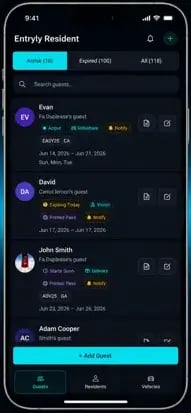
- Provide clear, structured guest access
- Reduce human error in both enforcement and communication
Solutions like ParqEx help create a more controlled and transparent parking environment, which naturally leads to fewer complaints.
Turning Complaints into Operational Insights
Every parking complaint contains useful information.
Over time, patterns begin to emerge that highlight where your system needs improvement.
For example, complaints can reveal:
- Where the parking supply is insufficient
- Where rules are unclear or misunderstood
- Where enforcement needs to be strengthened
Instead of viewing complaints as interruptions, they can be used as a feedback loop to improve operations.
The Goal Isn’t Zero Complaints
No matter how well your parking system is designed, some level of complaints will always exist.
And that’s okay. The goal isn’t perfection, it’s progress.
A well-run operation focuses on:
- Faster resolution times
- Fewer repeat issues
- More consistent systems
When those things improve, overall satisfaction improves with them.
Final Takeaway
Efficient complaint handling isn’t just about solving problems as they arise.
It’s about building a parking operation that:
- Prevents issues before they happen
- Responds quickly and consistently
- Continuously improves over time
When the system works, the complaints tend to take care of themselves.