




Most Parking Policies Are Outdated
Many parking policies were written years ago based on fixed assumptions about how parking should be used. You assign spaces, create a few rules, and expect everything to run smoothly.
But real-world parking does not follow those rules. Anyone managing a property today already knows that.
Today’s properties are dealing with far more complexity than they were a decade ago. Demand fluctuates constantly, guest and delivery traffic have increased, and many properties now operate in mixed-use environments. On top of that, enforcement resources are often limited or inconsistent.
Most teams do not realize how much parking policy affects day-to-day operations until complaints start piling up.
A modern parking policy cannot just set rules. It has to actually work in real life. It needs to adapt to how parking is actually used as part of modern parking management strategies.
What is a Parking Policy?
At its simplest, a parking policy is a structured set of rules that defines how parking operates at a property within broader parking systems used across different asset types.
It answers four fundamental questions:
- Who can park
- Where they can park
- When they can park
- How parking rules are enforced
These rules shape the day-to-day experience for residents, guests, staff, and operators alike. When done well, a parking policy creates clarity and consistency. When done poorly, it creates confusion, frustration, and constant complaints.
Why Traditional Parking Policies Fail
Most parking issues don’t actually come from a lack of parking rules. They come from rules that no longer reflect reality or account for modern parking demand challenges.
Static Rules Do Not Match Dynamic Demand
Traditional policies rely heavily on fixed assignments. While that sounds organized, it often leads to inefficiencies like:
- Empty reserved parking spaces sitting unused
- Other areas feeling overcrowded
- Limited flexibility when demand shifts
Parking is not static anymore, so policies cannot be either.
Enforcement is Inconsistent
Even the best rules do not matter if they are not enforced consistently.
Without a clear system in place:
- Violations go unchecked
- Residents begin to lose trust in the process
- Rules start to feel optional rather than authoritative
Guest Parking is an Afterthought
One of the biggest gaps in most parking policies is how they handle non-resident parking.
Many properties fail to properly plan for:
- Visitors
- Vendors
- Short-term or temporary access
This creates friction almost immediately and often leads to broader parking compliance challenges, especially in communities with frequent guest traffic.
No Data or Visibility
Traditional parking policies are often built once and left untouched.
But without visibility into how parking is actually being used, operators cannot:
- Track occupancy or usage trends
- Identify recurring issues
- Adjust policies based on real data
That lack of insight makes it nearly impossible to improve over time. And that is where things start to break down.
Key Components of an Effective Parking Policy
A strong parking policy is not just a list of rules. It is a structured system that reflects how your property operates day to day.
1. Access Control
Start by distinctly defining who is allowed to park at your property. This typically includes:
- Residents
- Guests
- Staff
- Vendors or service providers
Each group should have clearly defined permissions and expectations.
2. Space Allocation Strategy
Next, determine how parking spaces are assigned and used. There are several approaches, including models that align with parking as a service strategies:
- Assigned spaces for specific users
- Shared parking across groups
- Dynamic allocation based on demand
The right strategy depends on your property type, but flexibility is key.
3. Time-Based Rules
Parking usage often varies by time of day or week. Your policy should reflect that by distinguishing between:
- Overnight parking
- Daytime or business-hour use
- Event or temporary parking scenarios
Time-based rules help maximize usage without over-restricting access. This becomes especially important in mixed-use parking environments, where demand constantly shifts between user groups.
4. Enforcement Plan
A policy is only as strong as its enforcement.
Be clear about:
- How parking is monitored
- How violations are identified
- What actions are taken when rules are broken
Consistency here is what builds trust and compliance.
5. Guest Parking System
This is usually where things start to fall apart and where the biggest opportunity exists.
An effective guest parking system should include:
- Simple, easy registration
- Clear time limits
- Transparent rules for users
If guest parking is not handled well, it will quickly become your biggest source of complaints.
Step-by-Step: Building Your Parking Policy
Creating a parking policy does not have to be complicated, but it does take some real thought.
Step 1: Audit Current Parking Usage
Start by understanding how parking is actually being used today.
Look at:
- Occupancy patterns
- Peak demand times
- Areas of congestion or underuse
This gives you a realistic baseline to work from.
Step 2: Identify Pain Points
From there, pinpoint the issues that are causing friction.
Common challenges include:
- Not enough guest parking
- Unauthorized vehicles
- Empty reserved spaces that go unused
Your policy should directly address these problems.
Step 3: Define User Groups
Segment your users to create more targeted, effective rules. Different groups have different needs, and your policy should reflect that.
Step 4: Create Flexible Rules
Avoid overly rigid systems that cannot adapt.
Instead, build in flexibility through:
- Shared usage models
- Time-based access
- Adjustable rules as demand changes
Step 5: Implement Enforcement Tools
Consistency is everything when it comes to enforcement.
Whether manual or technology-driven, your enforcement approach needs to be reliable and repeatable.
Step 6: Communicate Clearly
Even the best policy will fail if people do not understand it.
Make sure rules are:
- Easy to access
- Clearly written
- Consistently communicated
Clarity reduces confusion and complaints.
Common Parking Policy Mistakes
Even well-intentioned policies can fall short if they overlook key realities.
Some of the most common mistakes include:
- Over-restricting access and limiting flexibility
- Ignoring guest and short-term parking needs
- Failing to enforce rules consistently
- Treating the policy as static instead of evolving
Avoiding these pitfalls can dramatically improve how your parking operates.
How Technology Strengthens Parking Policies
Modern parking policies are increasingly supported by technology, which makes them easier to manage, enforce, and adapt.
With the right tools, properties can:
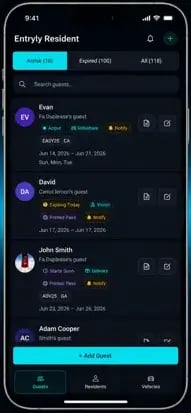
- Issue and manage digital permits
- Automate enforcement processes
- Monitor parking usage in real time
- Adjust rules based on actual data
Platforms like ParqEx help transform parking policies from static documents into fully operational systems. These capabilities are often powered by parking analytics and reporting, giving operators real visibility into performance.
From Static Rules to Dynamic Systems
The biggest shift in parking today is simple but powerful.
Parking policy is no longer just a written document.
It is a living system that evolves alongside your property, adapts to changing demand, and continuously improves over time.
Final Takeaway
A strong parking policy does not just control parking.
It creates:
- Clarity for residents and guests
- Fairness across users
- Operational efficiency for teams
- A better overall experience
When done right, your parking policy becomes less about restriction and more about simply making the property run better.