



Mixed-Use Parking Solution | Capital-Efficient Strategy for Developers & REITs
When a new 200+-unit mixed-use tower opened in a dense Northeast urban corridor, the development team was confident in the product. Strong location. Ground floor retail. Transit access. Modern residential layouts.
There was just one practical issue: the lack of on-site parking.
From a zoning perspective, that worked. Cities are continuously reducing parking minimums, especially near busy transit hubs. But condo buyer expectations and leasing dynamics never change at the same time.
During early sales conversations, parking came up more often than anticipated. Prospective retail tenants asked about employee parking. Asset managers quietly lagged in reviewing absorption projections. It was not a crisis, but it was a risk variable.
At that point, the team had three options. Build a garage. Master lease a block of spaces. Or rethink the model entirely.
They chose the third option and implemented a mixed-use parking solution powered by ParqEx.
That decision changed the trajectory of the conversation.
The Real Problem With Mixed-Use Parking
Mixed-use assets generate layered parking demand.
Residents want dependable overnight parking. Retail employees need predictable daily access. Customers need short-term availability. Restaurant customer parking traffic peaks in the evening. And of course, service providers show up at irregular times throughout the day.
When a building opens without parking, parking needs don’t just disappear because there’s no on-site parking available. Those needs scatter and seek solutions elsewhere.
Without a clear mixed-use parking solution, developers often face slower absorption, more negotiation friction with retail tenants, and recurring operational questions from residents.
Parking rarely drives the initial underwriting conversation, but it quietly affects how confident people feel moving forward.
Increase Parking Revenue
Mixed-use developments don’t just need parking—they need parking that creates value. Learn how ParqEx helps developers and property owners increase parking revenue through smarter utilization, automation, and flexible parking management.
Learn how to increase parking revenue →
Why Building a Garage Was Not the Obvious Answer
Structured parking garages in dense urban markets usually range from:
- $30,000 to $60,000 per above-grade space
- $60,000 to $90,000 or more per below-grade space
For a 200+ unit project, that translates into millions in capital before the first resident moves in.
Garages also introduce long-term considerations. Structurally expensive maintenance cycles. Waterproofing exposure. Lighting upgrades. Additional security needs. Insurance complexity. Utilization volatility.
In mixed-use properties, demand patterns rarely align cleanly. Residential demand peaks overnight. Retail and office demand concentrates during business hours. Restaurants spike later. Building permanent infrastructure for uneven demand can dilute capital efficiency.
For institutional owners and REITs, that imbalance matters.
The development team decided that building fixed parking for variable demand did not make financial sense.
Where ParqEx Came In
At this point, the conversation shifted from “Do we need parking?” to “How do we deliver it differently?”
ParqEx worked directly with the ownership group to design a structured off-site aggregation strategy.
The first step was not software, it was parking supply.
Through coordinated demand outreach, ParqEx identified underutilized private parking within a roughly 1-mile radius of the property. That inventory included:
- Religious institutions with weekday parking surplus
- Residential buildings with excess parking capacity
- Mixed-use neighbors with complementary demand cycles
- Select private commercial parking lots.
These spaces already existed but hadn’t been contracted for other properties’ parking needs.
ParqEx negotiated agreements, secured dedicated inventory, and formalized access rights. That created a real, contracted parking supply tied to the development.
Only then did the technology layer come into play.
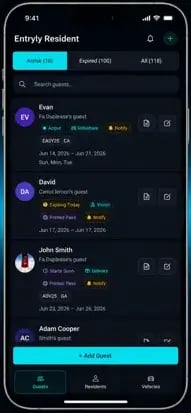
The secured spaces were onboarded into a centralized parking management portal that allowed residents and retail operators to:
- View available parking inventory
- Reserve monthly parking
- Join parking waitlists
- Manage payments
- Receive updates and communication.
ParqEx didn’t simply tell the community there were nearby parking options; they installed an operational system.
That clarity reduced uncertainty almost immediately.
Introducing the PaaS Layer
This model, seen at properties like this, fits within a broader Parking-as-a-Service (PaaS) framework.
Rather than building and owning parking infrastructure, the property provides parking access as a managed service layer. Inventory is coordinated. Access is subscription-based. Supply expands as demand expands.
Parking shifts from fixed asset to managed infrastructure.
If you want a deeper breakdown of how Parking as a Service works across asset classes, we explore that concept separately in our dedicated PaaS article.
Looking for more ways to monetize your parking assets? Learn how to increase parking revenue with ParqEx.
In this case, the PaaS model transformed parking from a vulnerability into a structured amenity.
The Structure Was Deliberate
The agreement between the property and ParqEx was based on a performance-based framework.
There was a specific onboarding window with an initial milestone of 15 or more secured parking spaces. Capacity could scale beyond 30 spaces as occupancy increased.
Economically, the structure blended a modest SaaS component with transaction-based alignment.
This meant the development avoided fixed, long-term parking exposure before demand justified it.
With this method in place, parking supply grew alongside occupancy. If demand remained moderate, costs remained moderate.
Why Asset Managers and REITs Should Pay Attention To ParqEx’s Mixed-Use Parking Solution
For developers, this solved a delivery problem.
For asset managers and REITs, it addressed capital discipline.
Parking influences lease-up velocity, condo absorption, retail tenant retention, and the potential for ancillary revenue. It also introduces long-term maintenance exposure if structured parking is built.
A scalable mixed-use parking solution built on a PaaS aggregation model allows institutional owners to offer parking access without embedding structural parking risk into the asset.
From a REIT parking strategy perspective, aggregation supports:
- Capital efficiency
- Reduced long-term CapEx exposure
- Variable cost alignment
- Portfolio consistency
Maximize Parking Revenue
ParqEx helps mixed-use developments transform parking into a recurring revenue source while improving tenant satisfaction and operational efficiency.
Explore Parking Revenue Solutions →
It is not flashy. But it is financially rational.
The Portfolio Angle
One overlooked advantage of a PaaS-driven parking-aggregation model is its repeatability.
Asset managers overseeing multiple mixed-use properties in their portfolio can apply similar frameworks across their assets. Parking allocation rules can be standardized, reporting centralized, and payment systems unified.
Instead of reinventing parking strategies for every property in a portfolio, owners can deploy a consistently reliable mixed-use parking solution across all their markets.
Over time, that consistency reduces operational friction and improves portfolio-level visibility.
Impact on NOI
Parking affects NOI in several ways, often indirectly.
Want to maximize your property’s financial performance? Learn how to increase parking revenue with ParqEx.
It influences retention, shapes retail confidence, creates ancillary revenue opportunities, but can also lead to underutilized overhead when structured parking is oversized.
By aligning costs with real demand through an aggregation-based mixed-use parking solution, owners introduce flexibility into the operating structure.
Flexibility, particularly in mixed-use assets, supports more resilient performance over time.
A Broader Industry Shift
Urban real estate continues moving toward asset-light infrastructure models. Flexible office. Shared amenities. Managed access systems. Subscription utilities.
Parking is moving in that direction as well.
Parking as a Service is not simply a buzzword. It reflects a shift away from ownership and toward coordination.
A modern mixed-use parking solution fits squarely within that shift.
Parking Revenue Strategies
Parking should be more than an operational necessity—it should be a revenue-generating asset. Discover how ParqEx helps mixed-use developments optimize parking utilization and increase parking revenue.
Learn More About Parking Revenue →
About ParqEx
ParqEx provides parking aggregation and AI-driven smart parking technology infrastructure for developers, asset managers, HOAs, and institutional owners and operators nationwide.
The ParqEx parking management platform supports:
- Off-site parking aggregation
- Mixed-use tenant parking management
- Retail validation systems
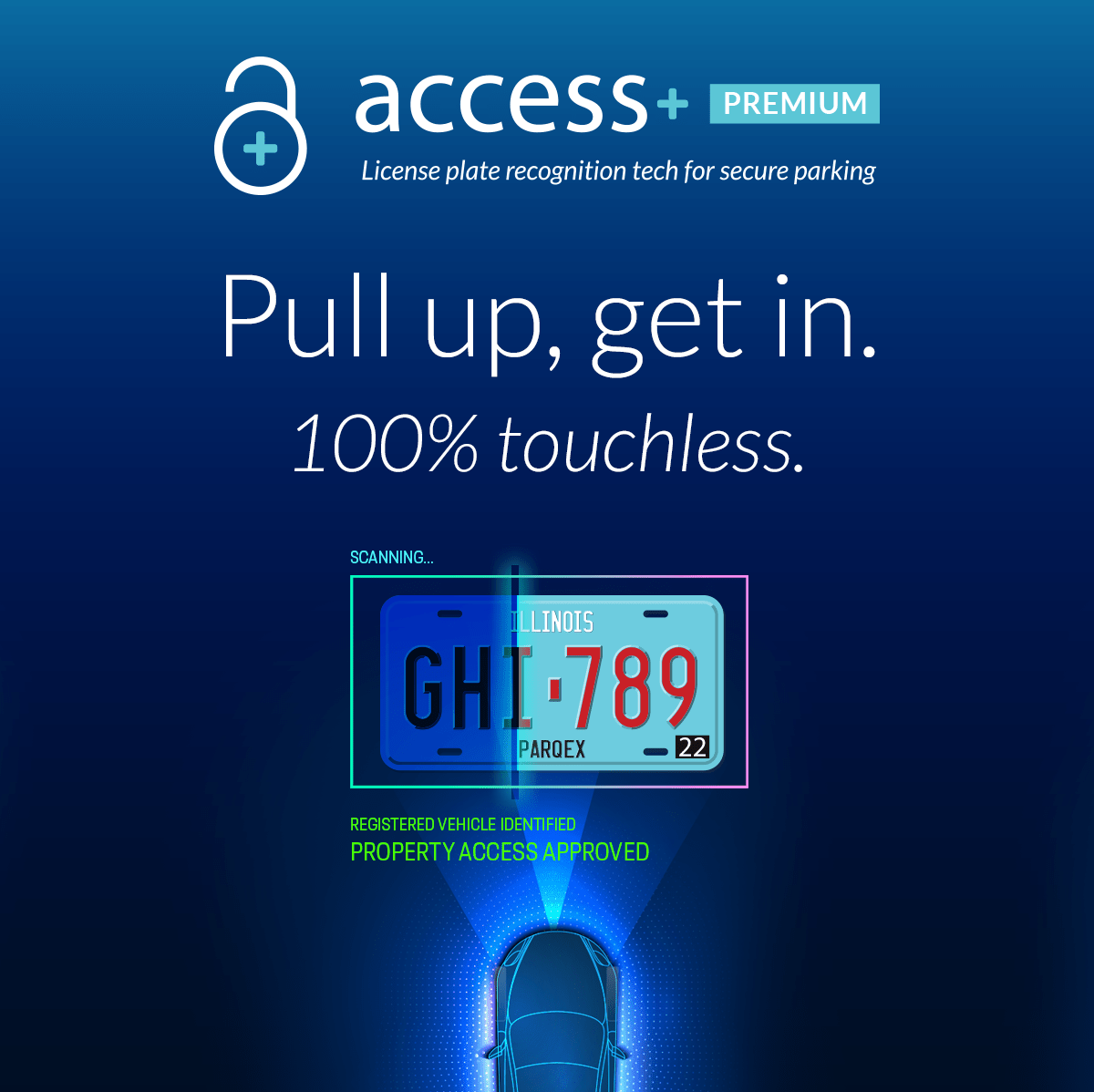
- LPR access control
- Portfolio-level coordination
The goal is straightforward. Transform parking from a capital burden into a scalable revenue-generating operating infrastructure.
If your mixed-use development faces parking constraints, the better question may not be how much parking to build, but how intelligently it can be delivered.
Reach out to ParqEx and get the conversation started!