




Why Security Teams Need Better Workforce Management
Today’s security teams do far more than patrol properties and respond to incidents.
In many organizations, security personnel have become the eyes and ears of daily operations. They’re often the first to notice safety concerns, access control issues, parking violations, suspicious activity, or resident complaints.
Whether supporting multifamily communities, commercial properties, hospitals, campuses, municipalities, or mixed-use developments, security teams are being asked to manage a growing range of responsibilities.
These may include:
- Property patrols
- Access control monitoring
- Visitor management
- Parking oversight
- Compliance checks
- Incident reporting
- Resident and customer assistance
For many security teams, parking oversight has become one of the most time-consuming responsibilities. Managing permits, monitoring unauthorized vehicles, responding to complaints, and supporting parking compliance efforts often falls directly on security personnel.
The challenge is that expectations continue to grow while staffing levels and budgets often do not.
As a result, many organizations are finding that traditional workforce management methods no longer provide enough insight into what is happening in the field. What worked when managing a handful of officers at a single location may no longer work across multiple properties, shifts, and client requirements.
This challenge becomes even more significant when security personnel are responsible for broader parking operations in addition to traditional security duties.
What Is Security Workforce Management?
At its core, security workforce management is about coordination, accountability, and operational awareness.
It’s the combination of processes, technology, reporting, and oversight that helps organizations manage personnel effectively while ensuring work is being completed consistently.
Managers need answers to questions like:
- Where are officers currently deployed?
- Were patrols completed as scheduled?
- Which properties require additional coverage?
- How are incidents being documented?
- Are compliance procedures being followed?
- Where are operational inefficiencies occurring?
Without a system in place to answer those questions, managers are often left relying on spreadsheets, phone calls, and end-of-shift updates.
That approach can work temporarily, but it becomes increasingly difficult to scale as operations grow.
Similar challenges exist within modern parking operations, where access to timely information often determines operational success.
Limited Visibility Into Field Operations
One of the most common frustrations among security managers is not knowing exactly what is happening across their sites in real time.
A manager may be responsible for multiple officers working across several locations, each with different responsibilities and reporting requirements.
When information is scattered across emails, texts, phone calls, and paper logs, it becomes difficult to verify completed work or identify problems before they escalate.
Organizations that lack operational awareness frequently experience:
- Missed patrols
- Delayed responses
- Inconsistent reporting
- Reduced accountability
- Client dissatisfaction
The larger the operation becomes, the more important it becomes to have reliable information available when decisions need to be made.
Manual Reporting Creates Gaps
Many security operations still rely heavily on manual processes.
Paper reports, spreadsheets, phone calls, and end-of-shift summaries have been industry standards for years. The problem is that these methods often create delays and leave room for inconsistencies.
As organizations grow, manual reporting can lead to:
- Delayed information
- Incomplete documentation
- Missed compliance requirements
- Reduced accountability
Most managers have experienced situations where important details were forgotten, reports were submitted late, or information was difficult to locate when needed.
These small inefficiencies add up over time.
Many organizations address these challenges through improved reporting, analytics, and parking utilization optimization strategies that provide a clearer picture of daily operations.
This challenge is especially common when security teams are responsible for parking-related activities. Tracking violations, documenting unauthorized vehicles, and verifying permits manually can create significant administrative overhead.
Inconsistent Patrol Coverage Creates Risk
Security effectiveness depends heavily on consistency.
When patrol routes, schedules, or responsibilities vary significantly between officers, organizations may experience:
- Coverage gaps
- Missed inspections
- Increased risk exposure
- Inconsistent service levels
- Client frustration
Managers gain confidence knowing patrols are being completed, reports are being submitted, and responsibilities are being fulfilled according to established procedures.
Consistency helps build trust with both clients and the communities being served.
Staffing Challenges Continue to Grow
Security organizations continue to face staffing pressures.
Managers must balance:
- Labor costs
- Shift coverage
- Property requirements
- Employee workloads
- Client expectations
Without reliable data, workforce planning often becomes reactive rather than strategic.
Instead of proactively allocating resources, organizations find themselves constantly responding to shortages, scheduling conflicts, or unexpected coverage issues.
Modern workforce management systems help organizations make staffing decisions based on actual operational data rather than assumptions.
How Technology Improves Security Workforce Management
Modern workforce management platforms provide organizations with tools that improve accountability, communication, and operational efficiency.
Key capabilities often include:
Mobile Workforce Management
Allowing officers to:
- Receive assignments
- Document activities
- Submit reports
- Access property information
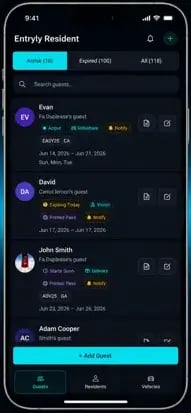
Mobile tools such as the ParqEx Enforcer App allow field personnel to document violations, verify permits, access property information, and submit reports directly from the field. This reduces paperwork while helping managers stay informed about field activity.
Real-Time Activity Tracking
Managers gain insight into:
- Patrol completion
- Site visits
- Response activity
- Coverage levels
This helps improve accountability while reducing administrative overhead.
Digital Reporting
Instead of relying on paperwork, organizations can centralize:
- Incident reports
- Patrol logs
- Compliance records
- Operational metrics
This creates a more complete operational picture.
Data and Analytics
One of the most valuable benefits of modern workforce management is access to operational data.
Analytics can help identify:
- Staffing trends
- Coverage gaps
- Property activity patterns
- Resource allocation opportunities
- Operational inefficiencies
Organizations that leverage data are often able to make more informed decisions and improve overall performance.
Workforce Management and Parking Operations
For many security organizations, parking oversight has become a significant part of the job.
Security teams are often responsible for:
- Visitor parking compliance
- Unauthorized vehicle monitoring
- Permit verification
- Access control enforcement
- Property patrols
On some properties, parking-related responsibilities can consume a surprising amount of an officer’s day. Responding to complaints, documenting violations, verifying permits, and monitoring unauthorized vehicles all require time and consistency.
As parking programs become more sophisticated, organizations benefit from systems that connect workforce activities with broader parking operations and parking compliance efforts. This helps reduce administrative burden while giving managers a clearer understanding of what is happening across the property.
The Growing Role of LPR Technology
Many organizations are adopting LPR parking for multifamily communities, campuses, and commercial properties to improve operational efficiency.
License Plate Recognition technology can help security teams:
- Verify vehicle authorization
- Improve compliance monitoring
- Reduce manual inspections
- Generate activity records
- Improve reporting accuracy
The same data can also support stronger parking compliance programs and reduce unauthorized vehicle activity.
Rather than increasing workloads, technology helps automate routine tasks and allows personnel to focus on higher-value responsibilities.
Scenario Example: Manual vs Technology-Enabled Operations
Consider a security team managing five properties with four patrol officers.
Traditional Approach
- Paper patrol logs
- Manual reporting
- Limited operational awareness
- Reactive issue management
Result:
- Delayed information
- Inconsistent documentation
- Increased administrative effort
Technology-Enabled Approach
- Mobile reporting
- Digital workflows
- Real-time insights
- Centralized analytics
Result:
- Improved accountability
- Faster reporting
- Better operational awareness
- More efficient workforce utilization
Similar efficiencies can often be achieved by improving parking utilization optimization and reducing manual workflows.
The difference is not necessarily adding more staff.
It is helping existing staff operate more effectively.
Why Data Is Becoming Essential
The security industry is becoming increasingly data-driven.
For years, many workforce decisions were based largely on experience and instinct. While those things still matter, organizations now have access to operational data that can help validate decisions and uncover opportunities for improvement.
By tracking activity and performance metrics, organizations can better understand:
- Resource utilization
- Property needs
- Compliance performance
- Service quality
- Workforce efficiency
The goal is not simply collecting data for the sake of reporting.
The goal is to use that information to improve staffing decisions, increase accountability, and operate more efficiently over time.
Organizations that embrace this approach are often able to identify problems sooner and make more informed decisions.
The same principles are increasingly driving innovation in parking data and operational reporting.
Final Takeaway
Today’s security teams are expected to do more with less.
The organizations that succeed are those that combine skilled personnel with technology, reporting, and operational awareness.
Because when managers can understand what is happening in the field, they can make better decisions, improve accountability, and operate more efficiently.