
Types of Parking Systems Explained: Permit, Gated, Ungated, and Hybrid Models
Parking has grown well beyond painted parking lines and assigned spaces. Today, property owners and parking operators are rethinking how parking functions, not just as infrastructure, but as a controllable asset that drives revenue, and influences tenant satisfaction, operational efficiency, and even property value.
Understanding the types of parking systems available is the first step toward building a smarter parking strategy.
Whether managing a residential community, commercial property, mixed-use development, or corporate campus, the right parking management system can reduce friction, improve access control, and help operators maximize every available space.
In this guide, we’ll break down the four primary types of parking systems used across modern properties:
- Permit parking systems
- Gated parking systems
- Ungated parking systems
- Hybrid parking systems
We’ll explore how each works, where it performs best, and why software, rather than manual processes, increasingly powers modern parking systems.
What Are Parking Systems?
Parking systems are the policies, technologies, and operational workflows used to control vehicle access, organize parking inventory, and enforce usage rules.
Historically, parking access control systems relied heavily on physical tools such as gates, decals, chalk-and-tire enforcement by patrol officers, and paper permits. While these methods provided a basic structure, they often limited flexibility and added to an already burdensome administrative workload.
Today, modern parking management systems take a more dynamic approach.
Instead of simply restricting access, today’s smart parking systems help operators:
- Digitally assign spaces
- Monitor utilization in real time
- Effortlessly manage guest parking
- Automate enforcement
- Adjust permissions instantly
- Unlock new revenue opportunities
As expectations rise for both residents and visitors, parking is increasingly viewed as part of the overall property experience, not just a logistical necessity.
The 4 Main Types of Parking Systems
Although each property has its own specific requirements, most parking operations can be categorized into four basic models. Recognizing these types of parking systems helps in determining which structure best supports your operational objectives.
1. Permit Parking Systems
Permit-based parking continues to be one of the most widely used residential parking systems, particularly in multifamily communities, HOAs, universities, and employee parking environments.
How Permit Parking Works
Drivers receive authorization to park through either physical or digital credentials, which may include:
- Hangtags
- Window decals
- License plate registrations
- Mobile permits
Then, enforcement teams or automated tools verify that vehicles are properly registered.
Why Properties Choose Permit Systems
Predictability
Assigned permissions help ensure residents and employees have reliable parking access.
Lower infrastructure costs
Permit systems typically do not require expensive hardware.
Familiar process
Many operators already understand how permits work, and no new workflow is introduced.
Where Permit Parking Systems Struggle
Despite their popularity, traditional permit models often introduce operational challenges.
Administrative overhead
Manual tracking, printing replacements, and handling resident requests consume valuable staff time.
Unauthorized sharing
Physical permits can be transferred and shared between vehicles, making enforcement harder.
Limited adaptability
Static permits don’t easily support short-term guests, vendor vehicles, or fluctuating demand.
Real-World Example: Multifamily Community Permit Parking
Example: Consider a 250-unit multifamily community where each resident is assigned one permit, but many households own multiple vehicles. Without a structured system, overflow quickly spills into guest spaces, creating frustration for both residents and visitors.
By implementing a digital permit parking system tied to license plates, the property can clearly define vehicle permissions, reduce unauthorized parking, and give management better visibility into how spaces are actually being used.
The Modern Evolution of Permit Parking
Digital permit parking is quickly replacing traditional paper permits. By linking permits directly to license plates and using centralized parking management software, operators can better monitor the property while reducing manual tasks.
Modern parking systems allow properties to instantly issue or rescind permits, stopping the need for drivers to visit offices or wait for physical credentials.
For many communities, this offers a good balance of structure and flexibility.
2. Gated Parking Systems
Gated environments are among the most recognizable parking access control systems, often associated with security-focused properties.
You’ll frequently see gated parking at:
- Luxury residential buildings
- Corporate headquarters
- Hotels
- Medical facilities
- Government sites
How Gated Parking Works
Drivers must present credentials before entering. These may include:
- Key fobs
- Access cards
- PIN codes
- Mobile apps
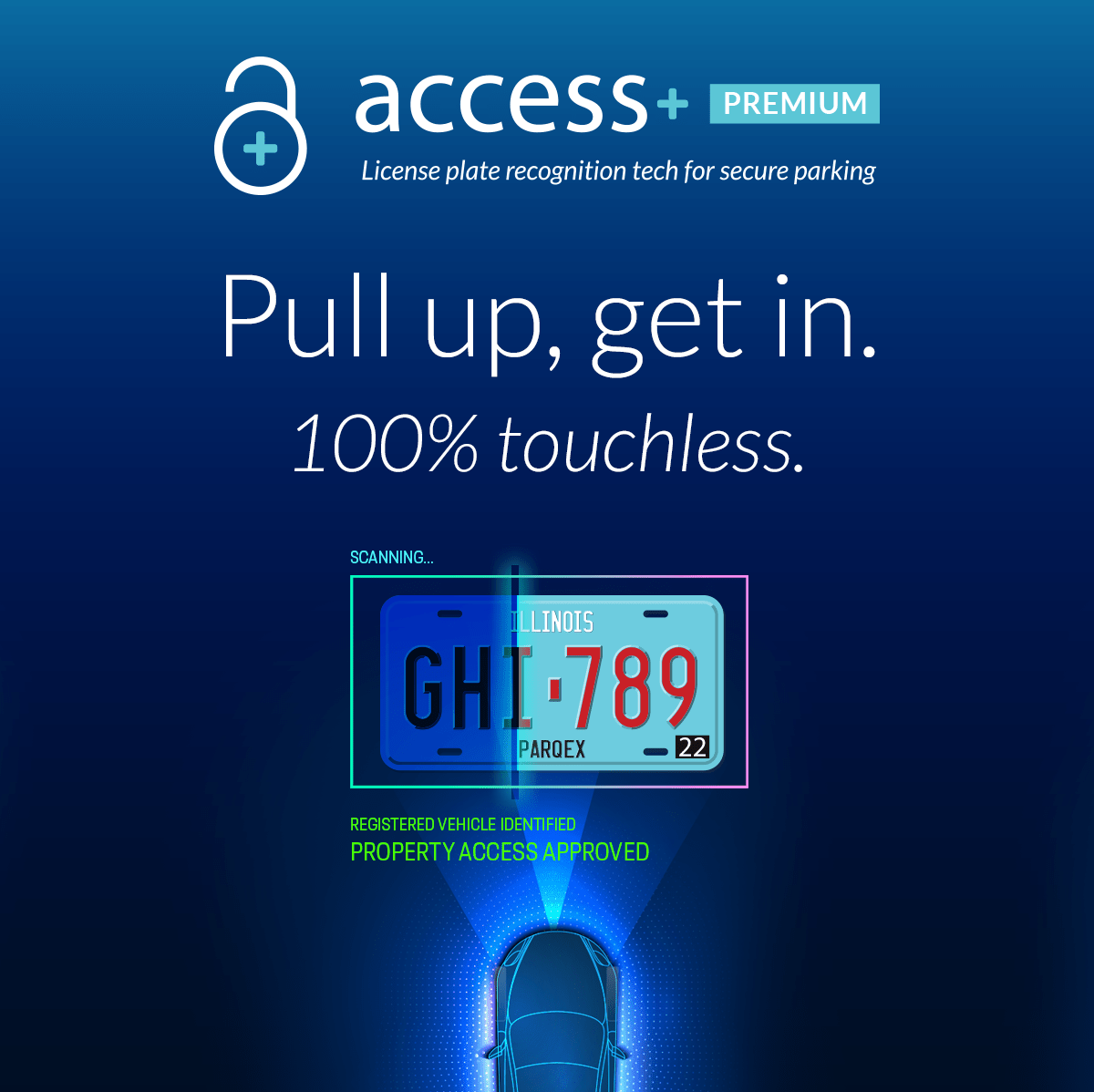
- License plate recognition
Once verified, the gate opens automatically.
Advantages of Gated Parking
Visible security presence
Physical barriers can discourage unauthorized vehicles.
Controlled entry points
Parking operators know exactly where vehicles enter and exit.
Reduced patrol reliance
Fewer unauthorized vehicles generally means fewer parking violations.
Limitations to Consider
High upfront investment
Installation, repairs, and ongoing maintenance can be costly.
Traffic congestion
Entry lines during peak parking hours can frustrate drivers.
Operational vulnerability
When a gate malfunctions, access may be completely cut off.
Guest complexity
Visitors often need temporary parking passes, which creates friction and confusion.
Real-World Example: Corporate Campus Access Control
Example: Imagine a corporate campus where employees arrive within the same 30-minute window each morning. A gated entrance may provide security, but it can also create long entry lines that delay staff and disrupt nearby traffic patterns.
When paired with modern parking access control technology such as license plate recognition, gates can open automatically for authorized vehicles — helping the property maintain security while improving traffic flow.
Smarter Gated Environments
Modern parking management systems enhance gated properties by enabling remote guest registration, digital passes, and real-time oversight.
However, gates alone cannot optimize utilization, especially when reserved spaces remain empty for long periods.
This is one reason many operators are shifting toward more flexible types of parking systems.
3. Ungated Parking Systems
Ungated parking removes physical barriers and instead relies on policy, enforcement, and technology.
This model is common in commercial parking systems, such as:
- Retail centers
- Mixed-use developments
- Urban surface lots
- Medical campuses
- Transit-adjacent properties
How Ungated Parking Works
Access is normally controlled through tools like:
- Parking apps
- Digital permits
- Pay-by-phone platforms
- License plate recognition
- Time-based restrictions
Why Operators Prefer Ungated Models
Lower capital expense
No gates means fewer hardware costs.
Better traffic flow
Drivers can enter and exit without delay.
Scalability
Inventory can expand without physical construction.
Revenue potential
Unused spaces can be made available to approved drivers.
Operational Challenges
Ungated parking requires discipline.
Without strong oversight, violations can increase, especially in high-demand areas.
Additionally, some tenants may associate gates with safety, even though technology often provides equal or better control.
Real-World Example: Mixed-Use Urban Property
Example: At a mixed-use development near restaurants and retail, parking demand often shifts throughout the day. Office commuters occupy spaces in the morning, while visitors arrive in the evening.
An ungated parking environment supported by smart parking software allows operators to accommodate both groups without major infrastructure, ensuring spaces don’t sit empty during off-peak hours.
The Role of Smart Parking Systems
When powered by smart parking software, ungated properties often surpass traditional setups in both efficiency and profitability.
Operators gain actionable data on who is parking, when demand peaks, and where availability exists, enabling smarter allocation decisions.
4. Hybrid Parking Systems: The Fastest-Growing Model
Hybrid parking systems combine elements of multiple parking structures, allowing properties to adapt as their parking demand shifts.
Rather than forcing a one-size-fits-all approach, hybrid models create layered access.
A property might:
- Reserve spaces for residents
- Offer structured guest parking
- Maintain controlled employee areas
- Rent unused inventory during off-hours
This flexibility is why hybrid parking is quickly becoming the preferred strategy across modern real estate.
Why Hybrid Parking Is Growing
Demand is no longer static.
Work patterns, visitor behavior, and urban density continue to evolve.
Hybrid parking management systems support:
- Demand-based allocation
- Higher utilization
- Additional revenue streams
- Improved driver experience
- Long-term operational agility
Real-World Example: Transit-Adjacent Residential Community
Example: Picture a residential property located near a major transit stop. During weekdays, many residents commute by train, leaving portions of the parking garage unused for hours at a time.
With a hybrid parking model, the operator can reserve spaces for residents overnight while making select inventory available to daytime commuters. This approach increases utilization without compromising resident access.
Technology Makes Hybrid Possible
Without centralized parking software, managing multiple user groups can overwhelm on-site teams.
Modern parking systems enable operators to manage permits, guest access, enforcement workflows, and inventory from a single interface, transforming parking from a reactive task into a strategic function.
How to Choose Between the Types of Parking Systems
There is no universal “best” parking model. The right choice depends on how your property operates today and how it may evolve tomorrow.
Ask these questions:
- Who uses your parking? (Residents, employees, customers, or all of the above?)
- Is demand predictable or variable?
- How important is access control?
- Are unused spaces generating value, or are they just sitting idle?
- Can your system adapt without major construction?
Future-ready properties prioritize flexibility. Parking needs rarely stay the same for long.
Why Modern Parking Systems Are Shifting Toward Software
Across both residential and commercial real estate, operators are moving away from manual workflows and toward software-driven parking management systems.
The goal is simple: reduce friction while increasing visibility.
Technology helps properties:
- Automate permissions
- Reduce administrative workload
- Improve enforcement accuracy
- Enhance the driver experience
- Capture data for smarter planning
Most importantly, software allows parking to operate as an asset rather than a recurring source of complaints.
Frequently Asked Questions About Types of Parking Systems
The four primary types of parking systems are permit, gated, ungated, and hybrid. Each provides a different balance of control, flexibility, and operational complexity.
Many communities begin with permit-based residential parking systems because they are simple. However, hybrid models are increasingly popular because they better accommodate guests, multiple vehicles, and changing demand.
Gates create a visible barrier, but true security depends on how access is managed. Digital credentials, license plate recognition, and monitored entry points often strengthen security beyond the gate itself.
A hybrid parking system blends multiple access strategies, allowing operators to allocate spaces dynamically. This approach helps maximize utilization while maintaining appropriate control.
Yes. When operators understand their utilization patterns, unused inventory can be made available to approved drivers, transforming parking into a revenue-producing asset rather than an underused expense.
Smart parking systems provide real-time visibility, automate manual processes, and allow properties to adjust quickly as demand changes. This adaptability is increasingly critical in modern real estate environments.
Parking access control systems help operators regulate who can enter a property while reducing the need for constant manual oversight. By using tools such as digital credentials, license plate recognition, and automated permissions, properties can minimize unauthorized parking, streamline enforcement, and create a more predictable experience for tenants and visitors. Over time, stronger access control also reduces administrative strain on on-site teams.
Traditional parking systems rely heavily on physical tools such as paper permits, decals, gates, and patrol enforcement. While these methods provide structure, they often lack flexibility and real-time visibility. Modern parking systems, by contrast, are typically software-driven. They allow operators to manage permissions remotely, monitor utilization, adjust policies instantly, and respond more effectively to changing demand. This shift enables parking to function as a dynamic resource rather than a static one.
Many operators assume upgrading their parking management system will be disruptive, but modern platforms are often designed for phased or low-friction implementation. Cloud-based systems, in particular, reduce the need for extensive hardware and enable gradual property transitions. Success typically depends on clear communication with users, thoughtful policy design, and the selection of technology that aligns with the property’s operational goals.
Parking is often one of the first and most frequent touchpoints people have with a property. When parking is confusing, oversubscribed, or poorly enforced, frustration builds quickly. Well-designed parking systems improve satisfaction by creating clarity around where people can park, simplifying guest access, and reducing daily uncertainty. In many cases, a smoother parking experience contributes directly to higher tenant retention and a stronger overall perception of the property.
Absolutely. Parking demand shifts alongside resident behavior, commuting patterns, and local development. A system that worked well five years ago may no longer support current needs. Regularly evaluating parking utilization, enforcement trends, and user feedback helps operators identify opportunities for improvement. Properties that periodically modernize their approach are far better positioned to adapt without requiring costly structural changes.
A future-ready parking system should prioritize flexibility, visibility, and ease of management. Operators benefit from solutions that support digital permits, real-time data insights, scalable access control, and the ability to adjust policies without major infrastructure changes. As real estate continues to evolve, adaptable parking systems help ensure that today’s solution doesn’t become tomorrow’s limitation.
Parking Is No Longer Just Infrastructure, It’s Strategy
Choosing between parking system types is no longer just an operational decision; it’s a strategic one.
Properties that modernize their parking approach often experience:
- Fewer disputes
- Stronger access control
- Higher satisfaction
- Better space utilization
- New income opportunities
As real estate grows more dynamic, the most successful operators treat parking as part of a broader property strategy rather than a static necessity.
Final Thoughts
Each of the four types of parking systems, permit, gated, ungated, and hybrid, serves a distinct purpose. But the future belongs to flexible, technology-enabled models that can evolve without requiring costly structural changes.
Because ultimately, the best parking system is one that works quietly in the background, delivering convenience for drivers while giving operators the control and insight they need.
And as expectations continue to rise, modern parking systems will play an increasingly important role in shaping the overall property experience.
If you’d like help evaluating your property’s parking needs or understanding which parking system makes the most sense, you can book a demo with our team to walk through your options.