
The Complete Guide to Parking Management in 2026
If parking has become harder to manage over the past few years, you are not imagining it.
Not long ago, parking operations were predictable. Assign spaces, hand out permits, tow violators when necessary, and respond to occasional complaints. It was rarely glamorous, but it was manageable.
Today, parking touches revenue, resident satisfaction, liability, operational efficiency, and even long-term asset value. The expectations have changed, and the old tools many parking operations rely on were simply not built for the level of complexity properties now face.
Electric vehicles require charging access. Delivery traffic never seems to slow down. Guests expect frictionless entry. Employees want guaranteed parking. Meanwhile, property teams are under constant pressure to do more without expanding staff.
That is exactly why modern parking management has shifted from being a background task to a strategic operational priority.
This guide breaks down what parking management looks like in 2026, why traditional approaches are falling short, and how technology, especially AI-powered parking management software, is helping properties regain control.
What Is Parking Management Today?
At its core, parking management is about organizing how a parking asset is used so that the right people can access the right spaces at the right time. That sounds simple, but the execution has become far more nuanced.
Modern parking management now includes:
- Access control for residents, guests, employees, and vendors
- Enforcement measures that don’t create unnecessary confusion
- Digital parking permitting instead of physical tags
- Real-time visibility into parking occupancy
- Revenue generation from underutilized spaces
- Easy integration with property management software
- Data-driven AI-generated planning for future demand
To put it plainly, parking is no longer just a logistical concern; it’s an operational system that directly influences everyone who interacts with your property.
Properties that treat parking as an afterthought often feel the consequences quickly: resident frustration, staff burnout, and missed revenue opportunities that quietly add up over time.
Why Parking Management Matters More Than Ever
Over the recent years, several factors have made parking harder to manage with manual processes.
1) Demand Is Less Predictable
Hybrid work schedules alone have rewritten occupancy patterns. Tuesdays may look completely different from Fridays, while weekends can resemble peak travel periods depending on the property type.
Without visibility into how spaces are actually being used, property teams are often forced to react instead of plan.
2) Expectations Are Higher
Residents and tenants have grown accustomed to seamless digital experiences in nearly every part of their lives. Waiting for a temporary permit or dealing with unclear guest parking instructions feels outdated and unacceptable.
Convenience is no longer a perk; it is the baseline.
3) Operational Pressure Keeps Increasing
Property managers already juggle too much! Leasing, compliance, maintenance, vendor coordination, and resident communication take up enough of their time. Adding manual parking management and enforcement on top of that workload is rarely sustainable.
When parking is managed manually through print-out parking lease agreements, spreadsheets, email threads, and physical permits, small issues tend to snowball into daily interruptions.
4) Parking Is Financially Underutilized
Many properties sit on hidden revenue simply because they lack the tools to manage inventory dynamically. Unassigned spaces, poorly enforced rules, and unused premium spots represent income that never gets captured.
The Limitations of Traditional Parking Systems
If your current parking management process relies heavily on stickers, hang tags, or static parking permits, you are operating under an archaic model.
Traditional parking systems often create more work than they eliminate because they depend on manual oversight.
Common friction points include:
- Staff spending hours verifying permits
- Residents losing tags and needing replacements
- Enforcement disputes without clear audit trails
- Unauthorized vehicles slipping through the cracks
- Guest parking turning into a daily nightmare
Even when these systems technically function, they rarely scale well. What worked for a 150-unit property tends to strain in a larger or mixed-use environment.
The bigger issue is visibility. Without reliable data, it becomes extremely difficult to answer basic operational questions:
- Are we oversold or undersold on parking?
- When are we actually at capacity?
- Which rules are being ignored?
- Where are complaints coming from?
You cannot optimize what you cannot see.
What Defines Modern Parking Management Software?
The shift toward parking management software has less to do with chasing innovation and more to do with removing operational drag.
A strong parking management platform should simplify your day-to-day while giving management better insight into how the parking assets are working.
Look for capabilities like:
1) Automation That Reduces Manual Work
Instead of approving every parking-related request by hand, modern systems automate permitting, renewals, and enforcement triggers so your team can focus on higher-value tasks.
2) Real-Time Visibility
The ability to know exactly who is parked on-site and where eliminates guesswork and speeds up decision-making for management.
3) Flexible Rule Management
Every property operates differently. Configurable rules allow you to adapt policies without reinventing workflows.
4) Seamless Integrations
When parking software connects with platforms like AppFolio or Yardi, data flows naturally, and administrative duplication disappears.
5) Mobile Accessibility
Both staff and vehicle owners benefit from being able to manage everything from their own smartphones, instead of having to track down an office.
The goal is not simply digitization. It is operational clarity.
How AI Is Reshaping Parking Management
It’s fair to say that artificial intelligence has moved well beyond being simply a buzzword. In parking environments, it is proactively solving parking-related problems that used to require constant human attention.
Here is what that looks like in practice.
1) Smarter Enforcement
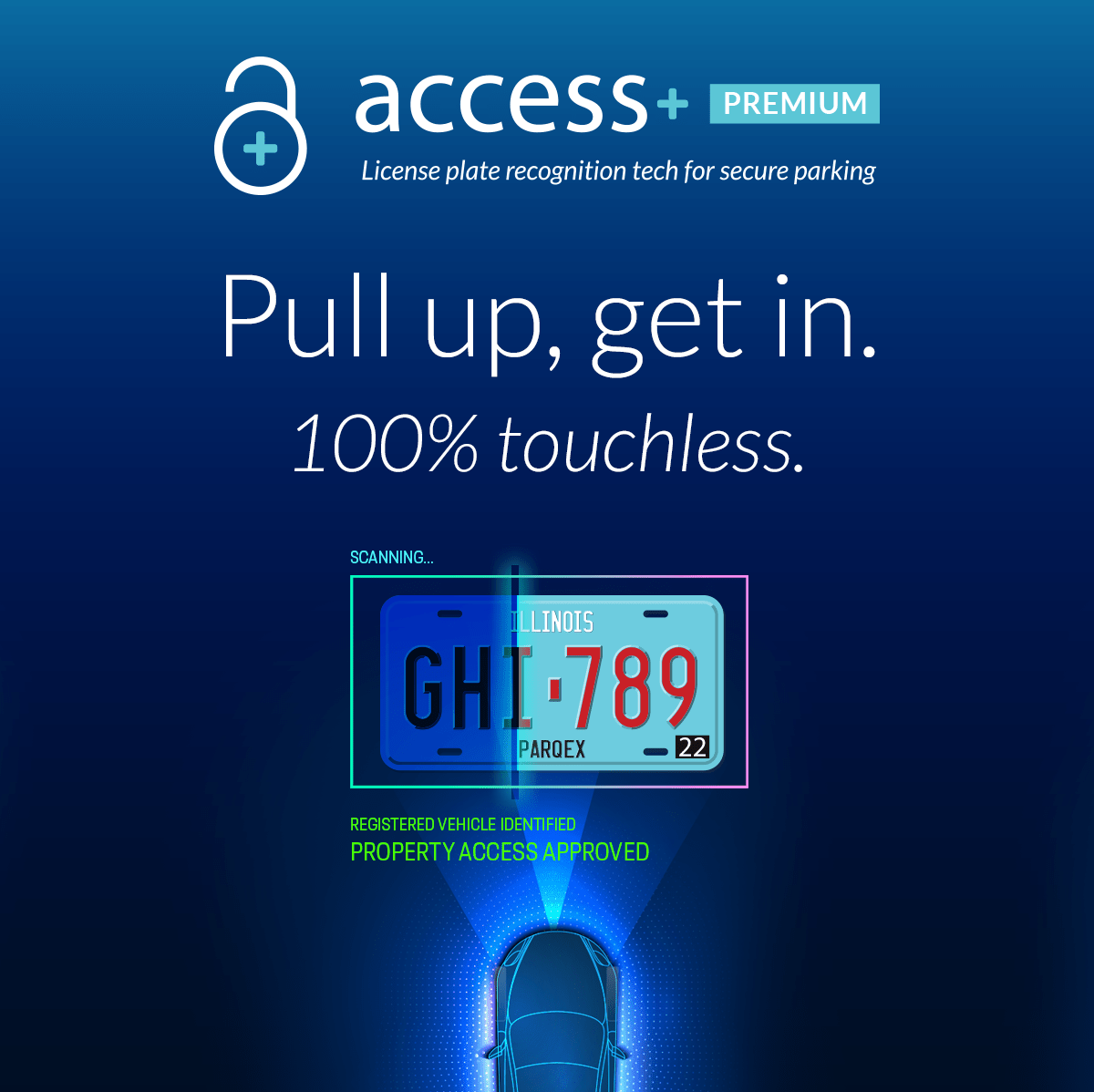
AI-assisted license plate recognition can instantly identify vehicles, reducing reliance on manual patrol checks while improving accuracy.
This often leads to heightened security along with fewer disputes because enforcement decisions are backed by clear data.
2) Demand Forecasting
Instead of guessing how many spaces management will need next quarter, AI can analyze historical parking usage patterns and surface trends you might otherwise miss.
For example, a property may discover that guest parking demand spikes during event seasons or that employee parking fluctuates more than one would have thought around midweek.
Insights like these allow teams to adjust policies before friction unfolds.
3) Dynamic Space Allocation
Some platforms can recommend how to redistribute parking inventory based on real usage, helping properties capture revenue from spaces that would otherwise sit empty.
4) Reduced Administrative Noise
When fewer issues escalate into manual investigations, staff regain time that can be redirected toward resident experience and property performance.
Importantly, AI is not replacing property teams. It removes repetitive work, enabling them to operate more strategically.
Key Features to Prioritize in 2026
Not every platform labeled “modern” actually delivers meaningful operational value, so it helps to focus on features that drive measurable outcomes.
Digital Permitting
Eliminates physical clutter while giving teams instant control over approvals and expirations.
Guest Parking Management
Allows residents or tenants to register visitors easily without overwhelming the front desk or management office.
Integrated Enforcement Tools
Creates consistency while reducing confrontation.
Analytics and Reporting
Turns parking from a guessing game into a measurable revenue-generating asset.
Scalability
Ensures the parking management system can grow alongside your portfolio.
The Business Impact of Better Parking Operations
Once parking is intentionally managed, the ripple effects extend far beyond the parking facility itself.
Properties often see improvements in:
- Resident satisfaction and retention
- Staff efficiency
- Compliance consistency
- Ancillary revenue
- Overall asset perception
If you think about it, prospective tenants and residents notice parking long before they decide to sign a lease. A chaotic parking experience can quietly and quickly derail an otherwise strong tour, while a smooth one reinforces professionalism.
Choosing the Right Parking Management Partner
Technology matters, but partnership matters just as much.
A provider should understand the operational realities property teams face and offer guidance that reflects real-world complexity, not theoretical workflows.
As you evaluate vendors, consider:
- How easy is the platform for both staff and parkers?
- Will software onboarding require heavy lifting from your team?
- Can the parking management system adapt as your needs evolve?
- Do you gain actionable insights, or just raw data?
The strongest partnerships feel collaborative from day one.
Looking Ahead: The Future of Parking Management
Parking is rapidly becoming more connected, more responsive, and more data-informed.
Over the next several years, you can expect continued momentum around:
- Predictive occupancy modeling
- Deeper integrations across property tech stacks
- Contactless access experiences
- Smarter EV coordination
- Expanded automation
Properties that invest early in property parking management often find themselves operating from a position of calm, and can pivot when necessary. At the same time, competitors scramble to modernize their parking operations.
Parking Is No Longer Just Infrastructure
For years, parking sat quietly in the background of property operations. Today, it plays a visible role in shaping daily experience, operational efficiency, and financial performance.
Treating parking strategically is no longer just for large properties or cutting-edge new developments. It is quickly becoming standard practice across residential, commercial, and mixed-use environments.
With the right parking management software and a thoughtful approach to automation, properties can transform parking from a recurring headache into a controlled, revenue-aware asset.
The tools exist. The data is available. The opportunity is real.