
How ParqEx Unlocks EV Charging Revenue & Control — With Either Payment Path
Property owners and parking operators face a common challenge with EV charging management: every site has unique rules, constraints, and revenue goals. ParqEx solves this by integrating with modern EV charging stations in two operating modes, while maintaining a seamless experience for both drivers and managers.
Two Payment Models
Charger/Network-Billed: The EV charging station (or its network) collects payment for energy. ParqEx handles EV stall reservations, access, enforcement, and reporting.
ParqEx-Billed: The charger operates in free-vend or $0 tariff mode. ParqEx tracks session usage (kWh/time) and bills the driver—bundling parking + energy into a single invoice.
In both models, ParqEx includes Tesla-style overstay/idle detection: vehicles plugged in but not actively charging are monitored, and rules (fees, alerts, or enforcement) are applied to maximize stall availability.
Why This Matters for Property Owners
- Maximize EV bay turnover: Avoid “charger squatters” by applying overstay and idle rules.
- Unify EV + parking operations: Reservations, access control, LPR enforcement, pricing, payments, and analytics—all in one platform.
- Flexible commercial models: Decide where energy is billed—at the charger or through ParqEx—without disrupting the user experience.
- Audit-ready data: Track session start/stop, kWh, plugin duration, idle time, and stall occupancy for compliance and revenue assurance.
Core EV Charging Management Capabilities
- EV stall reservations: Time-window reservations for tenants, guests, employees, or the public—per bay or per bank.
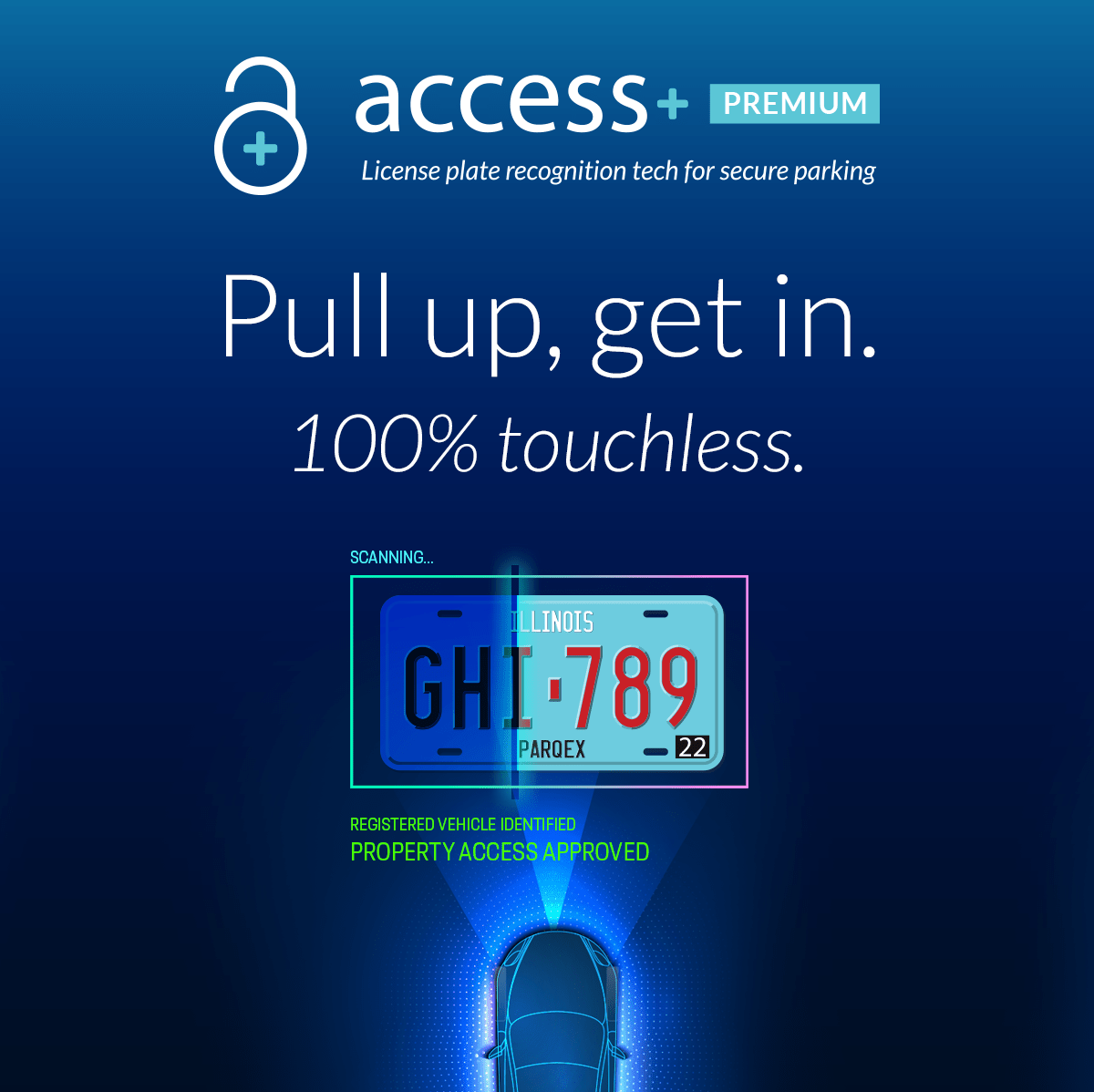
- Access control: Integrations with gates and doors via Access+ unlock stalls only during approved reservation windows.
- Overstay/idle detection: Policy engine monitors charging vs. plugged-in state and triggers notifications, idle fees, or violation workflows.
- LPR enforcement: Identify unauthorized or overstaying vehicles; create violations or tow triggers based on property policy.
- Integrated billing: Charge for parking, energy, idle/overstay time, or any combination; issue invoices and remit payouts to owners.
- Notifications: SMS, email, or push notifications for reservation start, charge start/complete, grace period warnings, and idle alerts.
- EV parking reporting & analytics: Monitor energy usage (kWh), stall occupancy, session duration, revenue per bay/site, repeat user behavior, and exceptions.
Common EV Charging Management Scenarios
Scenario 1 — Charger Billed for Energy; ParqEx Billed for Parking
Use Case: Residential or mixed-use properties want energy payments to remain with the charger network while preventing blocked EV bays.
How it Works:
- Driver reserves an EV bay through ParqEx’s parking app.
- Charging session is paid at the station/network.
- ParqEx monitors stall occupancy and charging state.
- When the session ends, idle timers start.
- If the vehicle remains plugged in past the grace period (e.g., 30 minutes), ParqEx charges idle fees or triggers enforcement.
Example Policy:
- Grace period: 30 minutes after charge completion
- Idle fee: $12/hour (billed in 10-minute increments)
- Escalation: After 90 minutes idle, send violation to enforcement or suspend EV privileges
Owner Value: Maximizes throughput on expensive EV infrastructure while maintaining vendor-based energy billing.
Scenario 2 — Reserved EV Charging for Specific User Groups
Use Case: Limited EV bays need priority access for tenants, guests, or specific visitors.
How it Works:
- ParqEx enforces eligibility at booking.
- Access+ gates/doors open only during approved reservation windows.
- ChargerBilled: energy paid at the station; ParqEx applies parking/idle rules.
- ParqExBilled: energy + parking + idle fees bundled and billed via ParqEx.
Example Policies:
- Office site: EV bays reserved for visitors 8 a.m.–6 p.m.; employees after hours
- Retail site: First 60 minutes validated with purchase; idle fees apply afterward
Owner Value: Guarantees availability for priority users while aligning with tenant satisfaction, shopper conversion, and guest experience goals.
Scenario 3 — High-Demand Paid Reservations
Use Case: Scarce EV bays in urban locations, hospitals, stadiums, airports, or campuses.
How it Works:
- Driver books a paid EV reservation.
- ParqEx collects a reservation fee.
- During the window, charging occurs: ParqExBilled charges per kWh; ChargerBilled paid at station.
- Overstay/idle fees apply automatically after charge completion.
Example Policy:
- Reservation fee: $3–$8 per 30 minutes
- Energy tariff (ParqExBilled): $0.42/kWh peak, $0.28/kWh off-peak
- Idle fee: $20/hour in 5-minute increments after 15-minute grace
Owner Value: Monetizes scarcity, improves reliability, and provides clear economics for future EV infrastructure.
Pricing & Policy Building Blocks
- Grace periods: 15–45 minutes post-charge
- Idle fees: per-minute or per-block, optional caps
- Tiered energy pricing: peak/off-peak, memberships, or flat
- Parking bundles: e.g., 2-hour parking includes 15 kWh; overages billed
- Validations/credits: retail purchase codes, resident allowances, or employer perks
- No-show rules: auto-cancel after X minutes; optional fees or warnings
- Enforcement triggers: LPR hits, patrol tasks, tickets, or tow workflows
High-Level Operational Flow
- Reserve: Driver books EV stall; rules applied.
- Access: Gate/door opens via Access+; occupancy begins.
- Charge: Session tracked (start/stop, kWh, power).
- Detect Idle: Start grace timer after charge; notify driver.
- Act: Apply idle fee or enforcement if occupied past grace.
- Bill: Generate invoices for parking, energy, and idle time.
- Report: Dashboards show utilization, revenue, exceptions, and repeat behavior.
Key KPIs for Property Owners
- Stall turnover (sessions/day per EV bay)
- Idle time ratio (idle ÷ plugged-in minutes)
- Energy revenue and parking/idle revenue (separate lines)
- Reservation fill rate and no-show %
- Session success rate (start to charge complete)
- User mix (tenant/guest/public; new vs. repeat)
Implementation Checklist
- Choose payment model: ChargerBilled or ParqExBilled
- Define policies: grace periods, idle fees, eligibility, validations, escalation
- Map hardware: charger models, firmware, OCPP/vendor API credentials
- Configure access: gates, doors, stalls, and time windows
- Set pricing: parking, energy, bundles, promo codes
- Launch pilot: monitor KPIs, adjust policies, scale across properties
Summary
ParqEx gives property owners and managers two flexible ways to run EV charging management—keep energy payments at the charger network or move everything into ParqEx—without losing control, visibility, or driver convenience. With overstay/idle intelligence, you protect scarce EV bays, increase turnover, and unlock new revenue while ensuring drivers enjoy reliable access and transparent pricing.
Ready to take the next step? Book a demo with ParqEx today.