


Apartment Parking Problems: How Smart Communities Solve Them
Parking used to be easy. Residents received a sticker, guests checked in at the front desk, and parking enforcement meant occasionally walking the lot with a clipboard and maybe a piece of chalk.
Those days are long gone, and that model no longer works.
Today’s apartment communities are managing more vehicles per unit, constant delivery traffic, rideshare activity, vendor access, EV adoption, and increasing resident expectations, all while operating with smaller onsite teams.
And with this shift, parking has quickly and quietly evolved from a background amenity into operational infrastructure.
When parking operations break down, the consequences ripple across the entire property:
- Tenant and resident complaints increase
- Staff time gets consumed
- Policies become difficult to enforce
- Revenue opportunities are missed
- Online reviews suffer
The good news is that forward-thinking communities are no longer treating parking as an unsolvable headache. Residential communities are modernizing their parking and reaping measurable operational benefits.
Forward-thinking operators are increasingly turning to modern parking platforms like ParqEx to bring structure, visibility, and automation to what was once a manual process.
Let’s break down the most common apartment parking problems and, more importantly, how leading properties are fixing them.
Why Apartment Parking Has Become an Operational Challenge
Multifamily properties today operate in a completely different environment than they did even a decade ago.
Here are just a handful of things that have changed in those ten years:
- Vehicle ownership is rising. Many households now have multiple cars.
- Guest vehicle traffic is unpredictable. Friends, family, short-term visitors, and service providers create endless parking turnover.
- Delivery volume has exploded. Food delivery, grocery services, Amazon, UPS, FedEx, DHL, etc., drivers are now daily parking users.
- Resident expectations are higher. Convenience is no longer a luxury; it’s an expectation.
- Staff bandwidth is shrinking. Teams simply do not have hours to track permits or mediate parking disputes manually.
In short, parking is no longer static. It is dynamic, high traffic, and operationally complex.
So, communities relying on manual processes often find themselves stuck in reactive mode, addressing apartment parking problems only after frustration builds.
Smart property managers and parking operators are shifting toward proactive parking management. It starts with understanding where the most significant friction points live.
10 Common Apartment Parking Problems (And How to Fix Them)
1. Unauthorized Parking
Few things annoy residents more than arriving home to find their parking spot being used by someone else.
Unauthorized parking generally stems from:
- Expired permits
- Visitors overstaying
- Neighboring property overflow
- Poor visibility into who belongs on-site
The Fix:
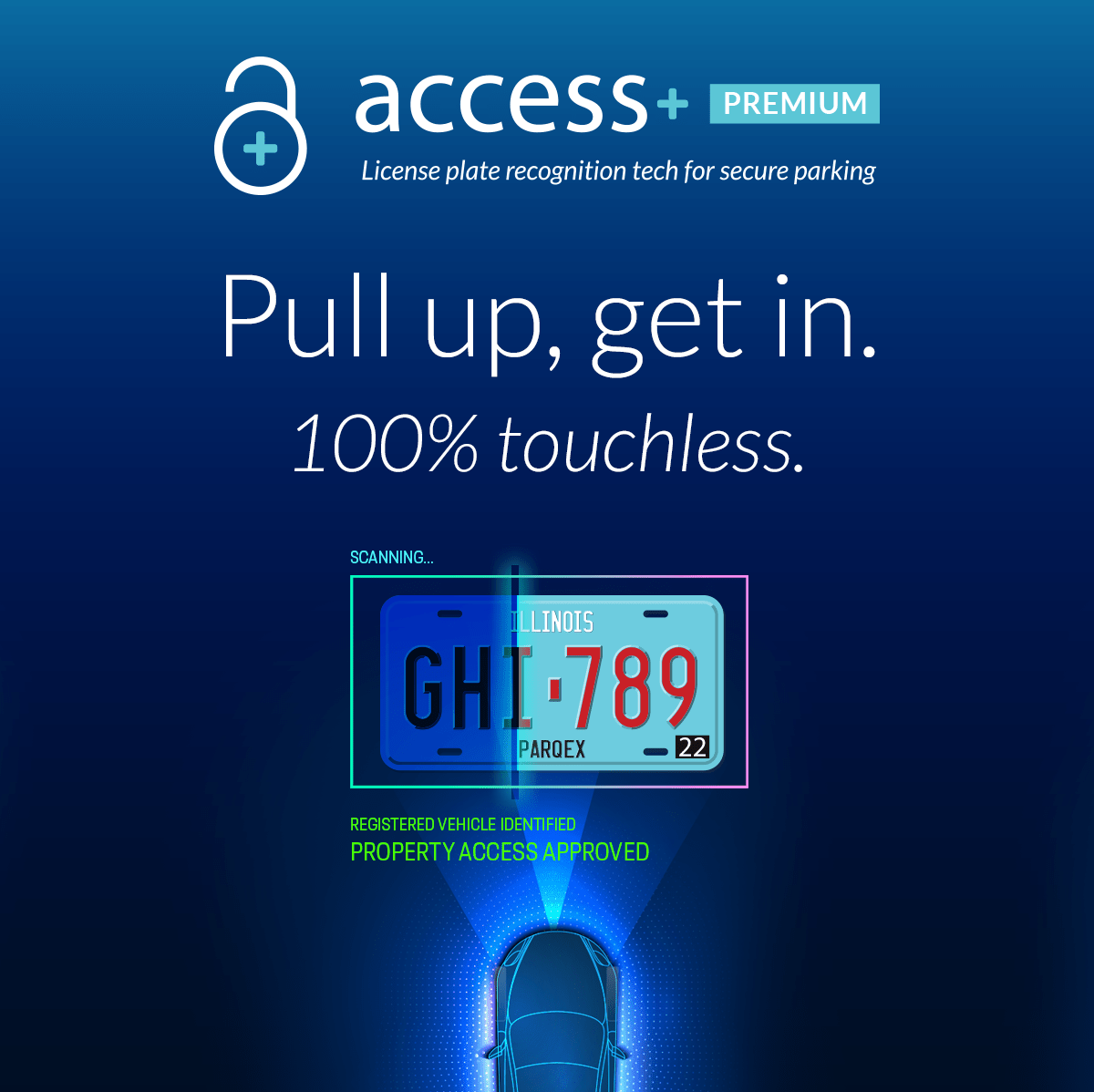
Modern communities are shifting from paper parking permits and decals to digital parking systems that instantly verify vehicles. This allows enforcement teams to confirm parking authorization within seconds, leading to quicker compliance without the need for aggressive towing that could harm resident relationships.
Visibility is vital.
2. Guest Parking Chaos
Guest parking often becomes the wild west of apartment operations.
Without a proper visitor parking structure:
- Residents flood the leasing office with guest parking requests
- Staff have to manually log all vehicles
- Guests park in restricted areas
- Enforcement becomes inconsistent
The Fix:
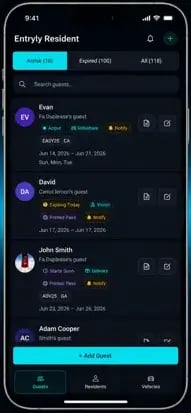
Self-service guest parking registration fixes everything. Residents can register their visitors in advance, set durations, and cut out the middleman, eliminating the need for staff involvement entirely.
The result is fewer interruptions for your team and a smoother, user-friendly experience for residents and guests.
3. Residents Owning More Vehicles Than Allocated Spaces
This issue is growing quickly, especially in suburban areas where driving is a necessity.
When supply does not match demand, properties face:
- Space hoarding
- Illegal parking
- Resident disputes
- Overflow into fire lanes or loading zones
The Fix:
Dynamic space allocation allows operators to manage inventory intelligently, whether through paid additional permits, shared spaces, or reassignments based on utilization patterns.
Instead of guessing, communities can make data-backed decisions.
4. Assigned Space Disputes
Even in a well-run apartment complex, assigned parking can create tension:
- “There’s someone in my spot.”
- “That car does not belong here.”
- “I pay for this parking space.”
The Fix:
Real-time vehicle records give teams immediate clarity. When staff can verify assignments instantly, disputes are resolved faster and with less emotional friction.
Transparency reduces conflict.
5. Manual Permit Tracking That Does Not Scale
Spreadsheets. Hangtags. Paper lists. This doesn’t cut it anymore.
Manual tracking introduces risk:
- Outdated records
- Human error
- Slow enforcement
- Administrative overload
The Fix:
Automation dramatically reduces operational drag. Digital parking permits update instantly, eliminate duplicate entry, and provide a single source of truth.
Your team should manage exceptions, not paperwork.
6. Lack of Real-Time Parking Data
Many operators do not actually know:
- How full their lots are
- Which spaces sit unused
- When demand spikes
- Whether policies are working
Without data, parking decisions become guesswork.
The Fix:
Analytics changes parking management from reactive to strategic. Communities can identify underused parking areas, modify policies, and predict parking needs. This overall enhances the performance of parking assets strongly.
7. Enforcement That Creates Resident Friction
Traditional enforcement often relies heavily on towing, regardless of the parking violation.
While sometimes necessary, aggressive tactics can:
- Damage resident trust
- Trigger negative reviews
- Increase churn risk
- Create uncomfortable confrontations
The Fix:
Smarter enforcement emphasizes encouraging compliance initially, rather than punishing. It uses automated in-app warnings, digital notifications, and grace periods to promote behavior change while minimizing tension.
The goal is not to catch residents doing something wrong. It is to help them do it right.
8. Underutilized Parking Equals Lost Revenue
Many communities have hidden inventory sitting unused:
- Vacant reserved spaces
- Daytime-only demand areas
- Unclaimed premium spots
- Misallocated capacity
That is revenue quietly and painfully slipping away.
The Fix:
Forward-thinking operators treat parking like the asset it is.
Options may include:
- Premium space upgrades
- Additional vehicle permits
- Reserved parking tiers
- Flexible pricing models
Platforms such as ParqEx help apartment buildings identify unused inventory, digitize access, and establish organized parking programs that generate new revenue streams. When managed effectively, parking can transform from a cost center into a promising source of revenue.
9. Policy Confusion
If residents do not understand the rules, they will not follow them.
Common breakdowns include:
- Policies buried deep in lease documents that nobody can find
- Outdated parking signage
- Inconsistent enforcement
- Poor onboarding communication
The Fix:
Digitized policies enhance clarity. When residents can quickly access rules, register vehicles, and get reminders, compliance improves. Keeping it simple is always the way to go.
10. Staff Time Drain
This is the silent killer of operational efficiency.
Ask any property manager how much time parking consumes, and the answer is usually annoyingly way too much.
Manual parking workflows suck up hours from property management teams already balancing:
- Leasing
- Resident retention
- Maintenance coordination
- Vendor management
The Fix:
Automation gives your staff time back, allowing them to focus on high-value, high-importance tasks rather than administrative work.
Operational leverage is one of the biggest drivers of ROI in modern parking management.
The Hidden Cost of Poor Parking Management
Parking problems do not stay confined to the lot. They impact the entire property ecosystem.
Poorly managed parking can lead to:
Lower resident satisfaction
Frustration adds up quickly when daily convenience is disrupted.
Negative online reviews
Parking complaints are one of the most common negative multifamily reviews, and prospects read them.
Increased churn risk
When residents feel their experience is deteriorating, renewal likelihood drops.
Higher staffing pressure
Every parking issue becomes another interruption.
Liability exposure
Improper parking can block emergency access or create safety hazards.
Missed revenue opportunities
Unused spaces represent unrealized value.
For asset managers and ownership groups, these are not minor inconveniences. They are performance factors.
What Modern Apartment Parking Management Looks Like
Leading communities are no longer settling for temporary fixes and treating them like band-aids; they are modernizing parking with technology designed for operational scale.
Modern systems typically tackle:
Automation
Reduce manual tasks and eliminate redundant workflows.
Digital Permitting
Instantly verify authorized vehicles without physical credentials.
Real-Time Visibility
Know exactly who is parked on your property at all times of the day.
Integrated Workflows
Connect parking to broader property operations instead of managing it in isolation.
Data-Driven Decision Making
Use insights to refine policies, pricing, and allocations.
Resident-Friendly Experiences
Make compliance straightforward instead of frustrating.
Platforms like ParqEx help communities digitize permitting, streamline enforcement, reduce administrative burden, and gain the visibility needed to manage parking as an actual operational asset.
What to Look For in Apartment Parking Management Software
If your community is evaluating solutions, prioritize platforms that support both operational efficiency and resident experience.
Key capabilities to consider include:
- Scalability: Can the system grow alongside your portfolio?
- Ease of Use: If residents and staff struggle to adopt it, the value disappears quickly.
- Enforcement Tools: Look for options that encourage compliance without defaulting to punitive measures.
- Reporting and Analytics: Visibility enables smarter decisions.
- Integrations: Systems that connect with property management platforms reduce duplicate work and improve accuracy.
- Flexible Policy Controls: Every community operates differently. Your software should reflect that.
Ultimately, the best technology fades into the background while making operations noticeably smoother.
Frequently Asked Questions About Apartment Parking Management
Many properties struggle with unauthorized vehicles, limited space, confusion over guest parking, and inconsistent enforcement. As vehicle ownership rises and delivery traffic increases, manual processes often fail to keep up.
Communities that modernize their approach typically gain better visibility into who is parked on-site, reduce resident complaints, and free up valuable staff time.
Building additional parking is expensive and often unrealistic. Instead, many operators focus on managing existing inventory more effectively.
Strategies may include digitizing permits, clarifying policies, improving enforcement consistency, and identifying underutilized areas. When operators understand how their parking is actually being used, they can make smarter allocation decisions without expanding their footprint.
Parking is part of a resident’s daily routine. When someone cannot find a space, discovers an unauthorized vehicle parked in their spot, or struggles to register a guest, frustration builds quickly.
Unlike some amenities, parking problems are highly visible and emotionally charged. A smoother experience removes a frequent source of stress and contributes to stronger overall satisfaction.
Not at all. While large properties often feel the operational strain first, mid-sized and growing communities benefit just as much from structured parking workflows.
Solutions like ParqEx help automate administrative tasks, improve compliance, and provide clearer oversight. Even modest time savings can make a meaningful difference for onsite teams managing multiple priorities.
Automation handles many of the tasks that traditionally consumed hours each week. This can include permit approvals, vehicle verification, guest registration, and violation tracking.
Instead of responding to constant parking interruptions, teams can stay focused on leasing, resident engagement, and property operations.
When parking is treated as a managed asset rather than a passive amenity, new opportunities often emerge. Communities may introduce premium spaces, offer additional permits, or restructure assignments based on demand.
More importantly, efficient parking supports resident retention and protects the overall value of the property. Small operational improvements can compound over time.
Ease of use should be a top priority. If a system is difficult for residents or staff to navigate, adoption suffers.
Operators typically benefit most from platforms that offer strong visibility, flexible policy controls, reliable enforcement tools, and integrations with broader property workflows. Scalability also matters, especially for portfolios planning future growth.
Change always requires planning, but many communities find the transition smoother than expected. Clear communication, simple onboarding, and resident-friendly tools help minimize disruption.
Once modern systems are in place, teams rarely want to return to spreadsheets and manual tracking.
If parking generates frequent complaints, consumes excessive staff time, or lacks clear oversight, it may be time to reassess existing processes.
Forward-thinking operators increasingly view parking as part of the broader resident experience and an opportunity to improve operational efficiency. The right tools can transform it from a recurring challenge into a structured, manageable system.
Parking Is No Longer Passive Infrastructure
For years, parking has been sitting around without proper active management. Finally, that mindset is changing!
Property management and parking operators increasingly recognize that well-run parking supports:
- Stronger resident satisfaction
- More efficient teams
- Additional revenue potential
- Better asset positioning
Solutions like ParqEx are helping apartment communities eliminate their apartment parking problems and transform parking from a daily frustration into a streamlined, revenue-generating asset.